 Guide On Map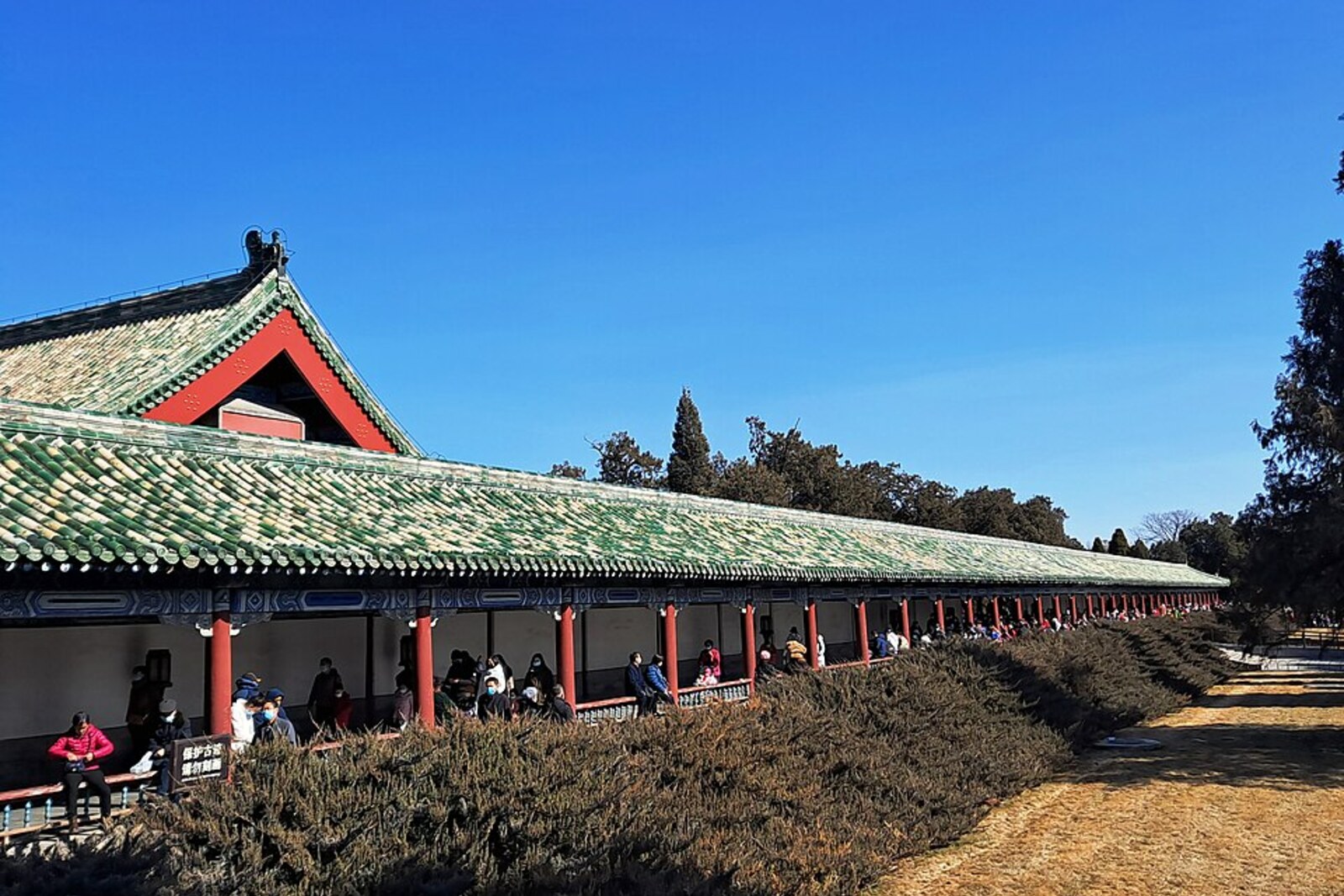
Look around first
What to notice
- Shared roof
- Red columns
- Seventy-two sections
- Benches
The story of the place
Low walls and latticed windows once enclosed this route within a long covered corridor inside the imperial complex. Beneath the shared roof ran seventy-two sections, connecting the far northern part of the park with the altar area; servants moved through them without being exposed to rain, snow, and dust. In nineteen thirty-seven, the walls and grilles were dismantled, opening the gallery to the park. The shared roof now rests on red columns, with benches between them, where Beijing residents play cards and chess.
The day before the Prayer for a Good Harvest, the emperor—the ritual's chief participant and petitioner on behalf of the entire country—either inspected the offerings prepared for Heaven himself or sent a high official. The inspection took place in the North Divine Kitchen, at the far end of this corridor. Grain, fruit, and other offerings lay there in baskets and bowls; jade and silk were stored nearby. A mistake meant spoiling a ritual expected to bring a very earthly result: rain and bread.
More than ninety kitchen servants worked on the offerings. They prepared more than thirty kinds of offerings, but this chain began even farther away, at the Animal Killing Pavilion. Before the slaughter, an official of the ceremonial department inspected the bull and made the prescribed bows. The use of a knife was forbidden: the animal was killed with a blow from a heavy wooden mallet, and for this reason the pavilion was also known as the Animal Killing Pavilion.
The ritual's organizers deliberately placed the slaughterhouse and kitchen more than two hundred steps from the altar. The meat was to be cut up away from the sacred platform, then delivered clean, without being soiled by rain, snow, or dust. That was why the Long Corridor was needed. It looked different then: low walls, latticed windows, and a shared roof formed an enclosed corridor. On the eve of the ceremony, servants lit lanterns in its sections and carried the prepared vessels to the place of prayer.
There the emperor offered wine and prepared food to Heaven, then received a ritual cup and a portion of the sacrificial meat as a blessing. This completed the work of the people who killed the animal, prepared dozens of dishes, inspected the vessels, and carried everything along this covered route.
The name “Seventy-Two Connected Rooms” refers precisely to the number of sections beneath the shared roof. There were originally seventy-five; in seventeen fifty-two, the builders left seventy-two. The documents offer no reliable explanation for this number. A legend later arose that the sections were intended for seventy-two earthly spirits, but that is already a folk interpretation.
In nineteen thirty-seven, park staff dismantled the window grilles and low walls, turning the enclosed service road into an open gallery. Benches now stand where the kitchen procession once passed, and Beijing residents play cards and chess between the red columns. What remains of the former route for offerings is the shared roof, seventy-two sections, and the direction—from the Animal Killing Pavilion, where the bull was killed, to the place where food for Heaven was carried.
Useful on site
Inside the park; follow the park's hours and those of the paid central zones.
Checked: June 28, 2026. Check the official source before visiting.Choose a spot to the side and do not block the passage. The corridor is suitable for a break in heat or rain, but it may be too lively around you to listen without headphones.