 Guide On Map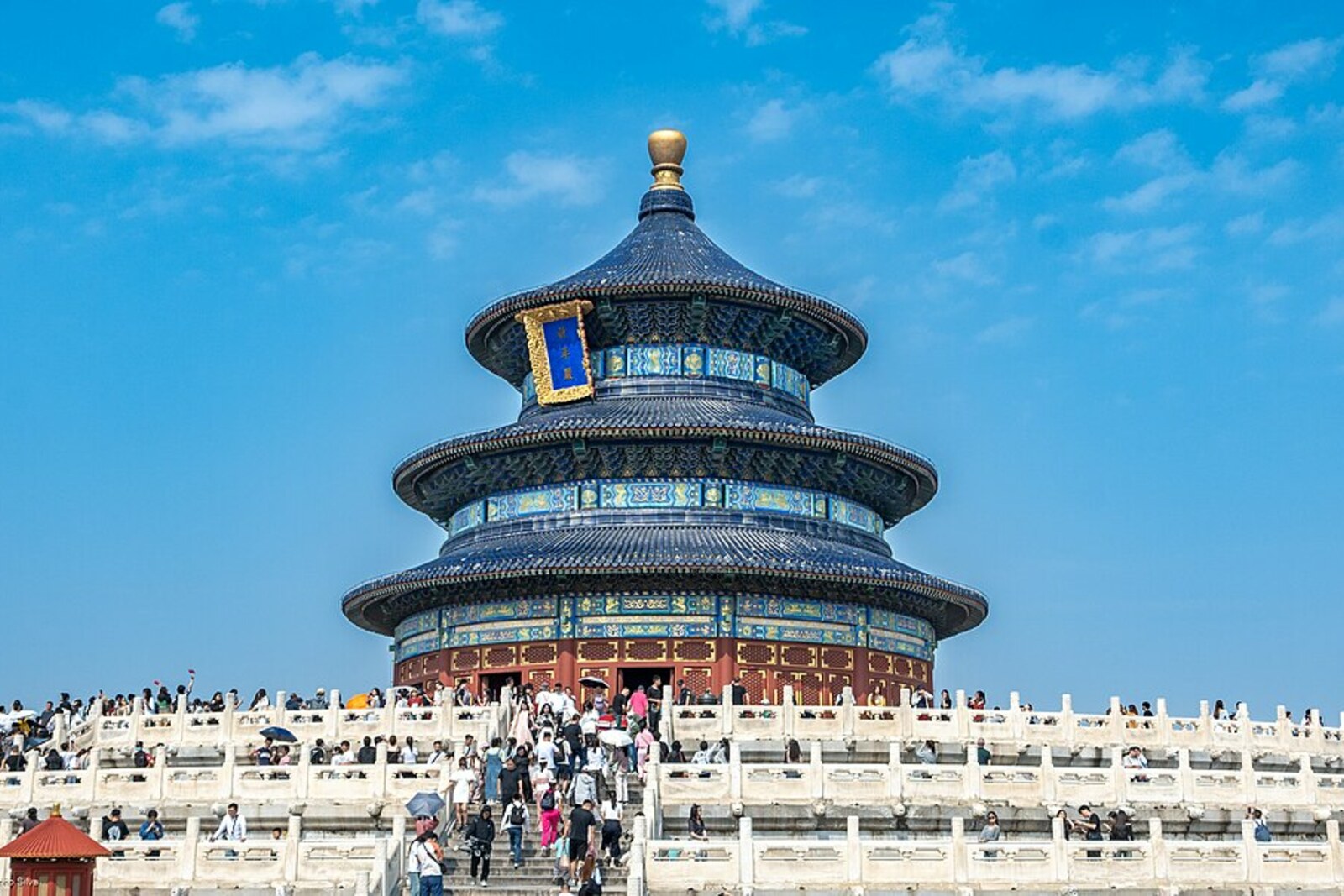
Look around first
What to notice
- Three tiers of blue roof
- White stone terraces
- Wooden columns
The story of the place
In late summer of eighteen eighty-nine, lightning shattered the plaque hanging beneath the roof of the Hall of Prayer for Good Harvests. A wooden beam caught fire, then the blaze spread to the load-bearing structures. By morning, the three-tiered hall no longer existed.
Three so-called altar courtyard attendants were on duty by the western gate. They were neither priests nor hereditary custodians. In their home counties, they lived by farming, while Beijing officials annually selected new men from among well-off peasants and sent them for a year to guard the imperial altars. This trio had arrived only a few months before the fire, settled in two rooms by the wall, and was supposed to patrol the courtyard, watch over the buildings, and keep the grounds clean. A direct lightning strike turned such service into a criminal case.
No one seriously denied the cause of the fire: both the official report and eyewitness accounts spoke of a thunderstorm. But the Guangxu Emperor saw what happened as a warning. It was here that the ruler of China annually asked Heaven to grant the country a harvest. In the first lunar month, the tablet of Huangtian Shangdi and the tablets of the imperial ancestors were carried into the hall. They were placed by the northern wall and along the sides of the passage. The emperor walked down this passage, knelt first before Heaven and then before each ancestor, and presented the prepared offerings.
The name described a very specific duty of the ruler. The Qianlong Emperor introduced it in seventeen fifty-one. The former name, the Hall of Great Offering, referred to the autumn thanksgiving rite, but under the Qing dynasty the spring prayer for grain was held here. Officials of the ceremonial bureau pointed out the discrepancy; Qianlong renamed the building and ordered the multicolored roof tiers to be replaced with uniform blue tiles—the color of Heaven.
After the fire, the Guangxu Emperor handed the officials responsible for the sanctuary over to the Board of Punishments, and the three altar courtyard attendants were interrogated. By contrast, the emperor ordered that those who took part in fighting the fire be rewarded. He then ordered the hall restored.
That was when it became clear that the Board of Works had no detailed drawings. Officials gathered craftsmen who had previously repaired the Hall of Prayer for Good Harvests. They reconstructed its design from memory: the arrangement of the columns, the joints of the wooden framework, and the proportions of the three roofs. The work took six years and was completed in eighteen ninety-six.
It is this late-nineteenth-century structure that now stands above the white stone terraces. The blue roofs and the name were retained from Qianlong’s decision; the wooden hall beneath them was rebuilt from scratch by Guangxu’s craftsmen after the earlier one burned along with the lost drawings.
Useful on site
Paid central areas: 08:00–18:00 in high season, last entry 17:30; 08:00–17:00 in low season, last entry 16:30; closed on Mondays except public holidays.
Checked: June 28, 2026. Check the official source before visiting.First, take in the silhouette from a distance, then come closer. If you cannot go inside, or if the details disappear in the crowd, the hall’s structure is still easy to read from its circular form and tiered roof.