 Guide On Map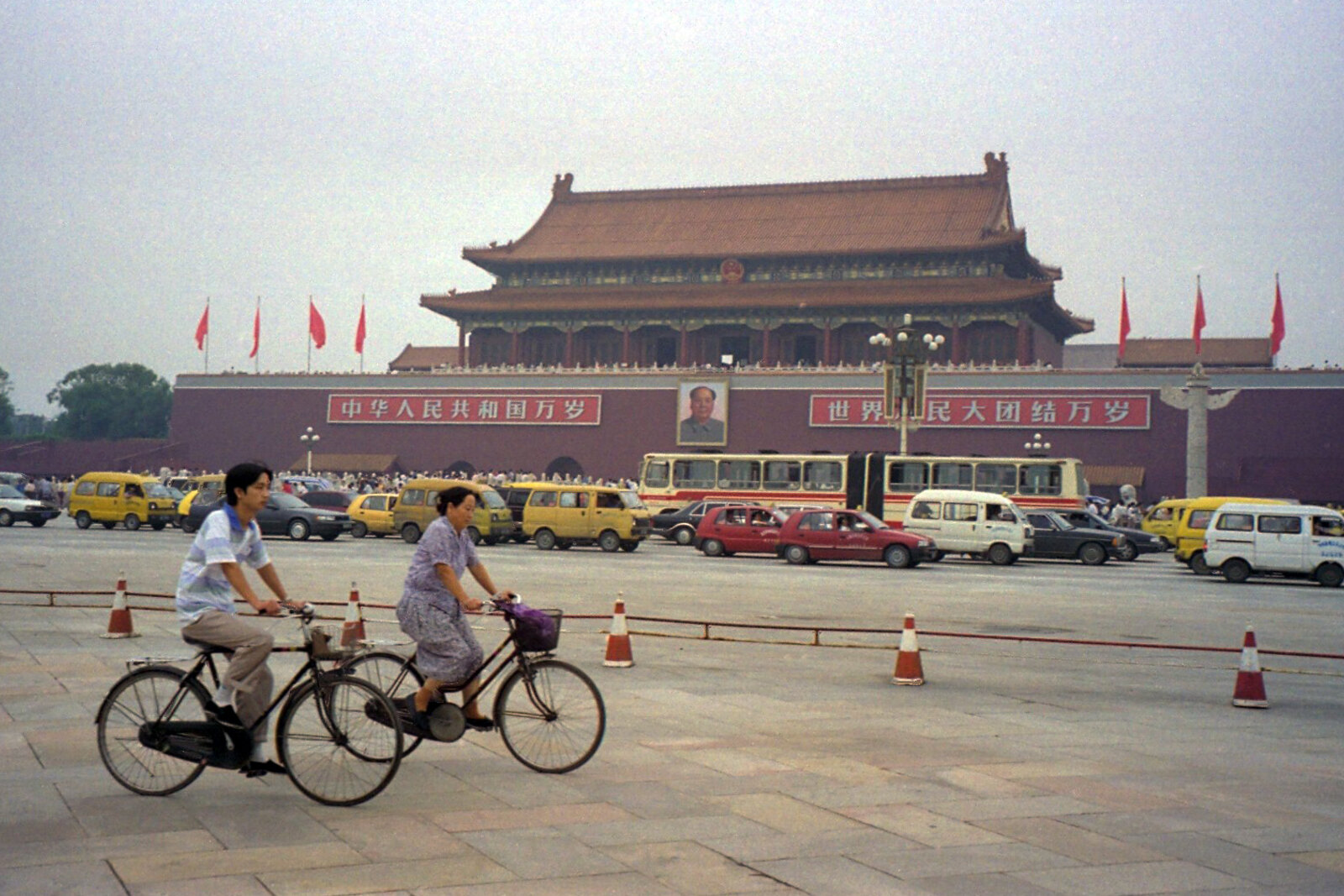
Look around first
What to notice
- The square's open space
- Tiananmen Gate
- Chang'an Avenue
The story of the place
The open rectangle before Tiananmen Gate used to look entirely different. A fenced imperial corridor with long galleries and a cross passage ran here, and ordinary city residents were almost never admitted into it. After the galleries were dismantled and the route along Chang'an Avenue was opened, this area lay between the government part of Beijing and the fenced quarter of foreign missions.
On May Fourth, nineteen nineteen, Fu Sinian led a column of Beijing students here. He studied at Peking University, edited a student magazine, and was chosen to marshal the march. His aim was quite specific: to make the Chinese delegation reject the Treaty of Versailles.
China took part in the First World War on the victors' side. Its representatives came to the peace conference to demand the return of German rights to the port of Qingdao and the railways in Shandong Province. However, the conference participants decided to transfer those rights to Japan. The students believed that the Beijing government of the Republic of China had failed to defend the country's interests and was now ready to sign the treaty.
The day before, representatives of thirteen educational institutions gathered at Peking University. All night, they wrote slogans and prepared banners. The next day, at about one in the afternoon, more than three thousand people converged in front of Tiananmen Gate. Fu Sinian walked at the front, carrying a large flag.
The site was chosen deliberately. Just a few years earlier, a fenced imperial corridor in the shape of a T had run through this spot. Ordinary city residents were almost never allowed inside. After the fall of the empire, officials dismantled the long galleries and opened a cross passage along Chang'an Avenue. The former palace area lay beside the entrance to the government part of the city and not far from the Beijing Legation Quarter—a fenced district of foreign diplomatic missions. From here, demands could be presented both to their own ministers and to representatives of the countries deciding Shandong's fate.
The students set out for the embassies, intending to hand an appeal to the diplomats. Guards did not let them into the quarter. Negotiations went on for about two hours. Fu Sinian tried to maintain order, but part of the column went to the home of the deputy foreign minister who had taken part in agreements with Japan. The official managed to hide. The demonstrators broke into the house, set it on fire, and beat the former Chinese envoy to Japan who was there. Police arrested thirty-two students.
The arrests turned the Beijing march into a nationwide movement. Students in other cities stopped attending classes, and merchants and clerks then joined them. The detainees were released as early as May seventh. Three officials whose resignations had been demanded on the square lost their posts. On June twenty-eighth, the Chinese delegation in Versailles refused to sign the treaty.
For Fu Sinian, taking part almost closed off his only available path to study abroad. In June, he took the examination for a government scholarship, but the examiners tried to exclude him as an organizer of the unrest. One of the heads of the provincial education administration insisted that his examination result be retained. At the end of the year, the former flag-bearer left to study in Europe on state funds.
In Beijing newspapers of the time, the gathering place was still called “the empty space before Tiananmen Gate.” It was much smaller than today's rectangle and retained the shape of the former imperial court. After May Fourth, the word “square” and the name of the northern gate began to become associated with it: Tiananmen Gate means “the Gate of Heavenly Tranquility.”
Useful on site
The square operates by name-specific reservation; as of the verification date, reservations 1–7 days in advance are in effect, and on ceremony days and major holidays the rules may be tightened.
Checked: June 28, 2026. Check the official source before visiting.Access to the square may require a separate reservation and involve checks. If you cannot enter, listen to the story from an accessible outside point where its scale and northern facade are visible.