 Guide On Map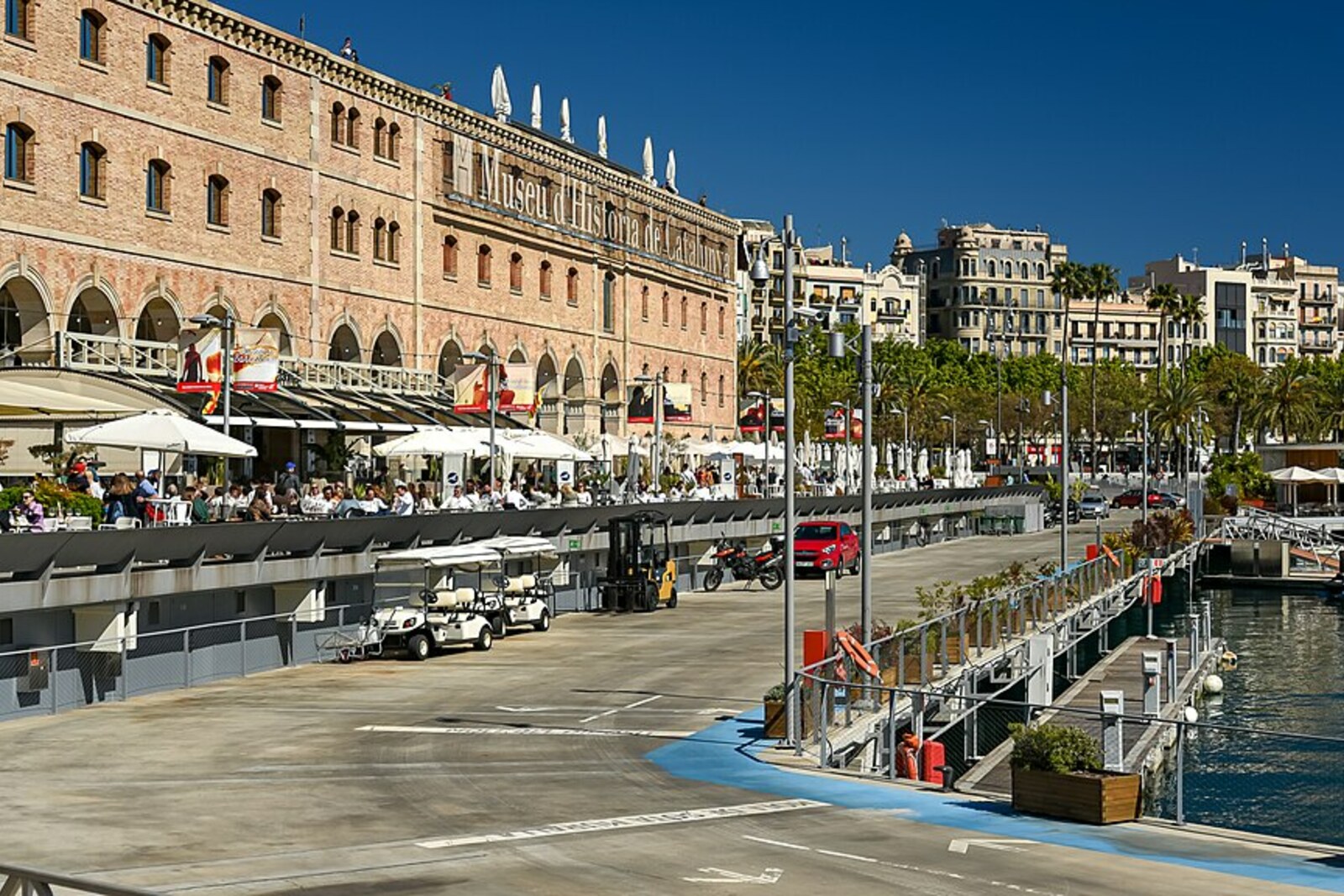
Look around first
What to notice
- Multistory brick building
- Arched openings on the ground floor
- Cast-iron and steel columns inside
The story of the place
The name “Palau de Mar”—“Palace of the Sea”—became attached to the building after the old docks were remodeled. There was never a palace here. For its first seventy years, the brick building was called the Main Commercial Warehouses. On July first, nineteen oh two, the port authority opened them for goods arriving in Barcelona by sea.
Dockworkers carried sacks, bales, and barrels through the arches. Elevators and conveyor belts lifted them to the upper floors, while tracks laid alongside connected the warehouse to the railway. Yet the main commodity leaving here could be paper—a warehouse certificate, or warrant.
Having received such a document, a merchant left the cargo in the warehouse’s custody and took the certificate to a bank. The coffee, cotton, or wine had not yet been sold, but it could already serve as collateral for money for the next purchase. If the merchant did not repay the debt, the creditor received the goods. The accuracy of the scales and the warehouse record determined whether the barrels and bales stated in the document really stood behind that sheet of paper.
In nineteen oh four, these certificates set off a struggle between two administrators of other people’s cargo. The port authority issued warrants for goods in its warehouses. The private company Crédito y Docks de Barcelona, which earned money from storage and loans secured by goods, demanded that its competitor be barred from such an operation. The government refused: port authorities were allowed to issue warehouse certificates, although they were forbidden to lend money from their own funds against their own papers.
The company did not get the ban it sought. But six years later, the port authority handed it management of these warehouses. Merchants continued to pledge the goods kept here, and Crédito y Docks received the very building whose operations it had previously disputed.
The building proved inconvenient for its main work: cargo had to be distributed across several floors. After the Spanish Civil War, commercial use declined, and an armed customs guard—the Carabineros Corps—occupied part of the premises. Then the port warehouses around it disappeared, while this one remained the only building of Barcelona’s old industrial port.
In February nineteen ninety-six, the Museum of the History of Catalonia opened in part of the building. It did not have a ready-made old collection that needed a home: first the museum and its permanent exhibition were created, and its own collection of documents and objects began to take shape later, including through donations.
The original cast-iron and steel columns have been preserved inside. They once supported floors holding pledged goods; now, between them, stands an exhibition for which museum objects were gradually assembled over time.
Useful on site
Officially: Tue–Sat 10:00–19:00, Wed 10:00–20:00, Sun/holidays 10:00–14:30; entry and the ticket office close 30 minutes beforehand; closed Mon and on certain holidays.
Checked: June 28, 2026. Check the official source before visiting.You can understand the warehouse’s history from the outside as well. If you decide to enter the museum or go higher up, allow separate time for it, then return to the route.