 Guide On Map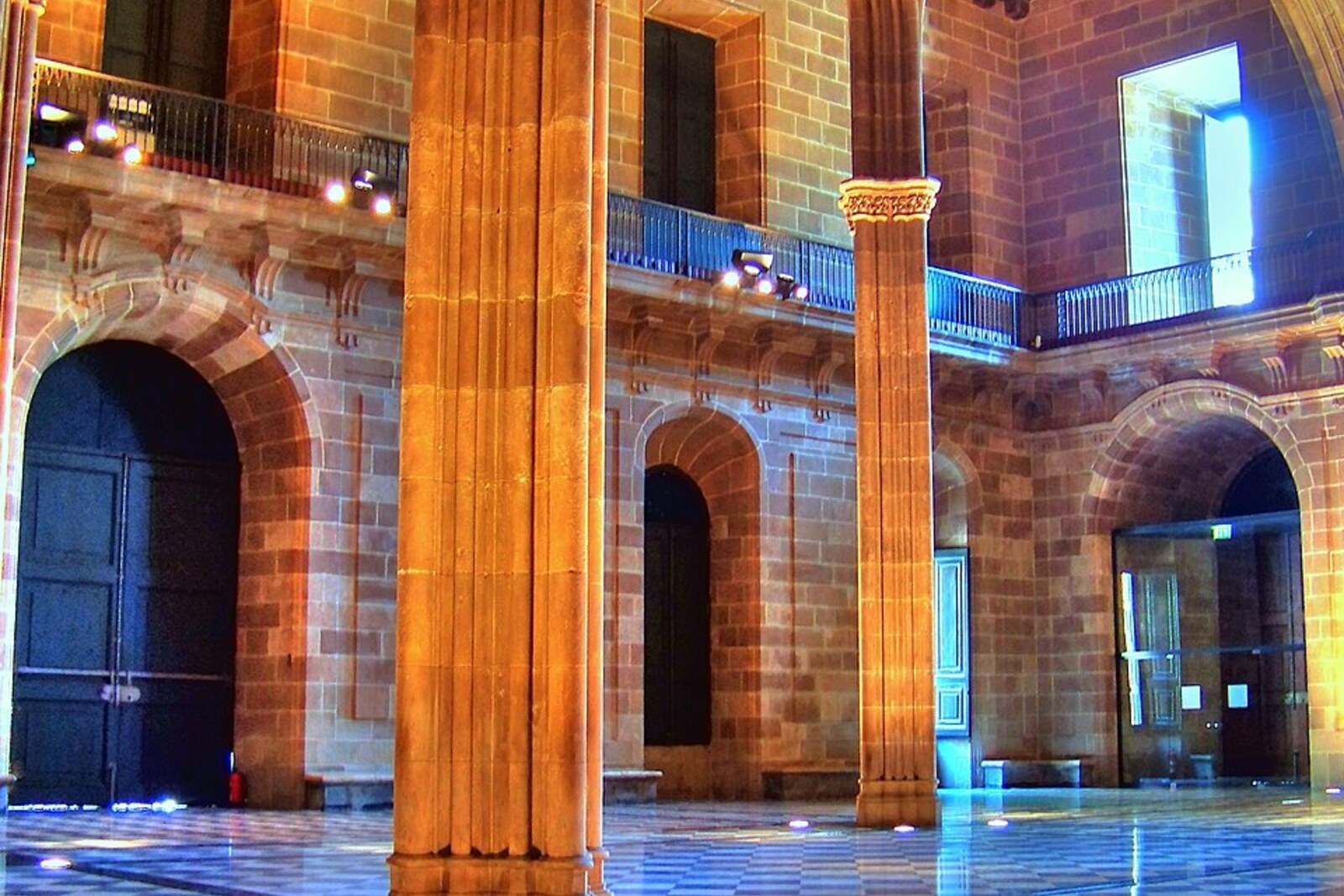
Look around first
What to notice
- Neoclassical façades
- The lower-level arcade
- The Gothic Hall of Contracts
The story of the place
In seventeen fourteen, after the capture of Barcelona, the troops of King Philip V occupied the entire building of La Llotja de Mar. The upper floors were assigned to soldiers, kitchens were set up in the Renaissance portico, and the Gothic Hall of Contracts was filled with grain.
Before it became a barracks, Barcelona’s merchants gathered here. The Catalans used the word “llotja” for a trading house where deals were made; the addition “de Mar” points to maritime trade. The building was erected by the harbor of the time because goods and people came through it, and they needed to agree on prices, transport, and shares in an enterprise. The Consulate of the Sea also met here—a merchants’ court that heard disputes between traders.
Two years after the city’s capture, a royal decree stripped the Consulate of the right to collect periatge—a duty on all goods loaded or unloaded in the port of Barcelona. The merchants’ institutions lost both their house and their main source of money. The Consulate had to move to the building opposite, while the soldiers remained in the former trading hall.
In seventeen fifty-five, Barcelona’s largest wholesalers asked King Ferdinand VI to return La Llotja and the port duty. Three years later, the king established new trade bodies, including the Royal Board of Trade, which represented the interests of major merchants, and restored the periatge. La Llotja was assigned as their headquarters, but the troops did not move out. In seventeen sixty-four, the Board received only a small room in the Hall of Contracts. It shared the rest with the soldiers and the city’s grain warehouses.
The captain general, the Marquis of la Mina, who was responsible for quartering the troops, refused to give the merchants the entire building: he had no other suitable barracks. After his death, the Count de Ricla took over the post. The Royal Board of Trade offered him thirty thousand pounds to build a new barracks or repair the royal palace—the money was to come from the restored duty on port cargo. In return, the merchants demanded the exclusive right to occupy La Llotja.
The Count agreed. In seventeen seventy-one, he handed the keys to the merchants, and the soldiers were transferred to another barracks. However, the Hall of Contracts was already in danger of collapse. The Board paid to repair its supports and built the present Neoclassical structure around the medieval core. The work was not fully completed until eighteen nineteen—forty-eight years after the keys were received.
Today, this is the headquarters of the Barcelona Chamber of Commerce, and business meetings are held here. Behind the Neoclassical façades, the Gothic Hall of Contracts still stands—a room the merchants regained with the proceeds of a duty on cargo passing through the port.
Useful on site
The interior is accessible only on official pre-booked tours; the façade can be viewed from outside at any time.
Checked: June 28, 2026. Check the official source before visiting.The square and the exterior can be explored independently, but the interior halls should not be considered a freely accessible part of the route. A separate organized tour is required for the interior.