 Guide On Map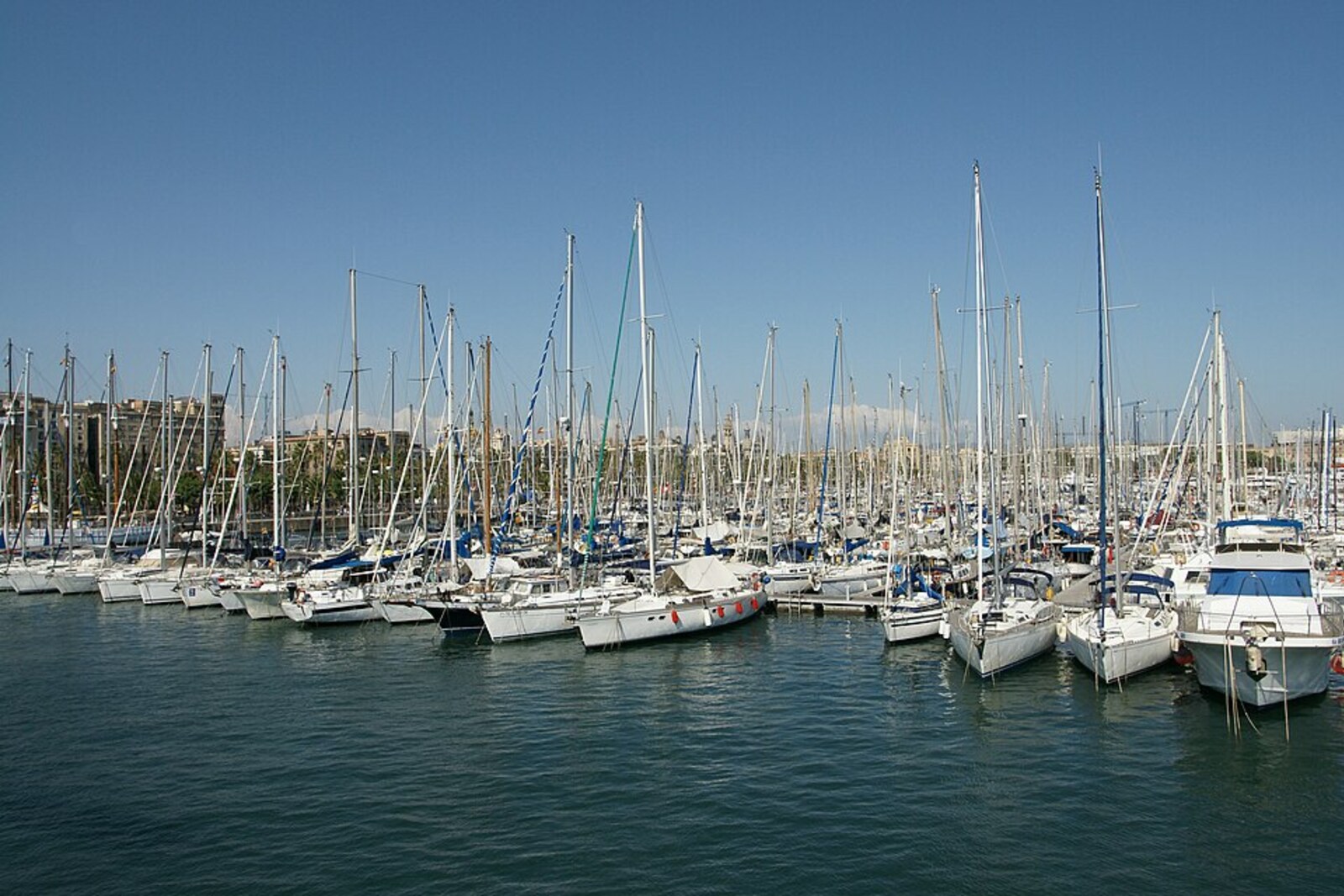
Look around first
What to notice
- Curving wooden deck
- Steps to the water
- Pivoting sections of the crossing
- Glass railings
The story of the place
By nineteen eighty, cargo work had shifted to the southern part of the port, while the buildings constructed on this waterfront at the beginning of the century stood empty. The waterfront still remained a closed working area, although the pier cleared of warehouses had already become accessible to the public. The Rambla de Mar pedestrian route runs above the water of Port Vell. Its wooden deck curves, in places becoming a platform almost thirty meters wide, and reaches the water by steps behind glass railings.
In the early nineties, Barcelona architects Albert Viaplana and Helio Piñón were tasked with taking pedestrians from the end of La Rambla to Moll d'Espanya while preserving the marina exit for three hundred boats. A fixed crossing would have trapped sailboats at the moorings. The architects had to lay a city street directly across an active shipping channel.
Such a commission came after a long transformation of the entire harbor. Port Vell means “old harbor”: it is the oldest part of Barcelona’s port. By nineteen eighty, almost all the cargo facilities built here at the beginning of the century were already idle. The main port operations had moved farther south, but the waterfront remained a service area. For more than seventy years, city residents were not allowed near the water.
In nineteen eighty-one, the board of the then Autonomous Port of Barcelona opened Moll de Bosch i Alsina (Moll de la Fusta), cleared of warehouses, to the public. The very next year, the port and City Hall commissioned the architect Manuel de Solà-Morales to create a permanent waterfront promenade. After Barcelona was awarded the Olympic Games, port and city leaders continued reshaping the old harbor. Under the plan of nineteen eighty-nine, an aquarium, movie theater, shops, and restaurants were to appear on Moll d'Espanya. Water remained between them and the end of La Rambla.
Viaplana conceived a broad wooden platform that he himself compared to a beach. He wanted people to linger here, so the deck curves, widens in places to thirty meters, descends to the water in steps, and covers about six thousand square meters. The port invested five hundred million pesetas in its construction. On opening day, journalists were already listing the architect’s professional risks: barely noticeable steps, gaps between the planks, glass railings, and the enormous cost of a passage that could have been made much narrower. Viaplana replied that architecture needs people in motion.
Boaters were left two exits. Small vessels could pass through a fifteen-meter opening, while for sailboats with masts, part of the deck pivoted. Closer to Plaça del Portal de la Pau, another section moved aside, freeing a wide passage for large yachts. The pedestrian Rambla had to be cut in two places because the owners of the three hundred boats moored here retained access to the sea.
On September twenty-fourth, nineteen ninety-four, the crossing was opened by Mayor Pasqual Maragall and Minister of Public Works Josep Borrell. The complex on the pier was still under construction, but the wooden route had already extended the city’s Rambla across the port water. Hence the name: Rambla de Mar, the Rambla of the sea.
The pivoting section still operates today. When it moves aside, pedestrians stop before the separated edges of the deck, a sailboat passes to the moorings of Port Vell, and then the wooden street again connects the end of La Rambla with Moll d'Espanya.
Useful on site
Public waterfront; Rambla de Mar is regularly opened for vessels, so passage may be briefly interrupted.
Checked: June 28, 2026. Check the official source before visiting.Do not rush across the deck: its meaning is best felt at the water’s edge. If the passage opens for a yacht, wait for the maneuver to finish and do not approach the moving section.