 Guide On Map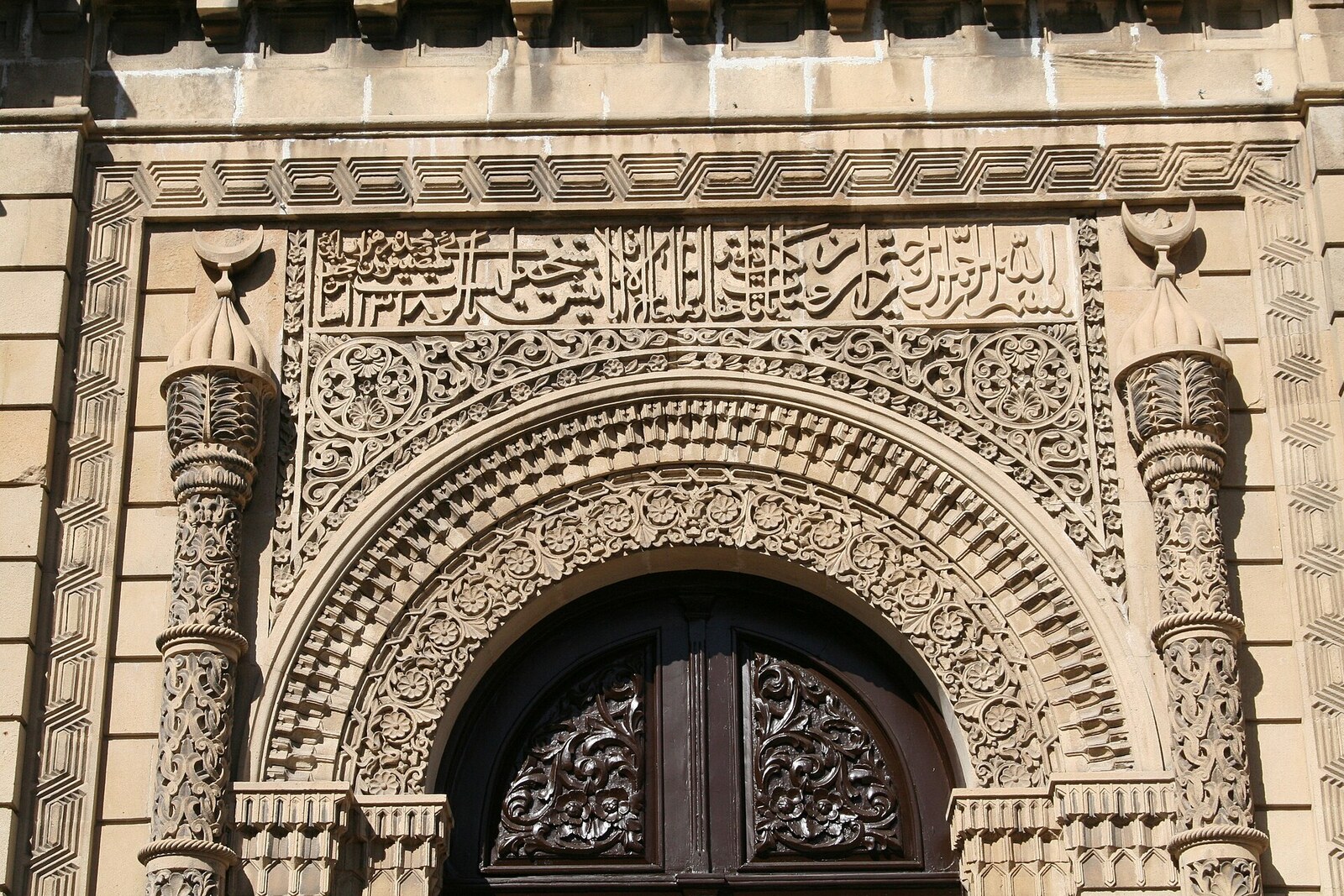
Look around first
What to notice
- Medieval minaret
- Stone with four Persian lines at the base
- Prayer hall from the late nineteenth century
The story of the place
The mosque’s name is connected with Friday communal prayer: on that day, the urban community, merchants, artisans, and oilfield owners gathered here. The former prayer hall became dilapidated, and at the end of the nineteenth century a Baku merchant and philanthropist paid to replace it. The new hall stands beside the medieval minaret, and their masonry belongs to different centuries.
A stone with four Persian lines is set into the masonry at the base of the minaret. It is a tax document from the early fourteenth century. Among the abolished levies, it separately names the “nafti,” a tax on owners of oil wells. Oil sustained Baku five and a half centuries before the industrial boom.
After the Mongol conquest, the rulers of the Ilkhanate took a substantial share of the wells into the treasury and began leasing them out to tax farmers. A tax farmer promised the treasury a set sum in advance and kept everything collected beyond it. The owners of the oilfields and peasants attached to the wells paid the price. There were almost no guarantees: a tax already paid could be demanded again. At the same time, the Ilkhanate’s wars with the Golden Horde devastated Northern Azerbaijan. People left their villages, trade weakened, and oil production declined.
Around thirteen oh nine, Muhammad Oljeitu, the ruler of the Ilkhanate, came to Baku, needing to restore revenues from the impoverished city. He issued a yarlik, an order sealed with a stamp, and lifted several taxes from the residents: per-capita levies, the tax on oil wells, and exactions not prescribed by religious law.
The stone inscription is not the yarlik itself. It recounts it in the third person and ends with a curse upon anyone who violates the exemption before the resurrection of the dead. In this way, a decision made by a distant ruler was turned into a public guarantee for the townspeople.
Juma Mosque was chosen for it. “Juma” means Friday: this was where the urban community gathered for communal prayer, so a message concerning merchants, artisans, and oilfield owners reached everyone at once. Baku’s residents received a respite, but not for long. The decree did not secure a lasting recovery; later, trade and oil exports rose under the Shirvanshahs.
The present building appeared much later. In eighteen ninety-nine, Haji Shikhali Dadashov, a Baku merchant and philanthropist who decided to replace the dilapidated mosque, paid for the construction of a new prayer hall. The medieval minaret remained beside it. The stone at its base is older than the minaret itself: in four lines, it preserves the memory of the brief time when Baku’s residents stopped paying tax on oil from their own wells.
Useful on site
Active mosque; tourist access depends on prayers and the decision of the attendants.
Checked: date not specified. Check the official source before visiting.This is an active mosque. View the interior only when it is open to visitors; during prayer, limit yourself to exterior details and do not photograph people without permission.