 Guide On Map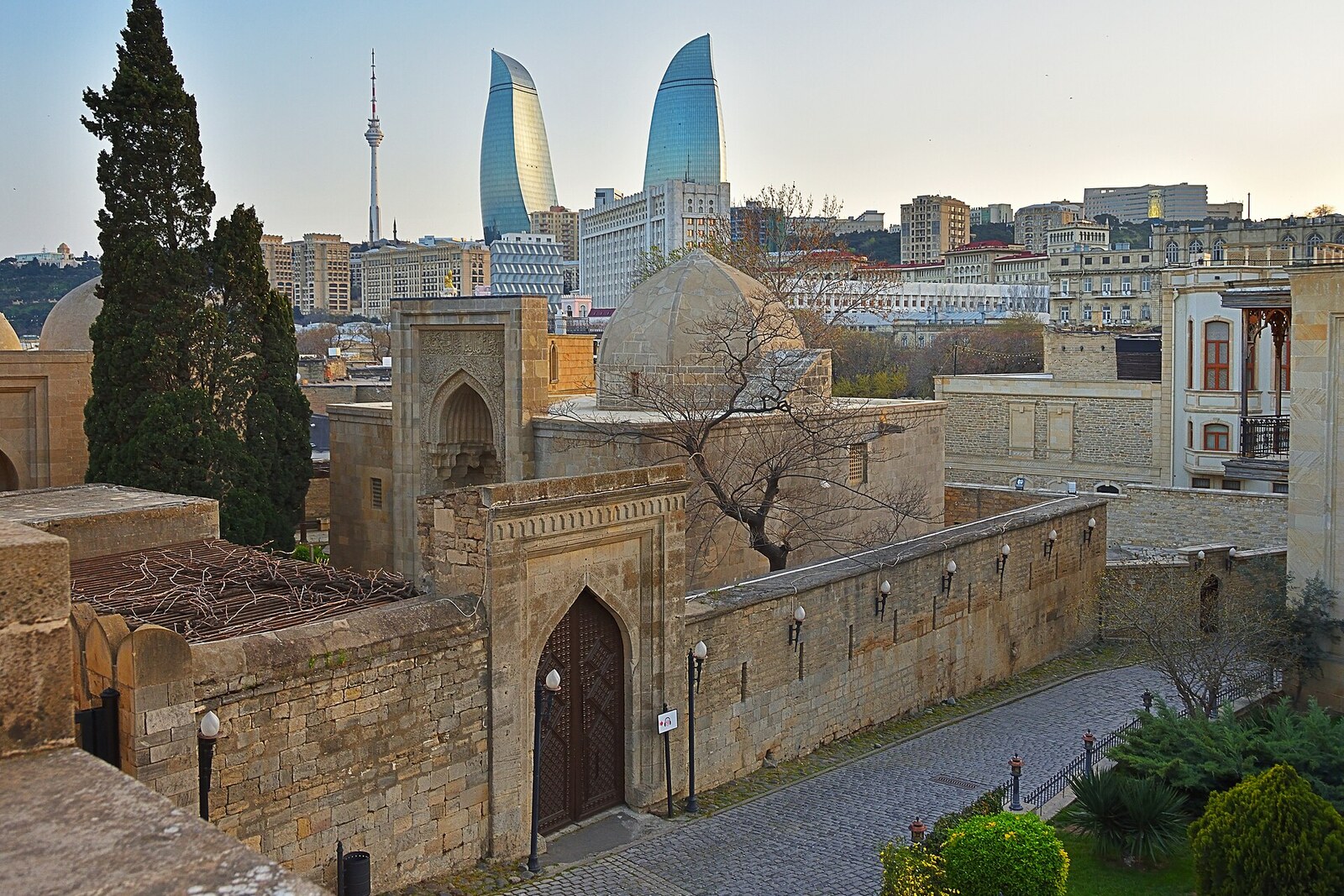
Look around first
What to notice
- Narrow windows on the lower floor
- Wide windows on the upper floor
- Stone façades of the main building
The story of the place
This stone building brought together the rulers' residence and the city administration under one roof. Behind the narrow windows of the lower floor, they kept supplies and housed servants and household services; the wider upper openings mark the quarters of the family and close associates. The treasury, administered from this house, was also kept here.
In the spring of fifteen oh one, the defense of Baku was led by a woman whose name the chroniclers did not preserve. She was the wife of Gazi Beg, the son of the Shirvanshah Farrukh Yasar. The Shirvanshahs were the rulers of Shirvan, the state to which Baku belonged. Gazi Beg was gathering the remnants of the army in mountain fortresses, so his wife took on both the defense of the city and its administration.
The main building was suited precisely to such a court. The twenty-seven rooms on the lower floor housed servants, household services, and supplies. The twenty-five upper rooms were occupied by the ruler, his family, and his close associates. The dynasty's treasury was also kept in Baku. Behind the fortress walls stood a house from which the city was governed and where there were resources to pay for its defense.
The cause of the siege had arisen under Khalilullah I, during whose reign the palace ensemble was built in the fifteenth century. In fourteen sixty, his troops killed Sheikh Junayd, the head of the Safavids' religious brotherhood, who had gathered armed followers and invaded Shirvan. Twenty-eight years later, Junayd's son, Sheikh Haydar, again led a detachment through these lands. Farrukh Yasar helped defeat him, and Haydar also died.
Haydar's son Ismail grew up among people who regarded the fallen sheikhs as their spiritual leaders. He sought a throne of his own and began his campaign by settling accounts for his father and grandfather. At the end of fifteen hundred, Ismail defeated Farrukh Yasar's army and ordered the captive Shirvanshah killed. Baku became the next target: Ismail's opponents still had a convenient port on the Caspian Sea here, as well as the palace and treasury.
Gazi Beg's wife refused to surrender the city. She ordered the execution of Ismail's envoy, who had urged her to capitulate, and then of Abd al-Fattah Beg, Baku's daruga, or city administrator, who had arrived with the same demand and threats. The resistance forced Ismail to send reinforcements and then to appear at the walls of Baku himself.
The besiegers breached the fortifications, but the residents blocked the gap with felt and held it for another three days. After a new assault, Ismail's troops entered the city. Seventy distinguished residents of Baku came out to the victor with Qurans in their hands, swords around their necks, and shrouds behind their backs—showing that they placed themselves at his judgment. Ismail spared the petitioners in exchange for a large “blood price,” stopped the massacre, and ordered the treasures of the Shirvanshahs taken away. Gold, jewels, and the treasury were carried from the palace to his camp.
The later fate of the woman who led the defense is unknown. The Shirvanshahs continued to rule as dependent sovereigns until fifteen thirty-eight, but the palace never recovered its former wealth. The arrangement of their court itself has survived in the main building: the narrow windows below belonged to rooms for supplies and service, while the wide windows above belonged to the family's quarters. In the spring of fifteen oh one, the lower floor lost its treasury, and the mistress of the upper floor vanished from the chronicles without leaving even a name.
Useful on site
Palace complex daily 10:00–19:00; a single ticket includes the complex's main sites.
Checked: date not specified. Check the official source before visiting.There are many stairs and passages between levels in the palace. Do not try to take in the complex from one point: walk around the building and compare the floors with their different room functions.