 Guide On Map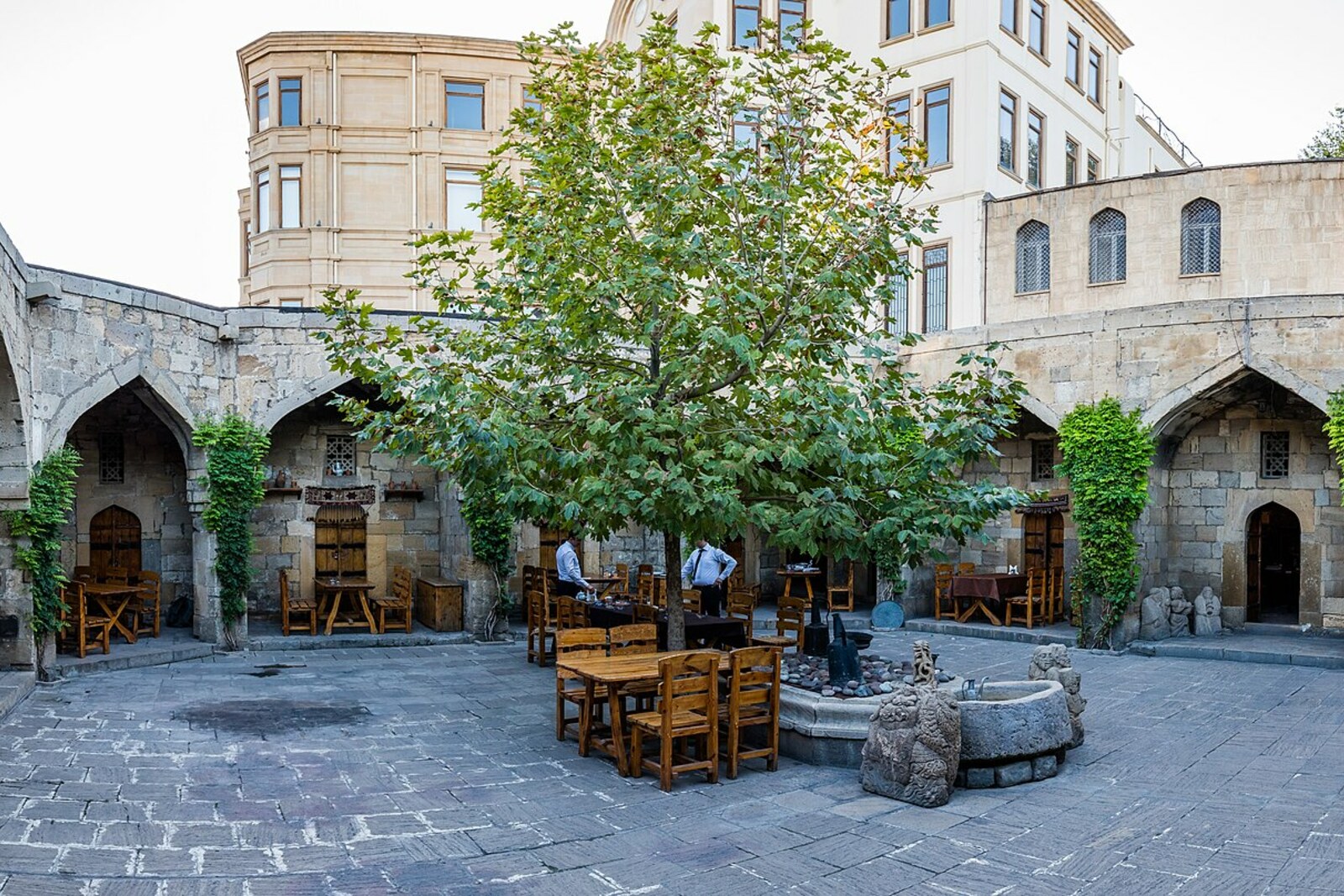
Look around first
What to notice
- Opposing entrance portals
- The square courtyard of the Multani Caravanserai
- The lower vaulted section of the Multani Caravanserai
- The octagonal courtyard of the Bukhara Caravanserai
The story of the place
In January sixteen eighty-three, the German physician Engelbert Kaempfer, traveling to Iran as secretary to the Swedish Embassy, met Indian merchants in this caravanserai. They lived here permanently and controlled substantial capital. This is how Kaempfer's travel notes first mention not an anonymous inn, but a Baku colony of Multani merchants.
Multani is the name for merchants connected through the family trading houses of Multan, a city in what is now Pakistan. Kaempfer called them a tribe, but they came from different backgrounds: among the Multani were Hindus, Muslims, Jains, and later Sikhs. Their business united them. The owners of the trading houses remained in Multan, while trusted representatives handled accounts for years, thousands of kilometers away from their families.
They brought spices, cotton and silk fabrics, and costly Kashmiri shawls to Baku. Above all, they bought raw silk from Shirvan. In the eighteenth century, white oil also appeared among the return cargoes: it was sent to India as a rare commodity long before the industrial oil boom.
A caravan route could be closed by internal strife; bandits seized cargo on the road, and at every border merchants had to pay a new duty. Lost bales meant lost capital for a family trading house. That is why both lodging and secure storage were needed here. The Multani arranged separate rooms around an enclosed courtyard and stored goods below them. The lower vaulted section is about two centuries older than the upper one and covers twice as much area. More space was set aside for goods than for their owners.
Trade gave the Indian colony the means to support compatriots living by the natural fires of Surakhani beyond the fortress. Wealthy merchants supplied them with money and food and paid for the construction of cells and a temple. Thus, income from silk, textiles, and oil provided pilgrims with a permanent sanctuary: today's Ateshgah.
Opposite stands a caravanserai named after another community of merchants from the same homeland. Bukhara is a city in what is now Uzbekistan. At the end of the fifteenth century, a courtyard for arrivals from Central Asia was laid out here, on the trade route from the Shamakhi Gates to the harbor. Eighteen rooms surrounded an octagonal courtyard with a pool. After the day's dealings, merchants returned to their own communities: the Multani to the square courtyard with its storage below, and the Bukharans across the street, to rooms around the octagon.
In March two thousand twenty-six, the Bukhara Caravanserai reopened after restoration. Its eighteen rooms were handed over to artisans who make and sell their work here. Merchants from Multan and Bukhara have long ceased to live opposite one another, but the names of their home cities still stand above the two entrances.
Useful on site
The facades are accessible at all times; no regular museum hours for the inner courtyards have been published.
Checked: date not specified. Check the official source before visiting.Do not count on being able to explore both buildings in detail from inside: their current use may limit access. The main connection between them is visible directly from the street.