 Guide On Map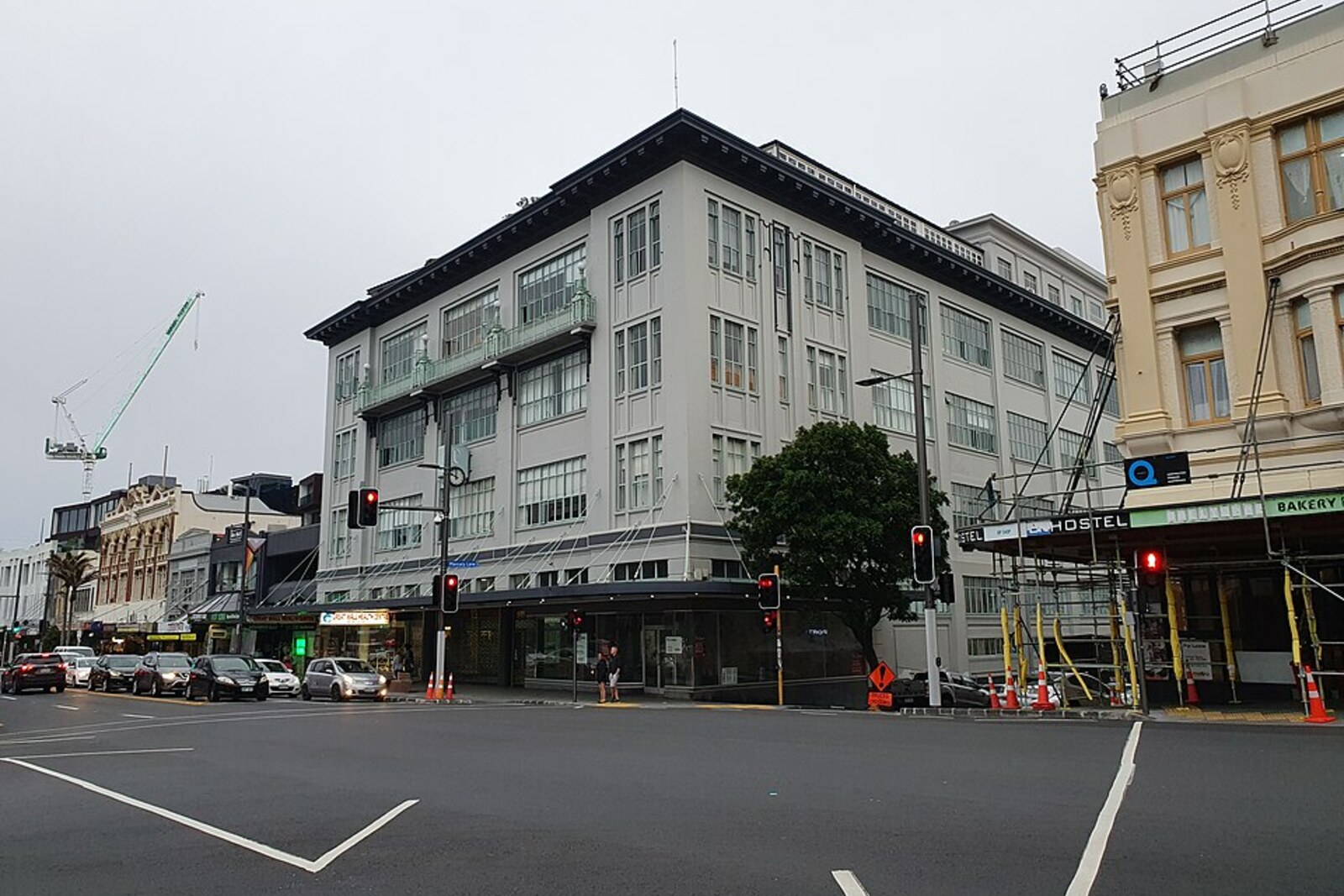
Look around first
What to notice
- Six-story facade
- Contemporary ground-floor signs
- Rows of upper-floor windows
- The name “George Courts”
The story of the place
The current signs above the ground floor belong to tenants, while the upper floors are occupied by apartments. The name of the entire building—“George Courts”—remains from the department store of George Court & Sons. Court here is the owner's surname: it has nothing to do with courts of law.
In eighteen eighty-six, the brothers George and Frederick Court opened a fabric shop in Auckland. The business began during an economic downturn; the brothers made their living by selling cloth to people who sewed clothes at home or took it to a tailor. Three years later, a third brother, John, joined them, having arrived in New Zealand with his wife and eight children. The family had to feed ever more people, and the older sons were already preparing to enter the trade.
Frederick soon withdrew from the business. In nineteen oh two, George and John amicably divided the expanded firm: John took the shops on Queen Street, while George remained on Karangahape Road and began running the business with his sons. This is where the name “George Court & Sons” came from; in conversation, it became “George Courts.”
George gradually bought up neighboring retail premises until the family firm held almost an entire street corner. In nineteen twenty, he acquired additional sites and began bringing the scattered departments together under one roof. This six-story department store opened in nineteen twenty-six. Five electric elevators were large enough for strollers; an attendant stood in each one, calling out the floors and departments. A separate room was provided for women shoppers to rest with their children, while the roof had a tea room and a playground. In the basement, employees assembled parcels every year for eighteen thousand customers living far from Auckland. The store sold them clothing, furniture, and household goods on credit through one combined account.
The family name disappeared after other retailers decided to enter the Auckland market. In nineteen eighty-four, the DIC department-store chain bought George Court's firm and occupied its main building. For several more years, the old store traded under its new owner's sign, then closed in nineteen eighty-eight. DIC did not remain here for long.
In nineteen ninety-three, the retail floors were divided into apartments. Of the department store's interior, the staircase and its associated oak paneling are specially protected. Store names change on the facade, while above them remains the residential building “George Courts”—the surname of the man whose goods are no longer sold here.
Useful on site
Private building; the facade is visible from the street, while access inside depends on residents and tenants.
Checked: June 28, 2026. Check the official source before visiting.The former retail floors have been converted into housing, so view the building from outside and do not seek access to the roof or private rooms. The main traces of the department store can be read directly on the facade.