 Guide On Map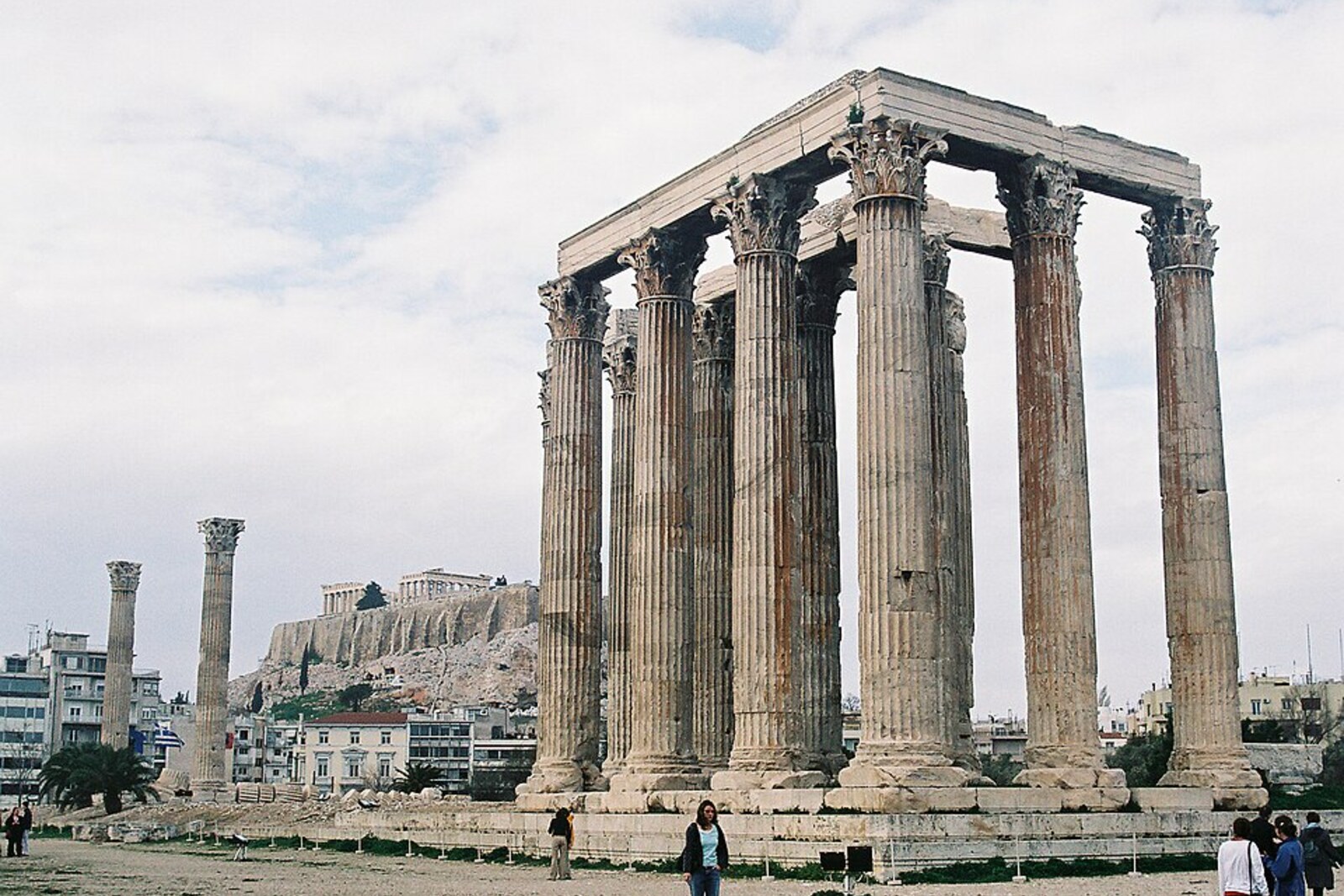
Look around first
What to notice
- Fifteen standing columns
- The fallen column
- The stepped foundation
The story of the place
Beneath the present marble columns lies a design that the Athenians refused to bring to completion for more than six centuries.
Around five hundred fifteen BCE, Peisistratus the Younger, grandson of the founder of the ruling family, ordered the small temple of Zeus that stood here to be replaced with a huge sanctuary modeled on the temples of Asia Minor. Olympian Zeus was the supreme god, the head of the gods of Olympus; the temple dedicated to him was meant to surpass Athens's other sanctuaries in size. The ruling family were called tyrants: in that era, the word meant sole rulers who held the city outside the former legal order.
Researchers believe that the Peisistratids themselves covered a substantial part of the cost. But behind the stone stood the labor of Athenians as well. Roughly a century and a half later, Aristotle cited this very construction project as one of the methods of tyranny: to occupy subjects with grand work and keep them poor, so that they would have no leisure for conspiracy. This is the philosopher's later explanation, not a surviving order from Peisistratus. It is all the more important that, after the fall of the family, the Athenians treated the temple almost exactly as Aristotle described.
By five hundred ten BCE, the builders had managed to lay out the stepped foundation and set up the first drums of the outer columns. Then the opponents of Hippias, head of the ruling family, expelled him from Athens with the support of the Spartan army. Hippias lost the city and died in exile, while the temple begun by his family lost its patrons.
A few years later, the Athenians established a new order with an assembly of citizens and decided not to continue the work. It was not because of a lack of money, nor because they had rejected Zeus: other public buildings were being erected in Athens, and sacrifices could be made here at an altar without a finished temple. The Athenians did not want the democracy they had created to complete a monument to hated family rule. Some of the prepared stone was later taken for the city's fortifications; the enormous foundation was left in place.
Peisistratus's columns never rose. The fifteen columns standing here now, and a sixteenth lying fallen after a storm, belong to the marble temple built much later under Hadrian. The emperor's builders preserved the gigantic plan of the ancient project, but all that remained beneath it from the first construction were the foundation and stones incorporated into the later masonry.
Useful on site
Seasonal ODAP/hhticket hours; in winter usually 08:00-15:00, longer in summer, with last entry before closing.
Checked: June 28, 2026. Check the official source before visiting.A separate entrance is needed to enter among the ruins; if the area is inaccessible, the columns remain visible through the fence, though the view will be limited.