 Guide On Map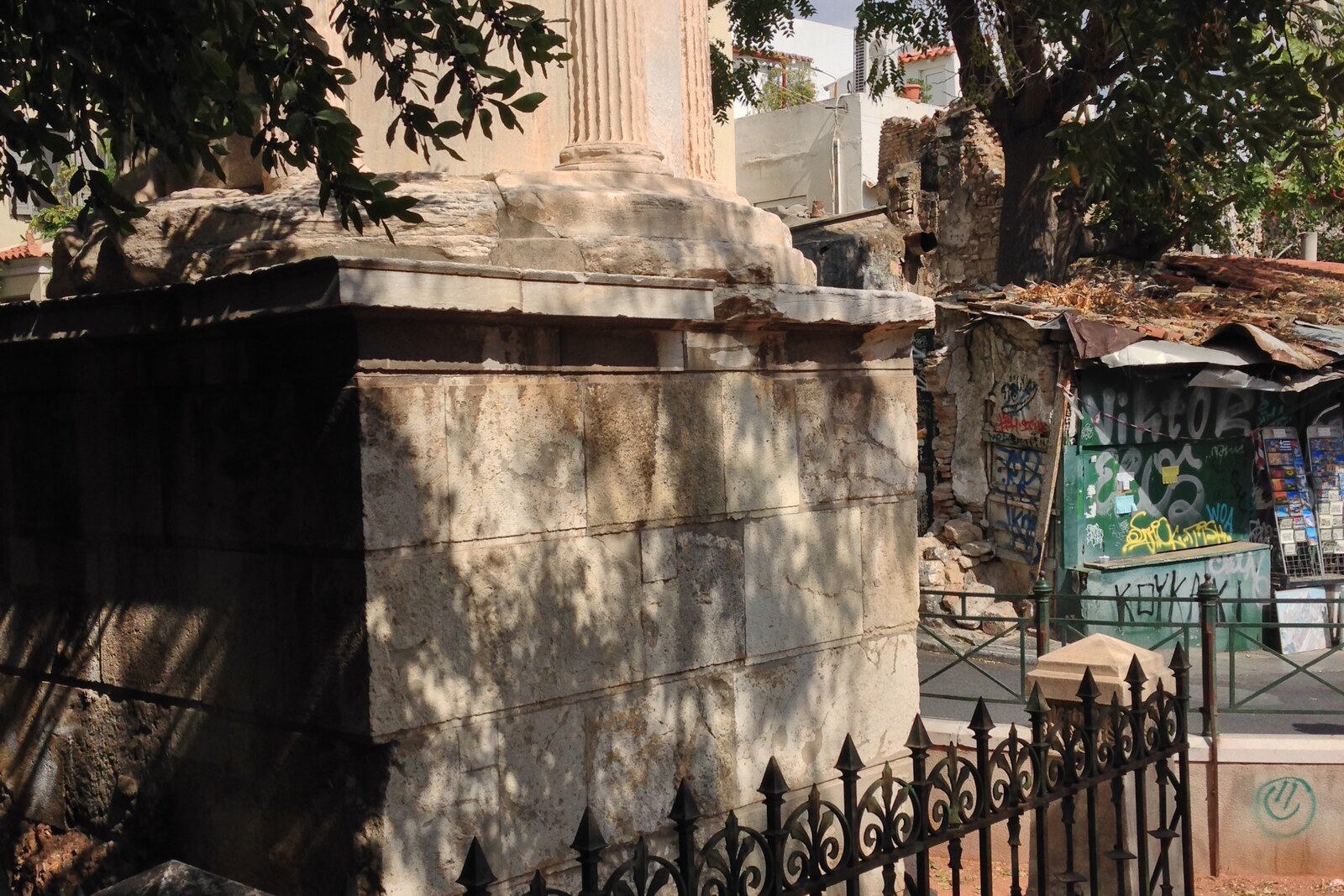
Look around first
What to notice
- Round marble monument
- Corinthian columns
- Frieze with Dionysus and the pirates
- Stone flower on the roof
The story of the place
Slender Corinthian columns surround the round marble body, and a carved stone flower survives on the roof above them. It once held a bronze tripod; many such awards stood along this road, which is why it was called the Street of the Tripods. The other tripods disappeared, and most of the stone bases were dismantled. This cylinder also survived because the Capuchins built it into their monastery, making a door, a reading room, and a library inside.
In three hundred thirty-five to three hundred thirty-four BCE, the Athenians entrusted the wealthy citizen Lysicrates with preparing a chorus of boys from the phyle of Acamantis—one of the groups into which the citizens of Athens were divided—for the City Dionysia. Lysicrates became the choregos. This was the name for the person who paid for the chorus's upkeep during rehearsals, costumes, a musician, and training. The city chose choregoi from among the wealthy: it is known that Lysicrates owned land in the mining district of Lavrion.
The boys performed a dithyramb—a choral song in honor of Dionysus, combined with music and movement. They were trained by the poet Lysiades, while Theon played the flute. Choruses from different phylai competed with one another; the expenses remained the choregos's responsibility regardless of the result, while victory brought him public recognition.
Lysicrates's chorus won. The choregos received no cash prize: the award was a large bronze tripod. To display it, Lysicrates also paid for this marble monument. That is its purpose and the source of its name. Before us is a pedestal for a theatrical trophy, and the inscription beneath the roof announces the result of the contest: Acamantis won among the boys, Lysicrates was choregos, Lysiades trained the chorus, and Theon played the flute.
On the frieze, Dionysus punishes sea pirates who tried to abduct him: his companions drive them into the sea, while the pirates themselves turn into dolphins. The victorious dithyramb was probably connected with this myth. Neither its text nor its music has survived, and the inscription does not give the boys' names. Stone immortalized the adults whose money, verses, and music made the performance possible.
Lysicrates chose a place for the trophy beside the Theatre of Dionysus, on the road where victors set up their tripods. The Street of the Tripods took its name from them. Many such monuments stood here; the bronze awards disappeared, and most of the stone bases were dismantled.
A new purpose helped the Monument of Lysicrates survive. In sixteen sixty-nine, Capuchin monks bought it and incorporated it into the walls of their monastery. They moved one marble wall section, made a door, and turned the cramped circular space into a reading room and library. The alteration damaged the ancient structure, but the monks used it and maintained it. When the monastery was destroyed during the Greek War of Independence, its buildings disappeared, but the marble cylinder remained. It was later cleared and restored.
A carved stone flower still stands on the roof, where it served as a support for the award. The bronze tripod itself is no longer there. What remain are the names of Lysicrates, the instructor, and the musician—and a line about the victory of boys whom the inscription never named.
Useful on site
The monument stands in an open square and is accessible around the clock; viewing is from outside only.
Checked: June 28, 2026. Check the official source before visiting.The frieze is high up and badly worn: first walk around the monument and examine the silhouettes from different sides.