 Guide On Map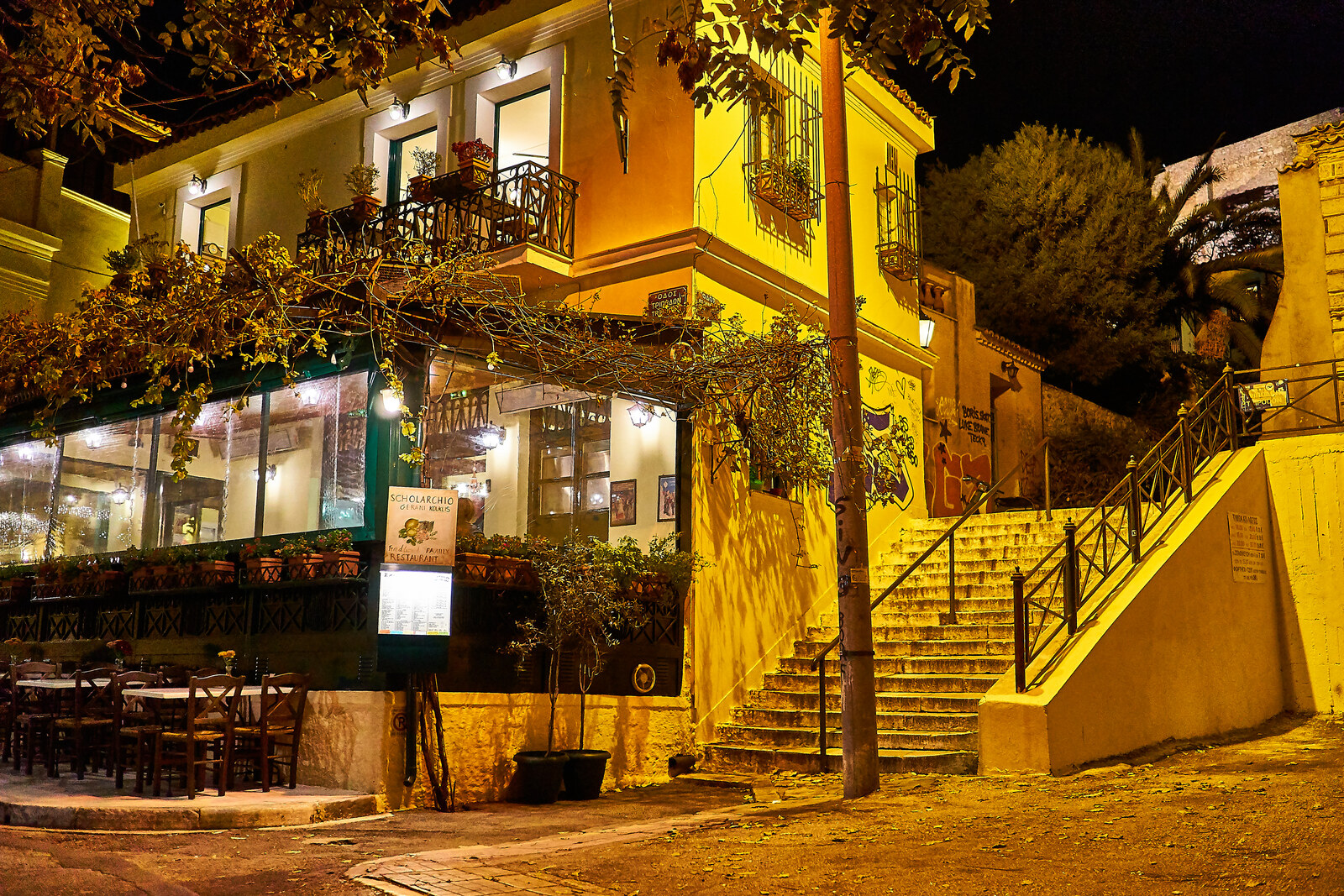
Look around first
What to notice
- Street-name sign
- Narrow paved roadway
- Turn toward Thespidos Street
- Monument of Lysicrates in the street’s perspective
The story of the place
A tripod was a large bronze cauldron on three legs. In classical Athens, the winner of a choral contest received such a prize, and Street of the Tripods became the place where winners displayed their awards.
First, the city appointed a choregus—a wealthy citizen who had to assemble and support a chorus, pay for the instructor, musician, costumes, and rehearsals. This appointment could not be declined simply by saying that it was too expensive. The choregus could name another Athenian whom he considered wealthier. That person either took the expenses upon himself or proposed exchanging all their property: if the first man was truly poorer, such a deal should benefit him. So a dispute over who would pay for the festival could end with the loss of one’s own estate in exchange for someone else’s.
The appointed choregoi competed with one another. Each spent money, but only one received the bronze tripod—the one whose chorus won. The prize was dedicated to Dionysus, so it was not taken home. The winner commissioned a stone base, placed the tripod on top, and carved his name. Lysicrates, whose monument survives at the beginning of the street, was one such man; the others did the same dozens of times.
The road from the sanctuary and the Theatre of Dionysus to the city center was chosen for the monuments. After the contests, the public passed the names of those who had paid for the winning choruses. The losing choregoi were left with their bills, while the winner turned the expense of one festival into a permanent inscription on a city street. By the fourth century BCE, monuments stood especially densely here, on the eastern slope of the Acropolis of Athens. The street took its name from the bronze tripods.
Almost the entire row has disappeared. One of the bases survives beneath a modern house at the corner of Street of the Tripods and Thespidos Street: about four and a half meters of ancient masonry are now in the basement. Above ground, there is neither a bronze cauldron nor its owner’s name; above remains an address—Street of the Tripods.
Useful on site
This is a residential street with no restrictions; passage is open around the clock.
Checked: June 28, 2026. Check the official source before visiting.What matters here is not a single object but the scale of the passage: imagine a row of bases without blocking traffic on the narrow stretch.