 Guide On Map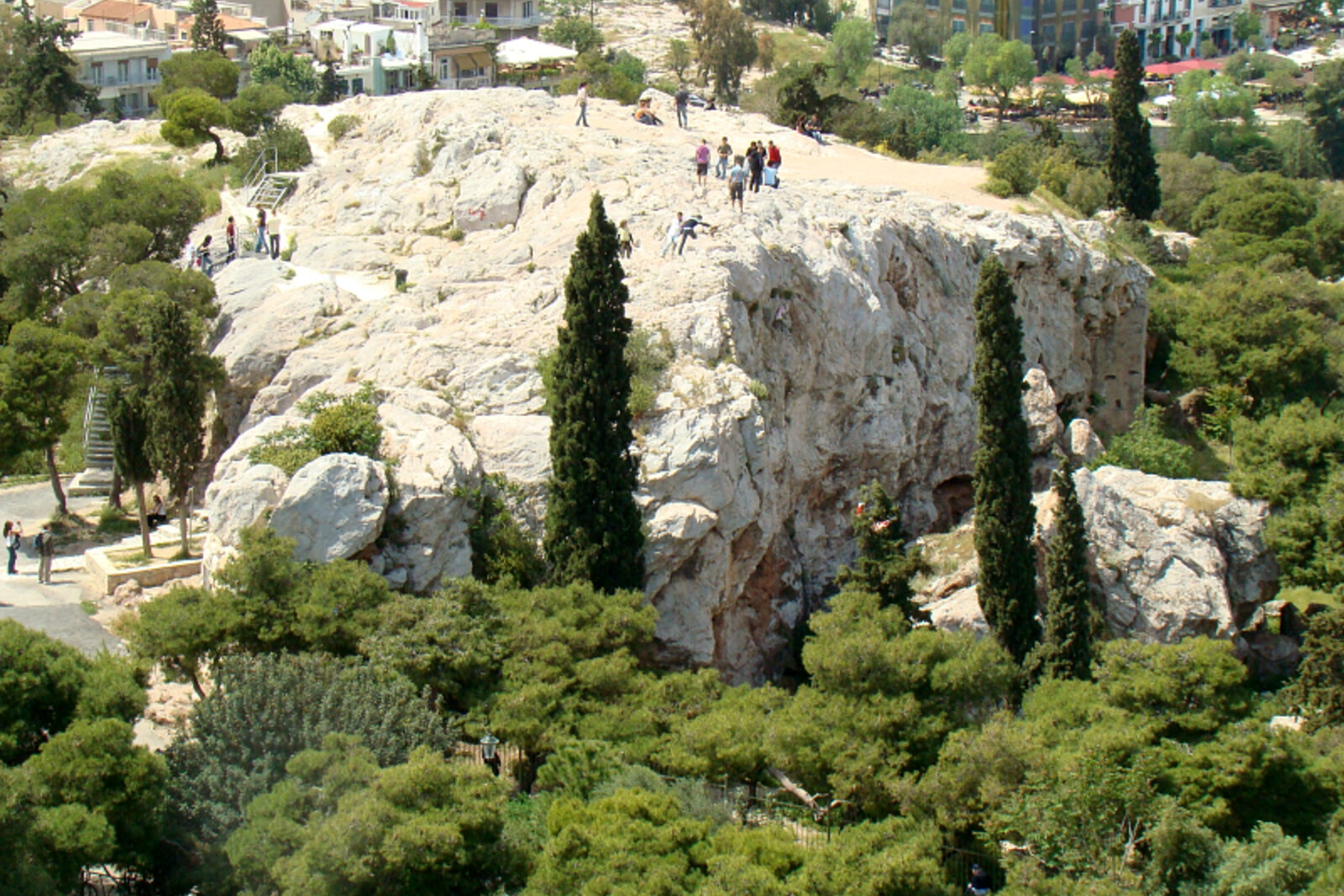
Look around first
What to notice
- Rocky platform
- Stone staircase
- Cubic stone block
The story of the place
The name of this rock comes from the defendant. “Areopagus” means “rock of Ares” in Greek. According to Athenian tradition, Halirrhothius, the son of Poseidon, attacked Alcippe, the daughter of Ares, here; ancient retellings disagree on whether he managed to commit rape. Ares killed the attacker, and Poseidon demanded a trial for his son. The Olympian gods tried Ares on this rock and acquitted him. This is a myth about the name, not a record of the first trial.
Athenians explained why a killing was examined precisely here through the fate of Orestes. His father, King Agamemnon, was killed after returning from the Trojan War by his wife Clytemnestra and her accomplice Aegisthus. Orestes wanted to avenge his father. At Apollo's command, he killed them both, but along with his father's killer, he struck down his own mother.
After that, the Erinyes began to pursue Orestes—ancient goddesses who punished the shedding of a relative's blood. To them, Apollo's command changed nothing: a son had killed his mother and had to die. Orestes fled Argos and reached Athens because he wanted to receive Athena's judgment and return to his father's house.
In Aeschylus's tragedy Eumenides, Athena convenes on the rock of Ares a court of Athenian citizens. Orestes does not deny the killing. The Erinyes act as prosecutors, Apollo defends him and acknowledges that he himself ordered the revenge. Athena casts her vote for Orestes and announces in advance that an equal number of votes will mean acquittal. After the count, the votes are evenly divided. Orestes is granted freedom, returns to Argos, and promises the Athenians an alliance.
The Erinyes lose the case and threaten to destroy Athenian land. Athena then offers them honor, sacrifices, and a sanctuary beneath this rock. They accept the offer. In the finale, they are already called the Eumenides—the Kindly Ones—and are solemnly led to an underground dwelling.
Aeschylus staged this story in the fifth century BCE. Orestes and his trial belong to myth, but the court on the Areopagus did exist. Its lifelong members were former archons—people who had previously held Athens's highest annual offices. Here they heard cases of intentional murder. Sessions were held outdoors: Athenians considered murder a source of ritual pollution and did not want the defendant, the slain person's relative, and the judges to be under one roof. After the first speech, the defendant could still choose exile; if he remained to await the verdict, he risked his life.
Pausanias saw two unworked stones here, where the accuser and the defendant stood. The surviving cubic block at the top is considered either one of these standing places or an altar of Athena, but archaeologists have no definite answer. A cave associated with the cult of the Eumenides has, however, been found at the northern foot. In the tragedy, the judges remain on the rock, while after Orestes's acquittal the goddesses of blood vengeance are led beneath it.
Useful on site
An open rock outside the ticket line; visit in daylight and avoid climbing after rain.
Checked: June 28, 2026. Check the official source before visiting.The stone is very slippery; climb only as far as you feel sure-footed.