 Guide On Map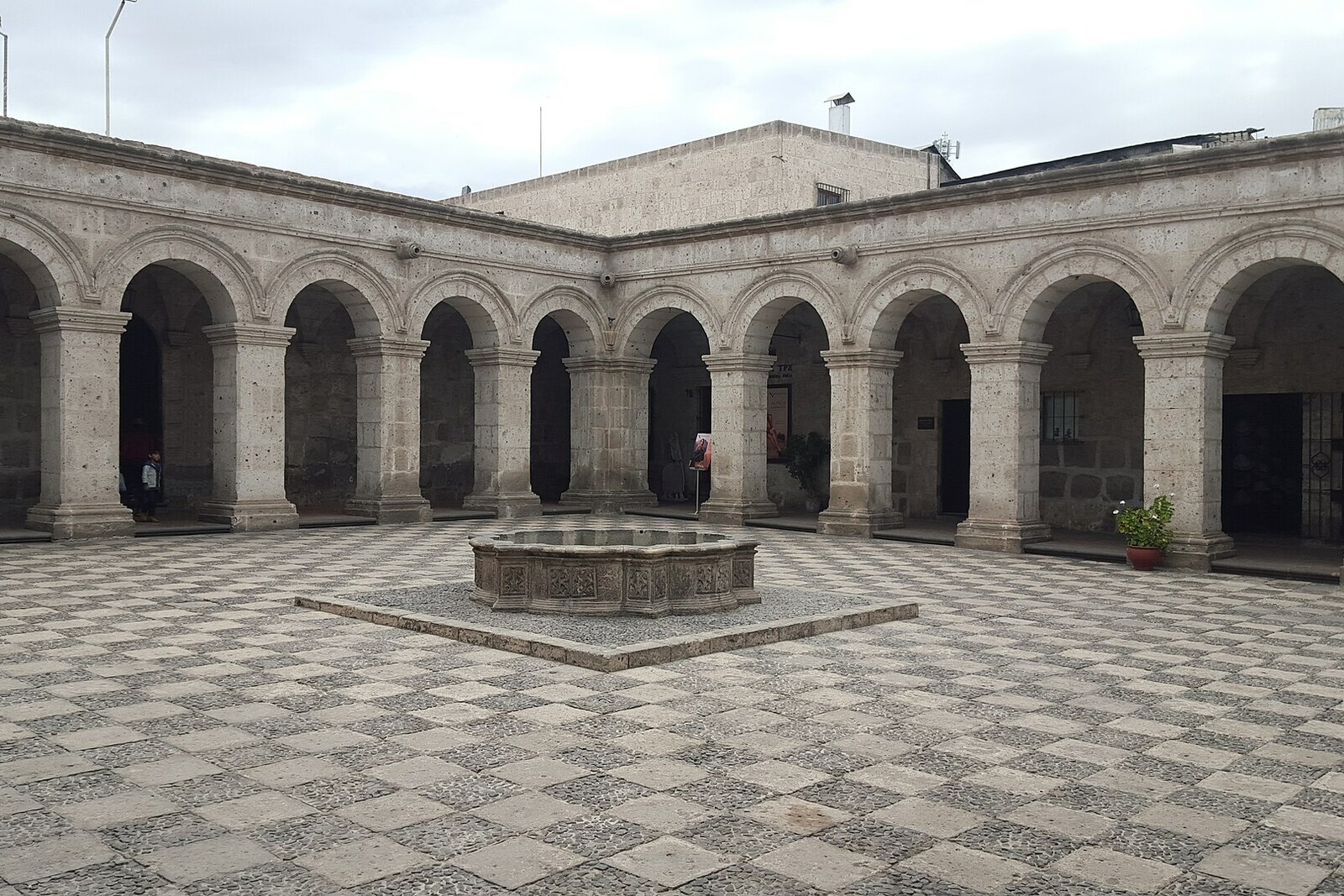
Look around first
What to notice
- Carved arcades
- Inner courtyards
- Commercial doors
- Premises of the former college
The story of the place
At the main courtyard, carved stone passageways stand beside traces of a long and rather rough remodeling. After the college closed, the premises were given to an orphanage for abandoned children; then the complex was divided into eight properties. The new owners dismantled three sides of the main gallery and erected two-story offices in the middle of the courtyard. Later, the properties were assembled again, the complex was restored, and the individual premises were sold off once more; rooms of the former college have survived behind the modern doors.
Shops, cafés, and restaurants now operate behind the carved arcades. Cloisters are covered galleries around inner courtyards. The historic name belongs to the Jesuits: their Catholic order is officially called the Society of Jesus. Its Colegio de Santiago and juniorate stood here—a house where young members of the order were trained.
It all began with the will of Diego Hernández Hidalgo. This wealthy Arequipa encomendero received income from urban property and from an encomienda—the granted right to collect tribute from the assigned Indigenous population. He wanted to bring the Jesuits to Arequipa and be remembered as the founder of their college. To that end, Hernández Hidalgo gave the order eleven thousand five hundred eighty pesos and eleven commercial premises. The conditions were personal: he was to be buried in the future church, and the day of James the Apostle was to be observed annually. In Spanish, James is Santiago; that is why the college received that very name.
On July twenty-sixth, fifteen seventy-eight, Hernández Hidalgo signed the will and died the next day. The document set a deadline: if the Jesuits did not open a house in time, the property would go to other charitable institutions. José de Acosta, head of the Jesuits in Peru, who was seeking the establishment of a college in Arequipa, sent two fellow Jesuits here. On August sixteenth, they accepted the bequeathed properties and bought a plot for the church.
The Jesuits hurried and began settling in before obtaining all the permits. Francisco de Toledo, viceroy of Peru, who demanded the closure of the unauthorized house, ordered the entrance sealed and the property seized. The deceased donor's capital was placed under attachment, and the promised college lasted only a few weeks.
Pedro Mejía, the order's attorney, filed a complaint with the Royal Audiencia of Lima and demanded recognition of the Jesuits' rights to the bequeathed property. The dispute reached the Spanish king. In February fifteen eighty-two, Philip II authorized the founding of a college and church in Arequipa, and the new viceroy Martín Enríquez ordered the seized property returned. Hernández Hidalgo's money and commercial premises did eventually go to Colegio de Santiago.
The very first buildings no longer survive: an earthquake in that same year, fifteen eighty-two, destroyed them. The present arcades and courtyards were built by the Jesuits much later—work continued from the end of the seventeenth century until seventeen thirty-eight.
After the college closed, an orphanage for abandoned children was housed here. In nineteen twenty-one, the orphanage moved to a new building, and the cloisters were divided into eight lots and sold. The owners demolished three sides of the main arcade and erected two-story offices in the middle of the courtyard. In nineteen seventy-one, the Central Mortgage Bank assembled the lots, restored the complex, and again sold off the individual premises. That is why rooms of the former college lie behind the present commercial doors, while above the courtyards remains the name of the order for which Diego Hernández Hidalgo gave away his fortune.
Useful on site
Usually accessible during daytime hours through commercial premises; the complex has no single official schedule.
Checked: date not specified. Check the official source before visiting.Stay in the open passageways: parts of the historic complex may have different owners and different access. Do not mistake the present use of the premises for the college's original layout.