 Guide On Map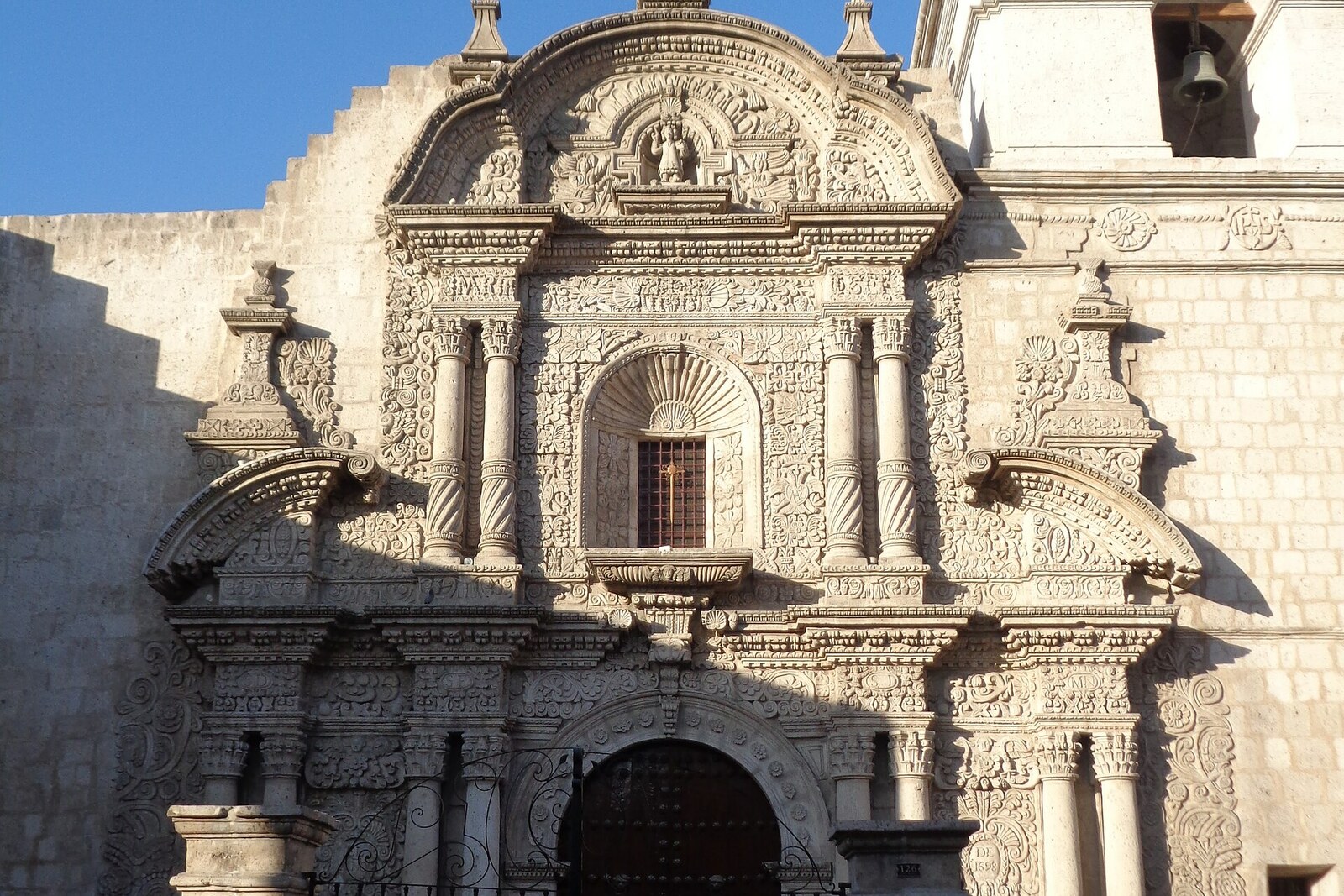
Look around first
What to notice
- Stone portal
- Main nave
- Main altar
- Neighboring building of the former college
The story of the place
The stone portal leads into the church where the Jesuits maintained Colegio de Santiago: the community lived here, the school operated here, and journeys to missions in Condesuyos were prepared here. Its support came from income from vineyards, sales of wine and grain, rent, and debts owed by the province’s residents. Enslaved men, women, and children labored on the community’s land in the valleys of Vítor and Siguas. The college’s books and papers were later dispersed among different collections, and the Jesuits once again came to serve in the church.
On September seventeenth, seventeen sixty-seven, at four o’clock in the morning, José Manrique y Guzmán approached the church. He was the corregidor, the crown-appointed governor and judge of Arequipa. With him were a clerk and two militia detachments. Manrique had assembled the men during the night without revealing their assignment: all the Jesuits of the province had to be detained simultaneously, so they would not have time to warn one another.
Next to the church stood Colegio de Santiago. It was a school and a base from which priests set out for the hard-to-reach region of Condesuyos. Their community was based here as well. “Society of Jesus” is the official name of the Jesuit order: the first companions of Ignatius of Loyola chose the name of Jesus for it. The church is therefore named for the people who built it, served here, and taught at the neighboring college.
Manrique found almost the entire community at the college; three were absent. He read the royal decree to those assembled, confined them here under house arrest, and ordered the others to be found. After that, the officials began inventorying the church, library, archive, urban real estate, and rural estates.
Colegio de Santiago was supported by vineyards, trade in wine and grain, rental payments, and debts paid to it by the province’s residents. In the valleys of Vítor and Siguas, enslaved men, women, and children labored on Jesuit-owned land; when the property was confiscated, they too were entered in the inventories. The morning order deprived members of the order of both their home and the resources that supported the school, missions, and church.
Spain’s King Charles III ordered the Jesuits expelled from all his possessions. His advisers linked the order to recent unrest and proposed treating the offense of an individual member as the guilt of the entire organization. No local accusation was brought against the priests of Arequipa. They were held in custody, then sent to Lima and, from there, together with other Peruvian Jesuits, beyond Spanish possessions. Most of the exiles ended up in the Papal States. Six years later, the pope suppressed the order itself.
After the confiscation, Colegio de Santiago closed, and its library and archive were dispersed among other collections. The Jesuits did not return to Arequipa until the end of the nineteenth century, when they once again took charge of this church. A community of the Society of Jesus now serves here again—the very order Manrique came to arrest before dawn.
Useful on site
The state tourist registry lists 09:00–19:00 for the church and 09:00–13:00 and 15:00–18:00 for the chapel; services and parish decisions may change access.
Checked: date not specified. Check the official source before visiting.Start with the exterior carvings: they do not depend on access to the church. Inside, speak quietly, and view the paintings and altar only where passage is open.