 Guide On Map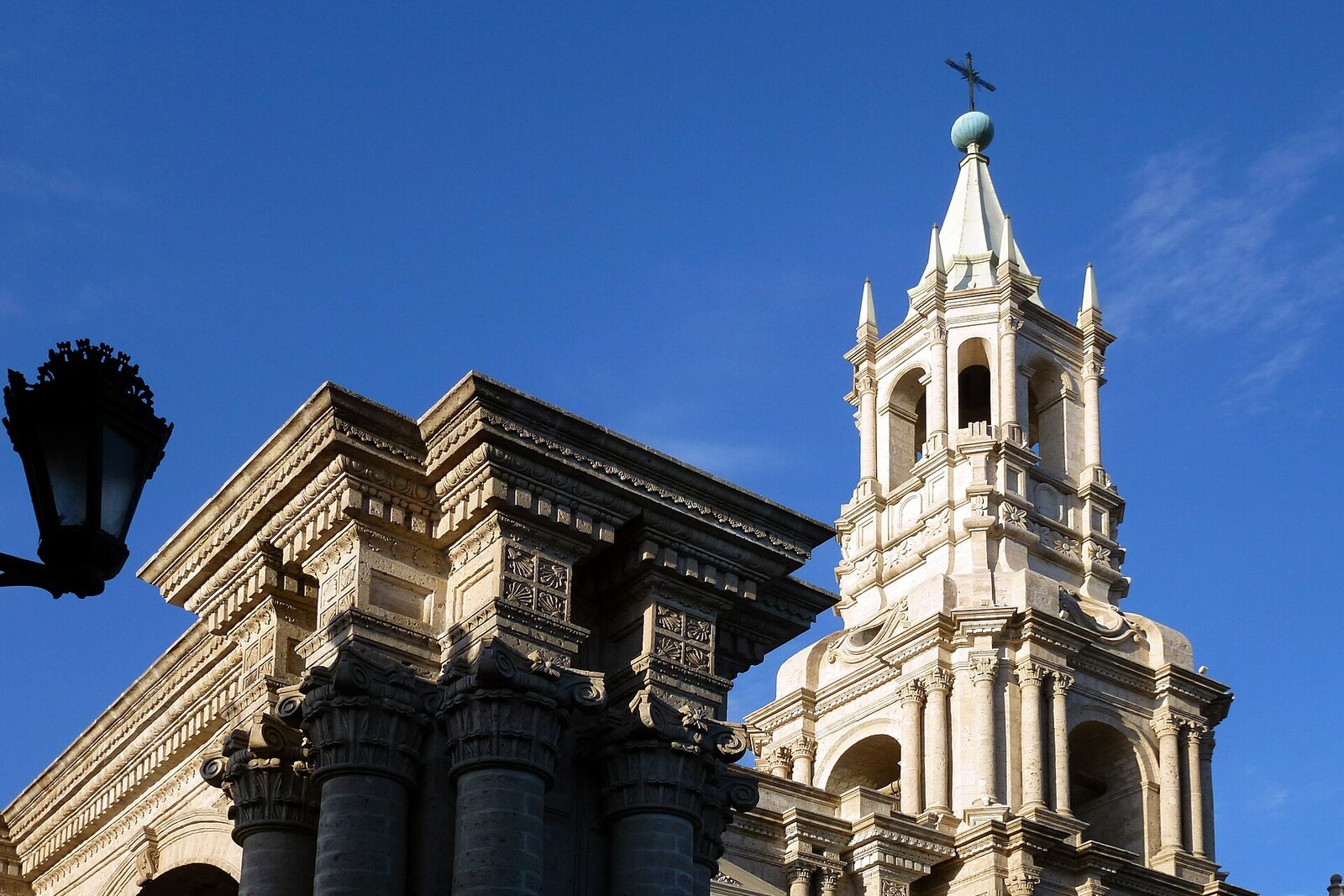
Look around first
What to notice
- Arch of the main entrance
- Lucas Poblete's signature
- High altar
- Surviving rooms of the old cathedral
The story of the place
The cathedral's long structure occupies the northern edge of the square. It was extended when the builders incorporated the site of the neighboring Church of San Juan, which had been destroyed by an earthquake. To the side, walls built as early as the seventeenth century have survived, and the name of the local master Lucas Poblete is carved on the arch above the doors. Inside stands a marble-and-bronze altar, later paid for by the bishop's relatives.
This church is called a cathedral because it contains the cathedra of the Archbishop of Arequipa. He presides over the archdiocese's main services here; during a special Mass, he consecrates oils that are then distributed to the parishes. The cathedral is dedicated to the Assumption of the Blessed Virgin Mary: the Spaniards founded Arequipa on August fifteenth, the day of this feast, and at the same time marked the site for the main church with a cross.
On December first, eighteen forty-four, the cathedral's large bell sounded the alarm. The high altar caught fire. The flames spread to the curtains and wooden retablos—carved altar structures. Residents rushed to the square. Men and women carried water in jugs and barrels, then directed water from a nearby irrigation canal into the naves. The fire was stopped, but fourteen retablos, the choir, two organs, portraits of bishops, and a collection of relics had already burned inside. The sources have preserved no reliable explanation of what caused the altar to catch fire.
Two weeks later, Bishop José Sebastián de Goyeneche ordered the clearing of the rubble to begin. He needed to restore the diocese's main church as quickly as possible. Goyeneche could pay himself: he came from Arequipa's wealthiest family, whose fortune had grown through trade and landownership. The bishop allocated twenty thousand pesos for the first work and continued to cover expenses from his personal funds. His brother Juan Mariano, a merchant and landowner, took charge of the construction and, according to a local newspaper, almost stopped attending to his own affairs.
The bishop offered to pay for the entire new building himself. The government refused, citing national patronage—the young republic's claim to take part in the administration of church affairs. Officials created a construction committee and provided money for the altars, but the Goyeneche brothers still took on the main share of the expenses.
They hoped to preserve the surviving stone structure. In September eighteen forty-six, part of the old building and two columns collapsed. After that, they had to dismantle almost everything except the side walls and the section already built. The technical work was entrusted to Lucas Poblete, a master from Arequipa. He lengthened the church by taking over the site of the neighboring Church of San Juan, which had been destroyed by an earlier earthquake. This is how the cathedral stretched along the entire northern side of the square.
In May eighteen forty-eight, Poblete closed the new vaults. The finishing work continued for many more years. Goyeneche ordered liturgical furnishings from Europe to replace those that had been lost; his relatives later paid for the marble-and-bronze high altar. In eighteen fifty-nine, the bishop left to head the Archdiocese of Lima, and the interior work in Arequipa was completed two years after his departure.
Lucas Poblete's signature remains on the arch of the main entrance. Behind it stands the altar paid for by the Goyeneche family, and in the side rooms remain parts of the seventeenth-century cathedral that the fire and the subsequent dismantling did not destroy.
Useful on site
Museum: Monday–Saturday 10:00–16:15; closed Sunday. Access to the church depends on services.
Checked: date not specified. Check the official source before visiting.The main story can be read from the square. The interior and museum are visited separately; during a service, do not walk around the church or disturb the parishioners.