 Guide On Map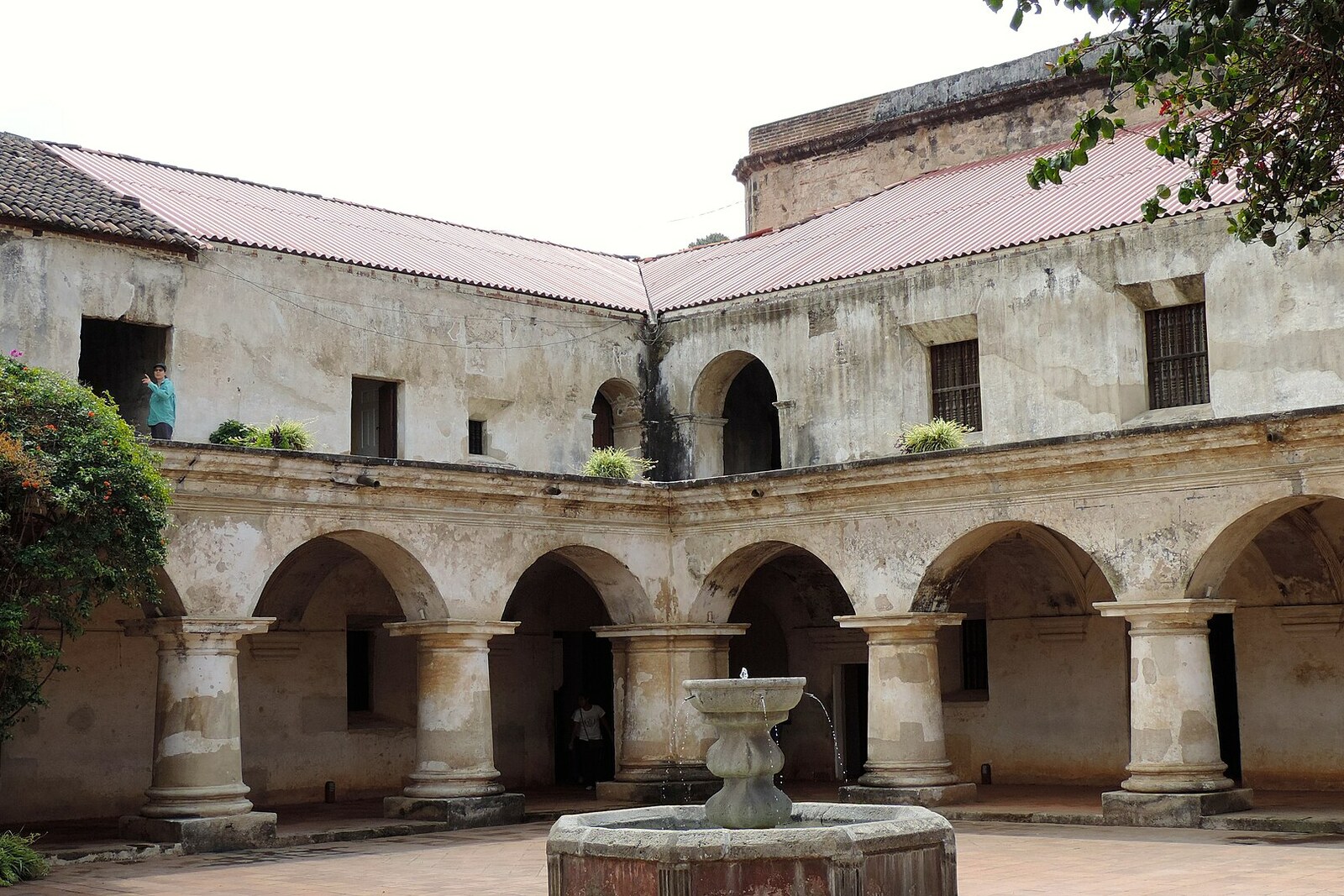
Look around first
What to notice
- Gallery arches
- Round courtyard
- Rooms around the perimeter
- Water channels
The story of the place
Capuchinas is the Spanish name for Capuchin nuns. Officially, their house was called the Convent of Our Lady of the Pillar of Zaragoza, but the townspeople remembered it for the women who lived here. The Capuchin nuns observed a strict branch of the Rule of Saint Clare: women were admitted here without a dowry, and the community depended on donations. In seventeen thirty-six, the nuns entered the new convent, built for a life of poverty, seclusion, fasting, and shared prayer.
On July twenty-ninth, seventeen seventy-three, most of the sisters were downstairs, near the convent infirmary. Four nuns remained in the sleeping quarters on the upper floor. When the gallery arches and the walls of the dormitory building began to fall, they climbed out onto the roof. It was no longer possible to go down by the stairs.
This is known from a letter sent by the abbess after the earthquake to the Capuchin nuns in Oaxaca. The sisters below shouted to the four women to jump toward the infirmary and held out poles they could slide down. But from above, they could see the walls disappearing, and there was almost nothing to brace themselves against. Mother María Ventura was the first to dare it. She climbed down from the edge, and the other three followed. None of them was hurt.
The nuns survived, but they could no longer return to their former life here. An inspection found the church cracked and partly destroyed, while the inner buildings had collapsed. Archbishop Pedro Cortés y Larraz placed the sisters in temporary thatched structures near the abandoned city. Later, the Capuchin nuns moved to the new capital, leaving behind the dormitories, refectory, and infirmary.
The round building in the courtyard is now called the Tower of Solitude, and sometimes the novices’ quarters. Its original purpose remained disputed for a long time. Researchers of the water system proposed another answer: this was the convent infirmary. Separate rooms stood around the courtyard, and a system of channels supplied the toilets, baths, and showers with cold and heated water.
The abbess’s letter helped test this version against the building itself. From the roof of the dormitory building to the round courtyard was about one and a half meters; in the other possible courtyards, they would have had to fall from twice the height. The letter preserved María Ventura’s name, and the round courtyard preserved the distance she was the first to dare.
Useful on site
Official tourist monument hours — daily 09:00–17:00; closed 1 January, 1 November, 24, 25, and 31 December.
Checked: date not specified. Check the official source before visiting.An interior visit is important for understanding the complex; check access in advance, and watch your step on the stone passageways.