 Guide On Map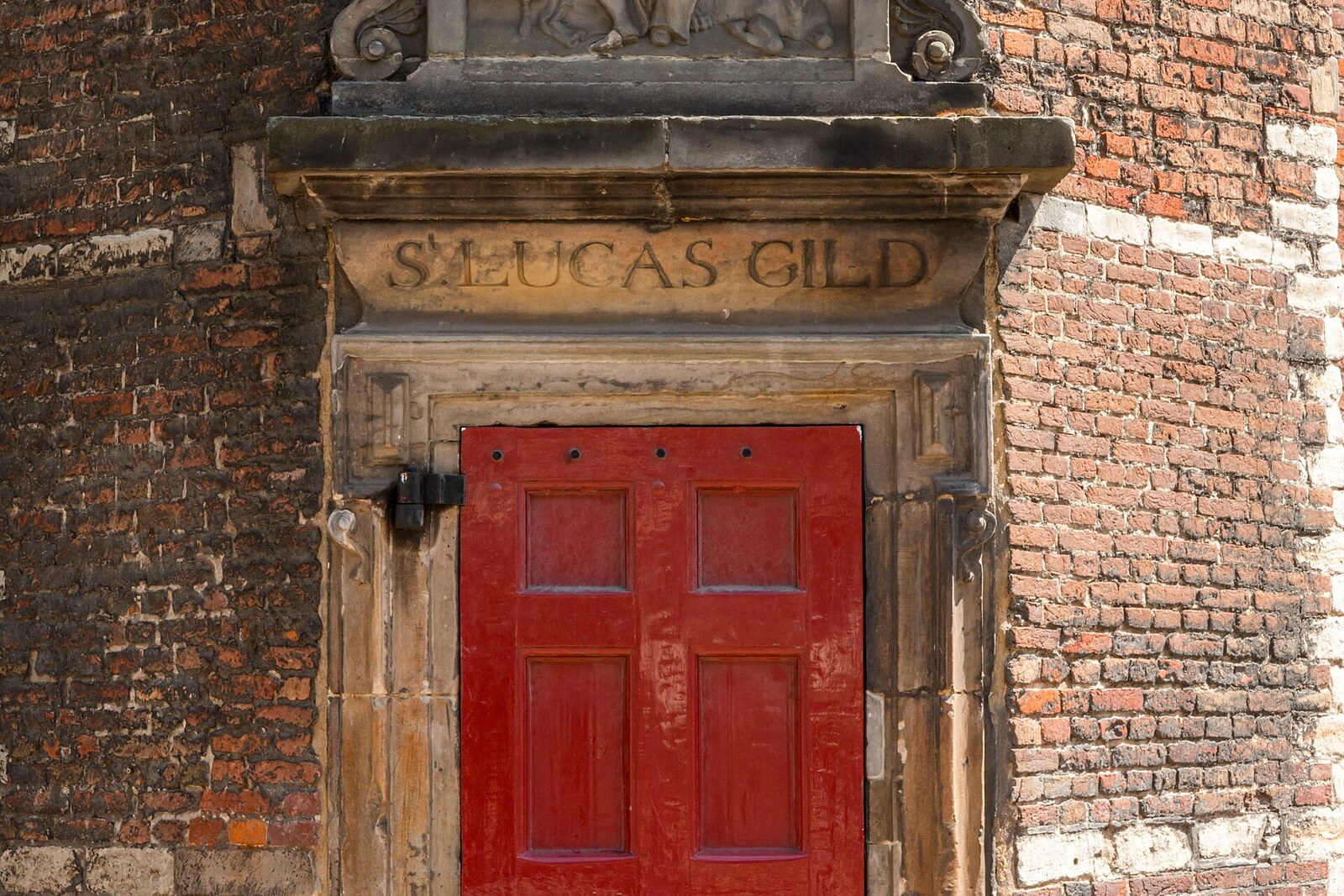
Look around first
What to notice
- Diagonal passages of the former gate
- The towers of De Waag (Saint Anthony's Gate)
- Separate entrances with guild emblems
- The inscription “Anatomical Theatre”
The story of the place
In the lower rooms of De Waag (Saint Anthony's Gate), the city service checked the weight of goods brought for sale; the nearby quay allowed merchants to bring them here directly from vessels. The upper rooms belonged to craft guilds, and each had its own entrance marked with an emblem. Above one door, the words “Anatomical Theatre” have survived, and later an octagonal hall was created beneath a dome in the upper part of the building.
Nieuwmarkt translates as “new market,” and De Waag (Saint Anthony's Gate) was the city weighing house. The square is younger than the towers at its center. The diagonally placed passages preserved the direction of medieval roads: in fourteen eighty-eight, Saint Anthony's Gate was built here, on Amsterdam's eastern boundary.
After the city expanded, the gate found itself among residential neighborhoods. In sixteen fourteen, city officials ordered the moat surrounding it to be partly filled in and covered over. This created space for a new market. Three years later, the old fortification was adapted as a weighing house: the previous premises on Dam Square could no longer handle the flow of goods. Large scales were installed under the canopies, where bales of tobacco, anchors, and even cannons were weighed before sale. The port was nearby, so merchants received their cargoes almost directly from ships. The market and the weighing house gave the square and the building their present names.
The upper rooms were given to craft guilds. Each guild had a separate entrance with its own emblem. The best-known story began behind the surgeons' door.
In January sixteen thirty-two, Dr. Nicolaes Tulp, the guild's chief instructor in anatomy, was preparing to conduct the annual public dissection. The body of an executed criminal was provided for teaching. It was Adriaen Adriaensz (Aris Kindt), a boilermaker banished from Leiden who was trying to get settled in Amsterdam.
His trade did not keep him from his former pursuit. Kindt had already been punished for theft by the cutting off of his right hand. In Amsterdam, he attacked a man and took his winter coat. On January thirty-first, sixteen thirty-two, he was hanged, and his body was handed over to the surgeons.
Spectators bought tickets for such dissections; they included students, doctors, and townspeople. The lesson could last several days, and the guild received substantial income. Tulp explained the structure of the arm while young surgeons watched his instrument and an open anatomical treatise.
Rembrandt was commissioned to depict the lesson. The twenty-five-year-old artist had recently moved from Leiden and was looking for patrons among wealthy Amsterdammers. Tulp and seven guild members paid for their places in the group portrait. Kindt could no longer pay or choose his place.
In the painting, he has a right hand. Study of the paint layers showed that Rembrandt initially left a stump in its place, then later painted in the hand. The artist altered the body for the composition, but court records preserved the man's name: lying before Tulp was not anonymous teaching material, but a boilermaker executed for a winter coat. This commission established Rembrandt's reputation as an Amsterdam portraitist.
The Anatomy Lesson of Dr Nicolaes Tulp hung in De Waag (Saint Anthony's Gate) for almost two centuries and is now in the Mauritshuis in The Hague. The domed anatomical theater upstairs was built later, in sixteen ninety-one, so Tulp was not yet teaching in the present octagonal hall. The words “Anatomical Theatre” are still carved above the surgeons' separate entrance.
Useful on site
The square is open as an urban public space. According to I amsterdam: small market Mon–Fri 10:00–18:30, Saturday organic market 09:00–18:30, Sunday summer market 09:00–17:00; access to De Waag (Saint Anthony's Gate) depends on tenants and events.
Checked: June 28, 2026. Check the official source before visiting.The market, terraces, and deliveries can block part of the façade, and bicycles cross the square from different directions. The upper rooms of the former anatomical theater should not be assumed to be freely accessible.