 Guide On Map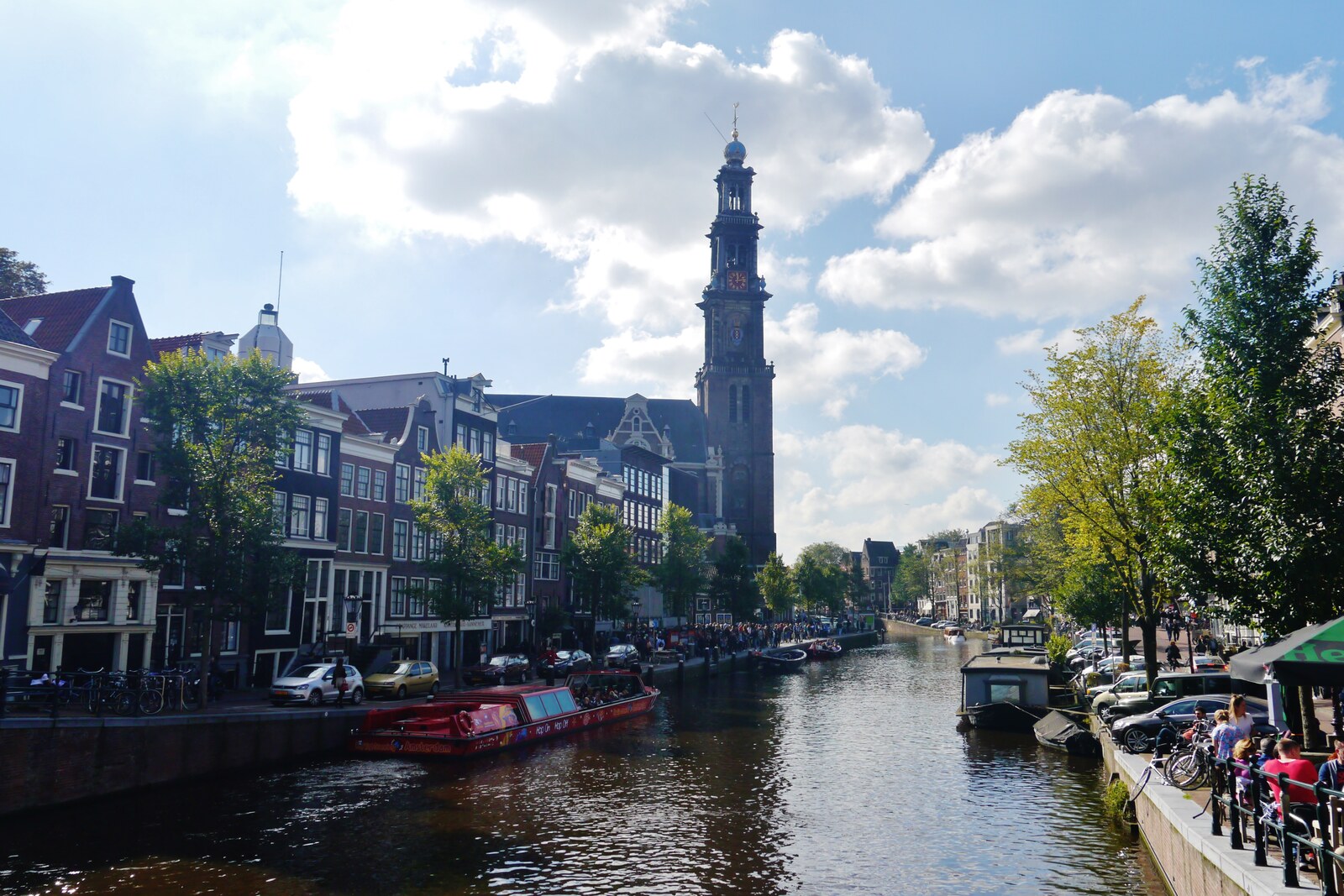
Look around first
What to notice
- The Westerkerk building
- The slab with Rembrandt's name on the north wall
- Westermarkt square
The story of the place
Westerkerk served as the Reformed church for the western part of the new canal ring: here, residents of the surrounding neighborhoods were baptized, married, and buried. City residents were usually brought to the church closest to their home, so the church was part of the neighborhood's everyday order, not only a place for Sunday services. Its south side faces Westermarkt, a square whose name preserves the memory of trade. Inside, on the north wall, hangs a commemorative slab, while beneath the church floor lie graves whose exact locations have long ceased to be known.
In the Westerkerk burial register for October eighth, sixteen sixty-nine, Rembrandt van Rijn appears between two other deceased people. The artist, who was considered one of Amsterdam's finest masters even during his lifetime, was entered in the book without special honors. Fifteen guilders were paid for the burial—the set price for a rented church grave. Its location is now unknown.
Rembrandt came to this burial through bankruptcy. In sixteen fifty-six, he petitioned for a voluntary cession of his property to his creditors. Such a procedure saved a debtor from prison, but his house, furniture, and art collection had to be sold. The inventory drawn up by officials contains no easels, brushes, or paints: the law did not allow the seizure of tools without which a person could not earn a living. Rembrandt was left able to paint, although it became increasingly difficult for him to control his income independently.
Four years later, Hendrickje Stoffels, the artist's companion, and his son Titus, who traded in his works, established their own firm. They wanted the family's new earnings not to go straight to the creditors. Rembrandt was officially hired: under the contract, he received lodging, food, and exemption from the expense of renting a house, and in return he had to work for the firm's profit. This is how he continued to paint and make prints in a rented house on Rozengracht.
Hendrickje died in sixteen sixty-three. She was buried here, in Westerkerk. On September seventh, sixteen sixty-eight, Titus was brought here. Rembrandt outlived his son by a little more than a year: he died in the house on Rozengracht on October fourth, sixteen sixty-nine, and four days later was buried in the same church. The family was brought here because Amsterdam residents were usually buried in the church closest to their home.
This function had been built into Westerkerk from the beginning. After open Catholic services were banned, the city council built Reformed churches in Amsterdam's new districts. Westerkerk was built for the western part of the canal ring—the Western Church—and opened in sixteen thirty-one. Here, the residents of the neighborhood were baptized, married, and buried. Trade took place in the square on the south side; its name, Westermarkt, remains from it.
Inside Westerkerk, on the north wall, hangs a slab bearing Rembrandt's name. It was placed in memory of the artist buried here and does not mark his grave: the exact location beneath the church floor has been lost.
Useful on site
The square and the exterior view are always accessible; the interior and the tower follow separate schedules.
Checked: June 28, 2026. Check the official source before visiting.For the main story, it is enough to view the church from the square and the canal. If the carillon is playing, step out of the flow of passersby and let it finish its phrase.