 Guide On Map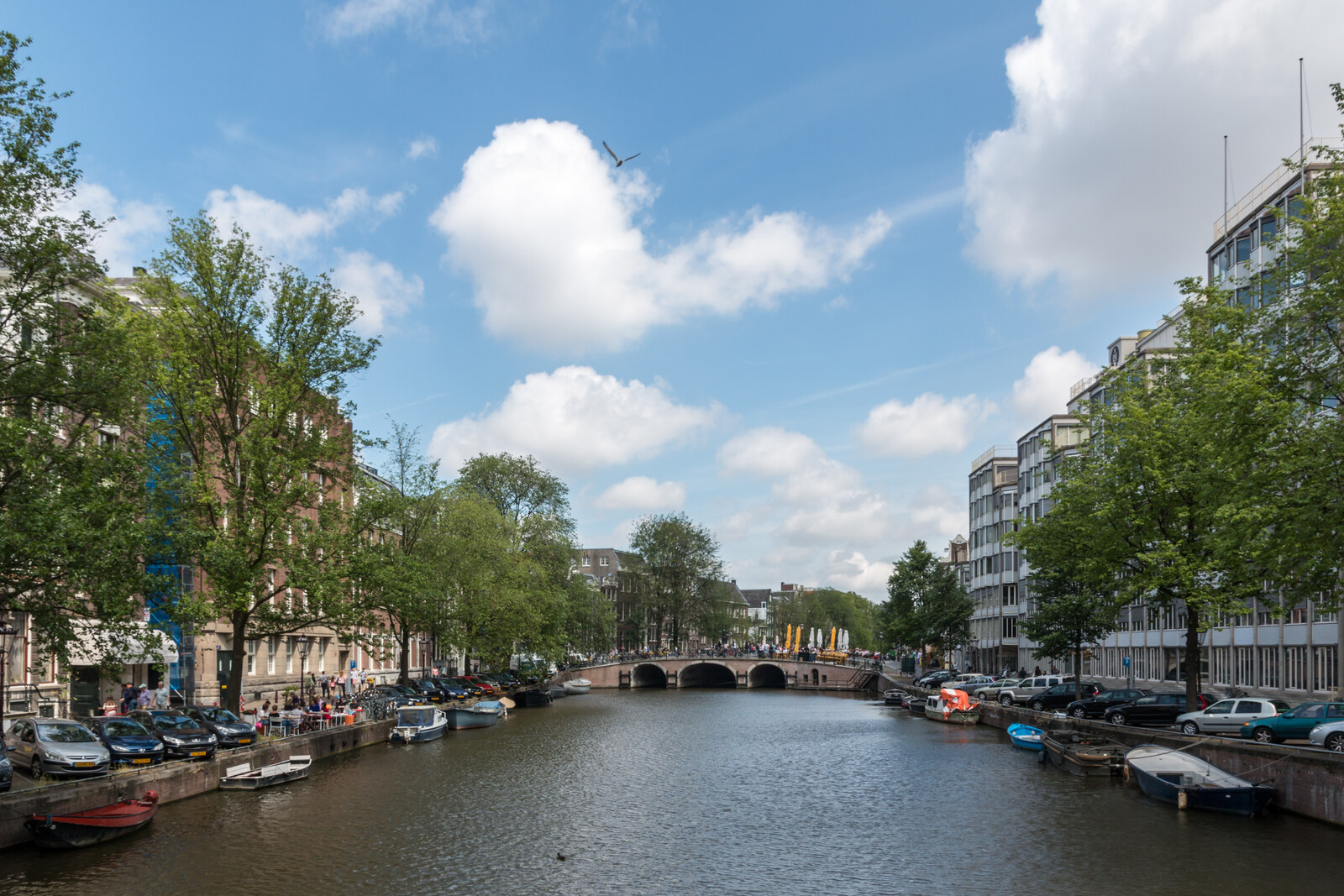
Look around first
What to notice
- The rounded outline of the tower in the paving
- The broad stone bridge
- Vaulted rooms with grates
The story of the place
The stone bridge was built around a structure that was already standing; two arched chambers with grates survived beneath the deck. Singel ran along Amsterdam's outer boundary, and across the water a rope maker produced rigging for ships and entered the city through the gate by the tower. When the fortification lost its military role, its base was enclosed in stone, a spire was raised, and a clock and bells were installed. The prison was not closed, and the bridge was given its unusual width so that the building could fit directly into the crossing.
A broad rounded outline is set into the cobblestones of Torensluis. Until eighteen twenty-nine, a tower stood here, occupying a considerable part of what is now the bridge.
At the end of the fifteenth century, Singel was the city boundary: the word “singel” referred to water or a road running along the city's outer edge. Across the canal stood the rope-making workshop of Jan Rood, a craftsman who earned his living making rigging for ships. The opening in the city wall that he used was named Jan Roodenpoort, and the tower by the gate was called Jan Roodenpoortstoren. Guards locked beggars and offenders in its basement even before they entered the city.
When Amsterdam expanded beyond Singel, the tower's defensive role came to an end. In sixteen sixteen, Burgomaster Reynier Pauw, who lived opposite and was seeking a reliable public clock for his neighborhood, pressed for its reconstruction. The city architect Hendrick de Keyser enclosed the old base in a stone structure and added a tall spire, a clock, and bells. The prison, however, remained.
In sixteen forty-eight, builders erected a stone bridge forty-two meters wide around the tower. At the time, the word “sluis” could also mean such a stone crossing; hence the present name Torensluis—a bridge by a tower. Its unusual width resulted from the building that had to be fitted into the bridge deck.
By eighteen thirteen, deserters and convicted servicemen were held in the tower and the rooms added to it. The Netherlands was then part of the First French Empire, military conscription sent local men into Napoleon's army, and those who left the ranks faced severe punishment. City residents knew the prison's conditions: prisoners were kept in cramped quarters, and some had almost no clothing.
On the night of November fourteenth to fifteenth, the French garrison left Amsterdam before the approaching Allied troops. The following day, residents came to the tower with a rattle used to summon people. They drove off the jailer, broke down the doors, and freed all the prisoners. The warden's furniture, prison registers, and papers were thrown into the street and burned. The freed servicemen left, while the participants in the assault climbed up and rang the very clock whose installation Burgomaster Pauw had pressed for two centuries earlier.
The tower stood for another sixteen years after that. The city refused to pay for repairs to the spire damaged by rot and removed an obstacle to traffic across the bridge. Before demolition, the city architect Abraham van der Hart measured the structure for a possible restoration, but his drawings remained only drawings.
Two vaulted rooms with grates have survived beneath Torensluis, part of the former prison. Above them lies the broad bridge, and the line in the cobblestones marks the place of the tower from which the last captives were led out on November sixteenth, eighteen thirteen.
Useful on site
The bridge and quay are public space, accessible around the clock.
Checked: June 28, 2026. Check the official source before visiting.On the broad bridge, it is easy to forget about bicycles: listen to the story away from the traffic lane. It is easier to look for the grates and masonry by changing sides of the canal.