 Guide On Map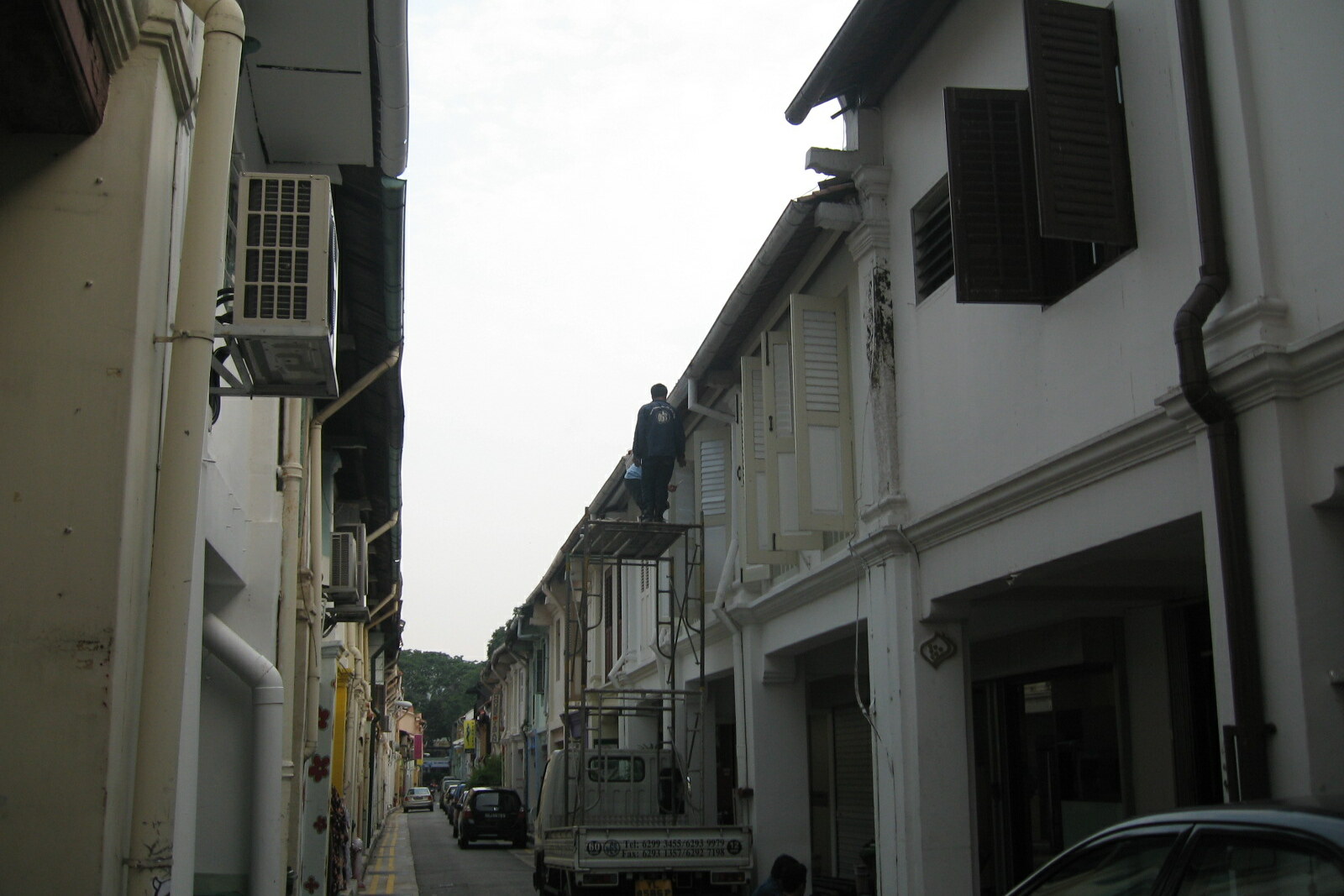
Look around first
What to notice
- Side walls with murals
- Service alleys
- Plaques with work titles and artists' names
- Trash bins and drains
The story of the place
The street-facing facades of the shophouses in this district were left for wooden windows, doors, and stucco, while the murals were placed on side walls and in rear passages. Gelam Gallery was allocated two service alleys behind the buildings on Muscat Street. Trash bins stand along these walls, drains run there, and service doors remain; plaques bearing the works' titles and the artists' names are mounted beside the works. The walls were specially prepared for the artists, and the bins were moved, but the utilitarian character of the alleys has not gone away.
Haji Lane was named long before its bright facades appeared. A haji is a person who has made a pilgrimage to Mecca; pilgrims stayed in the houses here, and intermediaries worked there, arranging their journey. When the sea route for the hajj through Singapore ended, some of the premises became warehouses, and later small shops, cafes, and bars moved in.
One of the street's present-day owners arrived here with spray-paint cans. Aileen Tan, the tenant of an old shophouse, owner of Blu Jaz Cafe, and secretary of the local business association, wanted to keep a mural she had commissioned on its side wall. For the cafe, the painting served as a sign the size of a house, but the building itself was protected as historic.
In January two thousand twelve, the city administration published rules for painting old shophouses: traditional pastel colors were recommended for facades, while bright paint was to be reserved for architectural details. A photograph of the painted wall on Haji Lane was cited as an undesirable example. A newspaper declared that the mural violated the rules. For such violations, the law allowed a large fine and even a prison term.
However, the wording of the rules did not explain whether the restrictions applied to blank side walls. By then, Tan and her colleagues had already been negotiating for five months: they asked to keep the existing painting and allow another nine murals. Each one was to be separately approved by neighbors and inspectors; in Tan's estimate, an artist's work cost from ten to fifteen thousand Singapore dollars per wall, so funding also had to be found.
The existing mural was allowed to remain. The city administration acknowledged that the previous instruction had caused confusion and, together with business owners and artists, developed a procedure for approving wall works. That is why the paintings here occupy mainly side walls and rear passages, while the wooden windows, doors, and stucco details of the street-facing facades remain exposed.
In the summer of two thousand nineteen, the same idea received a dedicated space: two service alleys behind the buildings on Muscat Street. Color Inc., with support from One Kampong Gelam, invited around thirty artists and students. Trash bins were moved, the walls were prepared, and the titles of the works and information about their authors were placed beside the paintings. This is how Gelam Gallery appeared, named after the district itself: Singapore's first permanent street gallery.
Cynthia Wang, a student at an art college, learned about the recruitment from her teacher, Woon Tien Wei. She was looking for summer work and had never painted such a high wall before. The organizers taught her to operate a lift and issued her an ID; her neighbor Shyam and his wife allowed her to leave the lift by their house and charge it overnight. Over one week, Cynthia used stencils to paint women's faces in frames and peacocks. These images, along with the plaque bearing her name, stand among bins, drains, and service doors: the gallery was allocated precisely those walls that no one had previously considered the front of the district.
Useful on site
Open alley and open walls. Shops, cafes, and bars operate on individual schedules; street works are best viewed in daylight.
Checked: July 1, 2026. Check the official source before visiting.The rear passages remain working areas: do not block doors, stairs, containers, or staff access.