 Guide On Map
Markets of Old Mumbai: Bhuleshwar and Mohammed Ali Road
From Mahatma Jyotiba Phule Mandai (Crawford Market) through Bhuleshwar and Chor Bazaar to Minara Masjid
Guide On Map on your phone
Open the walk like a regular app
It takes about 10 seconds to install. No app store needed.
The whole path
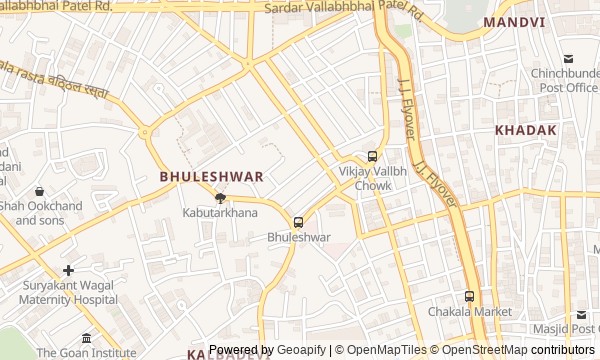
Route map
About the walk
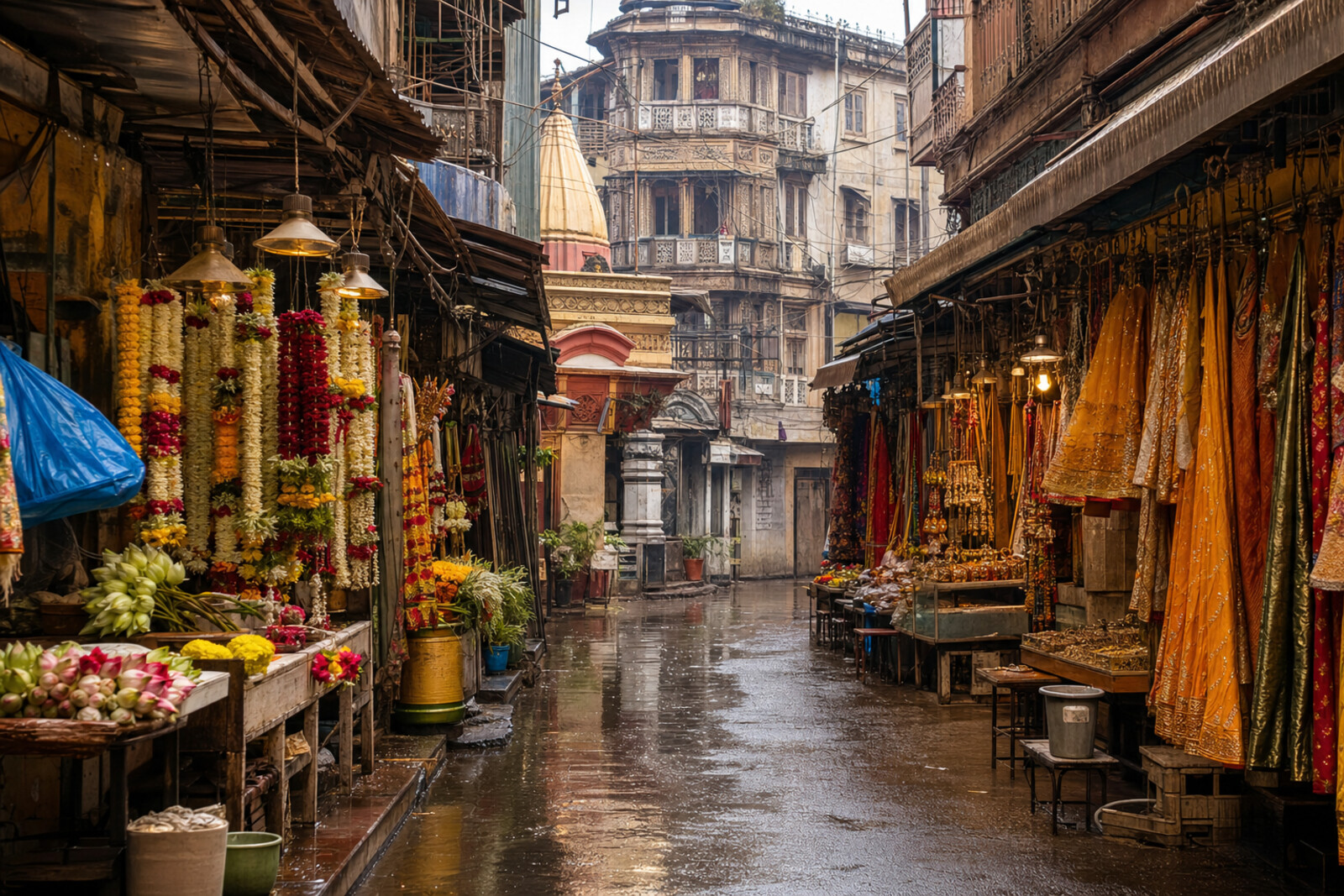
You will walk from the stone Mahatma Jyotiba Phule Mandai (Crawford Market) into the tight trading districts of Bhuleshwar, finishing beneath the minarets above Mohammed Ali Road. First, the route enters fabric passages where deals are made from samples. Then, among jewelry and flower rows, you will come upon the temple of the city goddess and shrines whose doors were once not open to everyone. Beyond them begins Bhendi Bazaar: instead of new goods, old lamps and furniture are taken apart down to the last screw. This is a walk about who controlled a trading place, a temple, or a family shop—and what happened when someone tried to change the familiar order. The stories will separate documents from city legends and stay close to small human decisions. By the end, you will be able to read old Bombay through a paid market stall, a temple door, a restored lamp, and a bakery beneath the minarets.
Why this order
Mahatma Jyotiba Phule Mandai (Crawford Market) first raises the question of price and control over a trading place. The neighboring fabric passages show a different order: a market created by merchants and once bought out by the shopkeepers themselves. From the question of who owned the premises, the route moves to Mumba Devi Temple, where a strengthened trading environment had already shaped the management of a shrine. The flower rows continue this connection between market and temple, but shift the focus from ownership to the right to enter. After short-lived offerings, the road reaches Chor Bazaar, where earnings are built on extending the lives of old things. The final stretch to Minara Masjid brings both threads together: family trade is woven directly into the mosque complex, and the route ends where shops, the prayer hall, and the street meet.
Those who want to understand how Mumbai’s old trading districts work Lovers of markets, craft shops, and urban microhistory Those interested in documented conflicts over ownership and access
Those expecting a quiet walk along wide streets Those who want a route focused only on major architectural landmarks Those who prefer a shopping overview to a history of trade
Before you go
Wear closed, comfortable shoes and bring a small bag that is easy to hold in front of you: the markets are crowded, and the passages are constantly occupied by shoppers and porters. You will need to remove your shoes in temples; clothing should cover your shoulders and knees. Ask permission before photographing people, transactions, altars, or prayer. The markets consist of independent shops, so some premises may be closed without any general notice. If you want to catch the food at Mohammed Ali Road, plan to finish in the evening; after sunset in Ramadan, it is especially crowded here.
When to go
2,5–3 hours; a temple queue, choosing fabric, conversations with traders, or a full dinner will noticeably extend the walk.
Backup plan
If a market or temple is closed, do not try to find an unofficial entrance: the first four stops offer plenty to explore from outside—facade reliefs, trading passages, flower rows, and the movement of pilgrims.
If Bhendi Bazaar is congested with construction, focus on accessible streets and Chor Bazaar shop windows, without going beyond barriers.
If the evening crowd at Minara Masjid becomes uncomfortable, end the story at the edge of the trading corridor or move your meal to a quieter place outside the densest part of the street.
Route conditions
Facilities. Toilets — 2
Elevation. Ascent — 16 m; descent — 16 m
OpenStreetMap extract of June 18, 2026: database data, not a check on the ground. Data © OpenStreetMap contributors, ODbL licence
Walk plan
Open in maps ↗- 1
Mahatma Jyotiba Phule Mandai (Crawford Market)
This is where the argument begins over whom an expensive city market benefits and how much a place inside costs a vendor. - 2
Mangaldas and Mulji Jetha Textile Markets
The neighboring markets help reveal a trading community that managed to intervene in the fate of the premises it occupied. - 3
Mumba Devi Temple
This stop connects the city's goddess with fishing communities, goldsmiths, and a change in temple management. - 4
Bhuleshwar Shrines and Flower Rows
Here, the daily trade in offerings leads to a story about people who had to fight for the right to approach an altar. - 5
Bhendi Bazaar and Chor Bazaar
A family restoration shop will show how an old trade survived the disappearance of its main customer. - 6
Minara Masjid and Mohammed Ali Road
The finale will connect the mosque's layout, the street's name, and a family shop that grew from a tiny bakery.
Route features
Everything you need stays in the browser
Progress, saves and your trip plan are stored on this device.
Add Guide On Map to your home screen so the walk opens outside the browser.
How we handle sources, maps and corrections: our editorial standards