 Guide On Map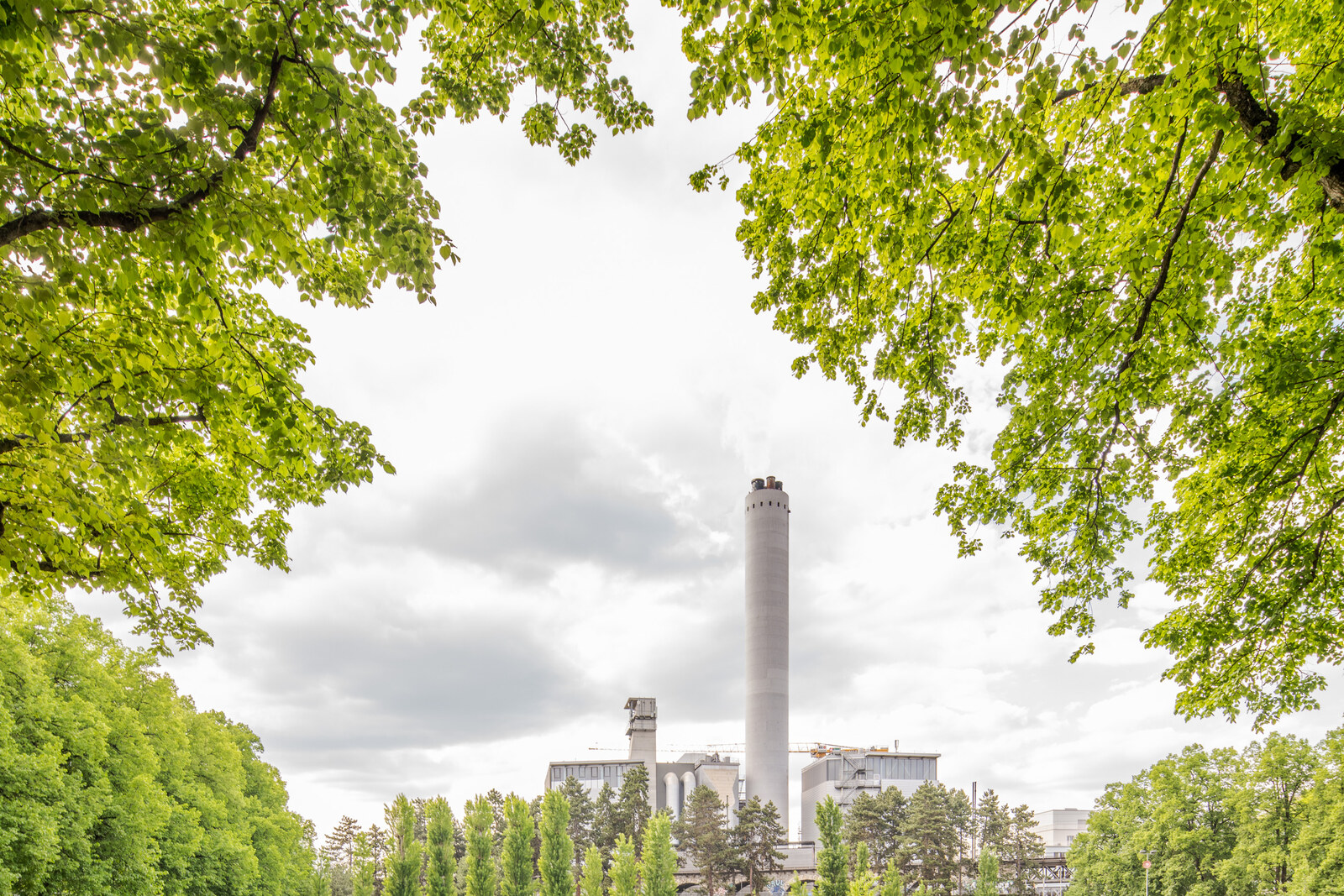
Look around first
What to notice
- Rectangular lawn
- Rows of trees
- Milchhüsli
- Temporary kiosk
The story of the place
Josefwiese has retained the form of a public park: a rectangular lawn for play and recreation framed by rows of trees. It was laid out on the last large free site in the industrial district, and a pavilion with changing rooms, restrooms, and a counter for nonalcoholic drinks was built nearby. Because milk was sold there, the pavilion was nicknamed Milchhüsli. The lawn remains open today, and a temporary kiosk operates beside the closed pavilion.
In the mid-nineties, parents from nearby homes asked the city to give them an empty pavilion at Josefwiese. They wanted to set up a “lunch table” here: a place where children could eat and spend part of the day close to home. After being refused, the parents acquired a construction trailer, placed it right on the lawn, and began feeding children there.
They chose the lawn not for its convenient address. In the industrial district, it was the last large undeveloped site. City garden inspector Gottlieb Friedrich Rothpletz designed a public park here: a large rectangular area for play, sports, and recreation, surrounded by rows of trees. The park opened in nineteen twenty-four, and two years later a pavilion was added with changing rooms, restrooms, and a counter for nonalcoholic drinks. Because milk was sold there, it was nicknamed Milchhüsli.
The name Josefwiese means “Josef’s meadow,” but it does not refer to a saint. The park inherited the name of neighboring Josefstrasse. In eighteen seventy-seven and eighteen seventy-eight, master plasterer Josef Blickle ceded land to the municipality free of charge for this street, then built several of its first houses there. He made his living in construction and invested in the suburb’s rapid growth, but went bankrupt in eighteen eighty-four. The street was named after him during his lifetime—using only his first name, without his surname; the name then passed from the street to the meadow.
For the parents of the nineties, Milchhüsli was the only ready-to-use space in the middle of the playground. Families were then trying to leave the district, while the city gave children tram tickets so they would spend their free time in other neighborhoods. After Platzspitz—the park where drugs were openly sold and used—closed, city services feared that this environment would move here. The unattended trailer seemed an additional risk.
The parents did not remove the lunch table. Eventually, the city agreed to transfer Milchhüsli to Verein Josefwiese on the condition that they use it regularly and hold gatherings here. From nineteen ninety-six onward, Verein Josefwiese ran a bistro in the pavilion where no purchase was required, and held activities, celebrations, and item swaps for district residents.
In June two thousand twenty-five, Milchhüsli was severely damaged by fire. The park itself remained open, and the association again moved into temporary premises and continued selling by the viaduct. The parents’ construction trailer has been gone for a long time; the closed old pavilion and the temporary kiosk repeat the solution from which the present-day life of Josefwiese began.
Useful on site
Public park; individual facilities, the kiosk, water play, and grilling areas depend on the season and city rules.
Checked: June 26, 2026. Check the official source before visiting.This is a lively neighborhood lawn, not a quiet memorial: share the space with playing children, athletes, and groups of local residents.