 Guide On Map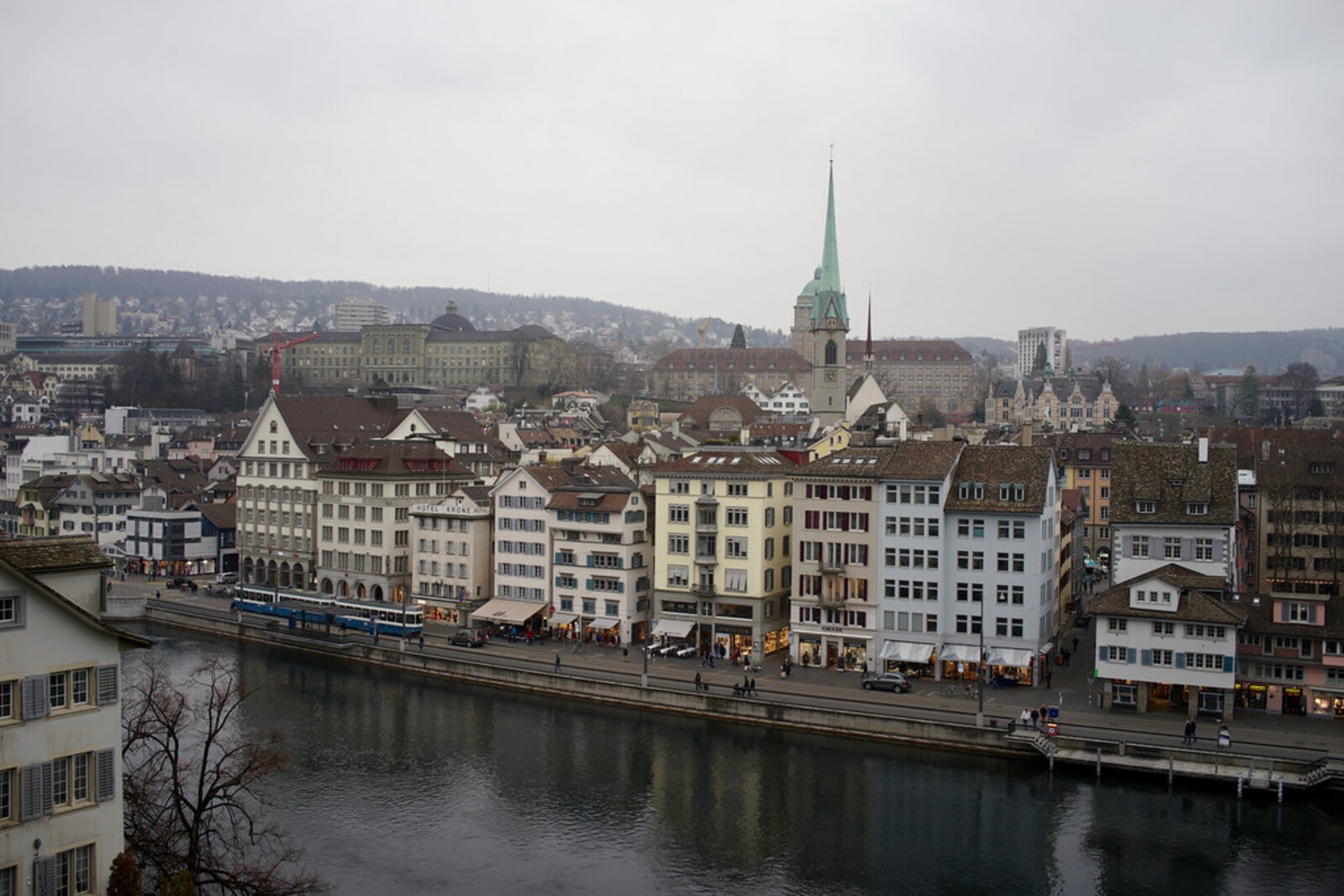
Look around first
What to notice
- Linden trees
- Fountain
- Figure of a woman in a helmet
- Sword and long spear
The story of the place
Lindenhof occupies the top of the hill above the Limmat: the broad square rises above the surrounding rooftops and is visible even from the slope of Zürichberg. A palace once stood here, and after it disappeared, an open plot remained inside the city walls. The linden trees appeared later and gave the place its name; by fourteen twenty-two, fifty-two linden trees were recorded on the hill, and townspeople could come here freely.
A woman wearing a helmet, with a sword and a long spear, stands above the fountain basin. She is often called Hedwig ab Burghalden—the name the city legend gives to the leader of Zurich’s women. However, the early account does not give a name. The siege of Zurich was a real event; the women’s ruse is known from a chronicle written down almost half a century later.
In twelve ninety-two, Zurich joined Uri and Schwyz in opposing the House of Habsburg and tried to take Winterthur, which belonged to the House of Habsburg. The townspeople fought themselves: merchants, artisans, and members of noble families, who were required to go on campaign with their own weapons. Near Winterthur, the Zurich detachment was defeated; many men were killed or taken prisoner.
Duke Albert I of Habsburg, lord of Winterthur, led an army to Zurich to force the weakened city to make peace on his terms. Zurich had no permanent garrison with which it could replace the dead and captive men.
According to legend, the townspeople issued armor to every woman able to bear arms. The women took spears and climbed up to Lindenhof. By then, the palace on the hill had disappeared, and an open space above the Limmat remained inside the city walls. It rose above the rooftops and was clearly visible from Albert’s camp on the slope of Zürichberg. The deception required exactly such a place: the enemy had to make out an armed formation, but not the faces beneath the helmets.
The women showed themselves to the men who could soon launch an assault. If the deception had been exposed, there would have been no other detachment behind that formation. Albert decided that reinforcements had managed to enter the city. He was not prepared for a long siege, so he made peace and withdrew his army. Zurich avoided an assault, although it lost the war: the city had to abandon its alliance with Uri and Schwyz.
The linden trees that gave the square its name—Lindenhof, “linden courtyard”—appeared here later. In fourteen twenty-two, fifty-two linden trees and a green square open to the townspeople are already mentioned. The fountain was installed in nineteen twelve. The sculptor Gustav Siber placed one armed woman on the column, but the figure’s official name is in the plural: “The Brave Zurich Women of Twelve Ninety-Two.”
Useful on site
The square is open as a public urban garden. The archaeological Lindenhofkeller is closed for renovations as of the verification date; do not plan key access without checking again.
Checked: June 30, 2026. Check the official source before visiting.The climb is short, but it follows old-town paving. The archaeological walls are hidden beneath the square, so use the visible markers and the story as your guide rather than expecting an underground visit.