 Guide On Map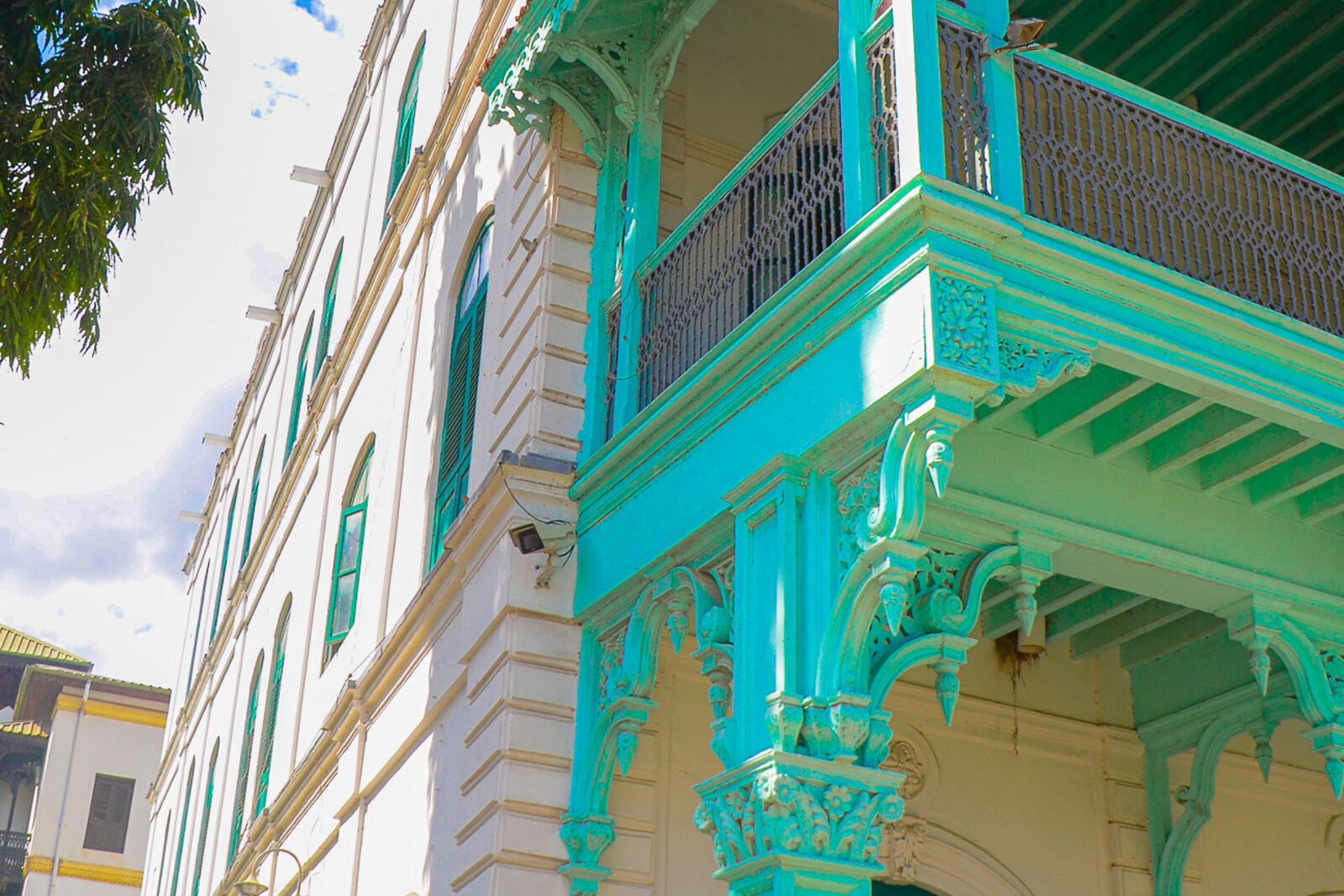
Look around first
What to notice
- Carved wooden balconies
- Lavish facade ornamentation
- Nur Mahomed's name on the facade
The story of the place
Carved wooden balconies and dense ornamentation cover a building that once stood right by the water: there was no harbor in front of it yet, and its facade faced the sea. It was conceived as a charitable hospital for poorer townspeople. After a long period of neglect, the building was restored, and now a clinic, diagnostic rooms, a dental clinic, and a pharmacy once again operate behind these balconies.
On the day the hospital's foundation stone was laid, its patron was not here. On July eighth, eighteen eighty-seven, Tharia Topan was in Bombay—seriously ill, almost blind, and no longer expecting to return to Zanzibar.
Topan came to the island as a young merchant, grew rich through trade and through the right to collect customs duties that he bought from the sultan, and became one of Sultan Barghash bin Said's advisers. On the waterfront, which was then being turned into the city's ceremonial frontage, Topan decided to build a charitable hospital for the poor. The occasion was the fiftieth anniversary of Queen Victoria's reign, so its original name was Tharia Topan Jubilee Hospital. The present port did not yet exist: the facade faced directly onto the sea.
Construction was initially supervised by Topan's nephew. After their quarrel, the patron replaced him with the master Haji Mistry, who arrived from India with stonemasons and carvers. Then Topan died. Because of a dispute over the will, the master was sent home, and the unfinished hospital was left without the person who had conceived and funded it.
Topan's third wife, Lady Janbai, took over the project. She wanted to fulfill her husband's intention and, in eighteen ninety-two, brought Haji Mistry back with his work crew. Most likely, it was during this stage that the master added some of the lavish ornamentation that had not appeared in the original drawings. However, the money Lady Janbai had set aside ran out before the work did. By eighteen ninety-four, the builders had completed the building, but there were no funds left for equipment or doctors' salaries. The hospital never admitted patients, and Lady Janbai had to sell it.
The buyers were the executors of the estate of another Zanzibar merchant, Nasser Nur Mahomed. They too intended the building for charity, but chose a more manageable arrangement. In nineteen hundred, three rooms on the ground floor were occupied by a doctor, his assistants, and a pharmacy; the upper floors were divided into apartments. Nur Mahomed's name appeared on the facade, and the name Old Dispensary became established in local speech. It recalls that the hospital envisioned by Topan never opened: medical care began to be provided here by other people and in a much smaller space.
After nineteen sixty-four, the dispensary closed, and the building stood empty for more than a quarter of a century. In the nineteen nineties, specialists from the Aga Khan Trust for Culture restored it, and in twenty twenty-three medical offices returned here. Aga Khan is the title of the spiritual leader of the Ismailis, the community to which Topan belonged. Now patients are once again seen behind the carved balconies: a clinic, diagnostic rooms, a dental clinic, and a pharmacy operate here.
Useful on site
The building operates as an Aga Khan clinic; public tourist access inside is not guaranteed. It can be viewed from outside during daylight hours, without disturbing patients or staff.
Checked: June 28, 2026. Check the official source before visiting.View the house from publicly accessible space, and do not take an open passageway as an invitation to enter.