 Guide On Map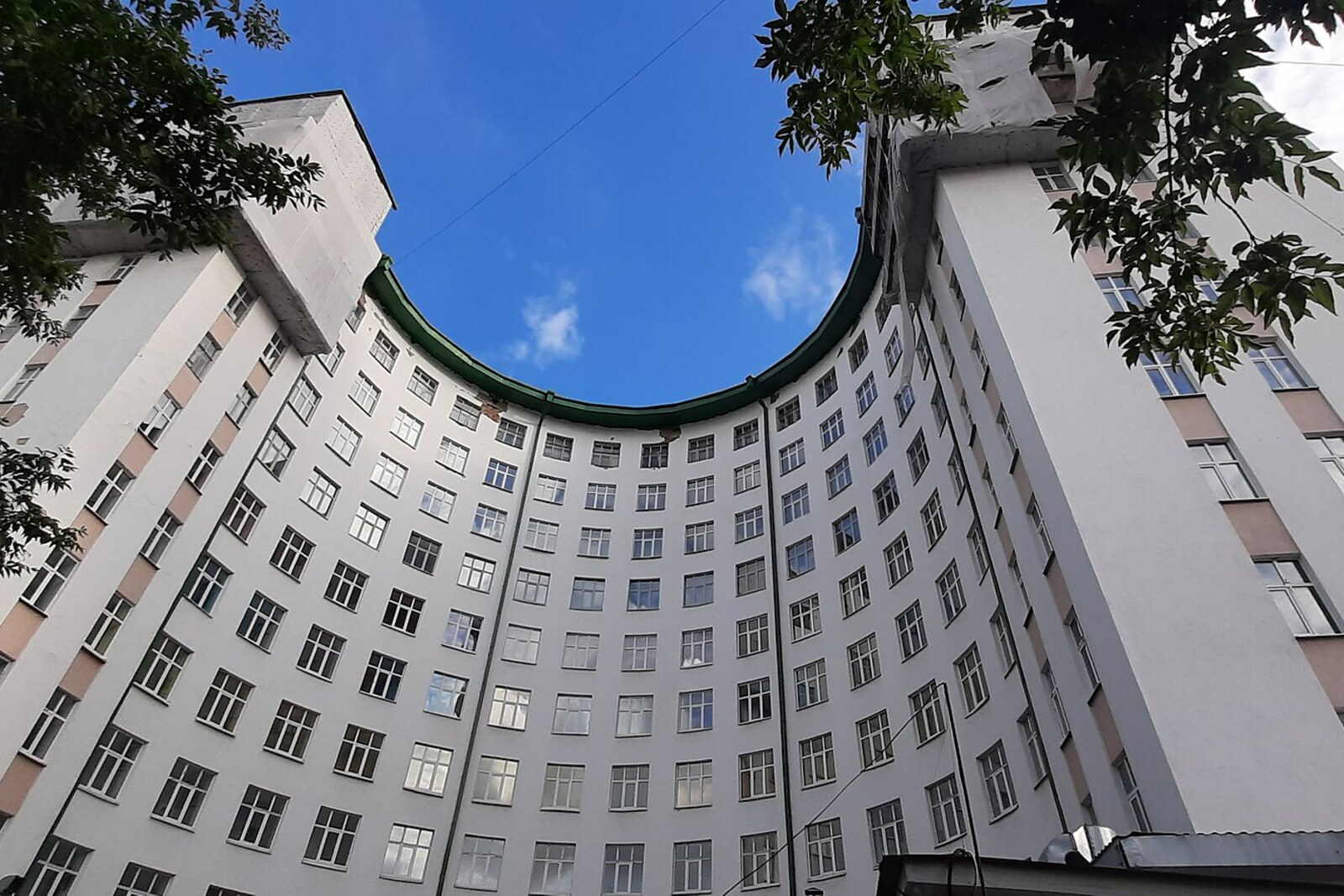
Look around first
What to notice
- The semicircular Iset building
- Long rows of windows
- The block's residential buildings
The story of the place
At the turn of the nineteen twenties and thirties, when Yekaterinburg was called Sverdlovsk, the architects Ivan Antonov and Veniamin Sokolov designed a residential complex of fourteen buildings here. Within one block, they placed apartments, a dormitory, a kindergarten, a clinic, a laundry, a dining hall, and a kitchen factory—a large enterprise that prepared food for many residents at once.
The semicircular Iset was a dormitory for single people, young married couples, and business travelers. Most family apartments around it were not provided with separate kitchens either. A small niche with a stove was left in the entryway: to reheat a brought-in lunch, to boil water. Ready-made meals could be collected from the kitchen factory or ordered home.
The architects expected that residents would no longer have to spend time cooking every day. Families decided otherwise. They needed to choose their own groceries, store dishes, cook for their children, and receive guests. Kitchens began to be installed in the apartments: sinks and stoves were moved, and parts of living rooms were given over to them. The residents themselves gradually changed the layout of every such building.
This story continues in the apartment of the architect Lyubov Degteva. In two thousand fifteen, she worked in the closed Iset on an exhibition of the Ural Industrial Biennial devoted to this block. Two years later, Degteva moved into one of its residential buildings. By then, the gas line and the sink in her apartment had already been moved into a room, turning it into a kitchen-living room. Gas service workers demanded every year that the remodeling be corrected. Degteva moved the stove back to the entryway and grew accustomed to cooking where Antonov and Sokolov had left a niche for it almost a century earlier.
The dormitory was dealt with just as practically. In nineteen fifty-eight, its residents were resettled, and in nineteen sixty-two a hotel with ninety-seven rooms opened inside. At first it was called Sport; in the seventies it received the name Iset. The last guests were received in two thousand thirteen: the small rooms of the old dormitory were already difficult to adapt to the requirements of a modern hotel. Two years later, the rooms were briefly occupied by artists and visitors to the Biennial—this was when Lyubov Degteva came here.
Now there are once again no guests behind the long rows of Iset's windows. And in the neighboring building, Degteva's stove stands in the entryway—in the only kitchen the architects left on their plan.
Useful on site
Viewing only from public streets and accessible passageways. The Iset hotel is closed; the upper floors have not been used since 2014.
Checked: June 24, 2026. Check the official source before visiting.First take in the complex as a whole, then pick out the arc of Iset. Remember that some buildings remain residential: do not look into the windows or turn courtyards and entryways into sightseeing areas.