 Guide On Map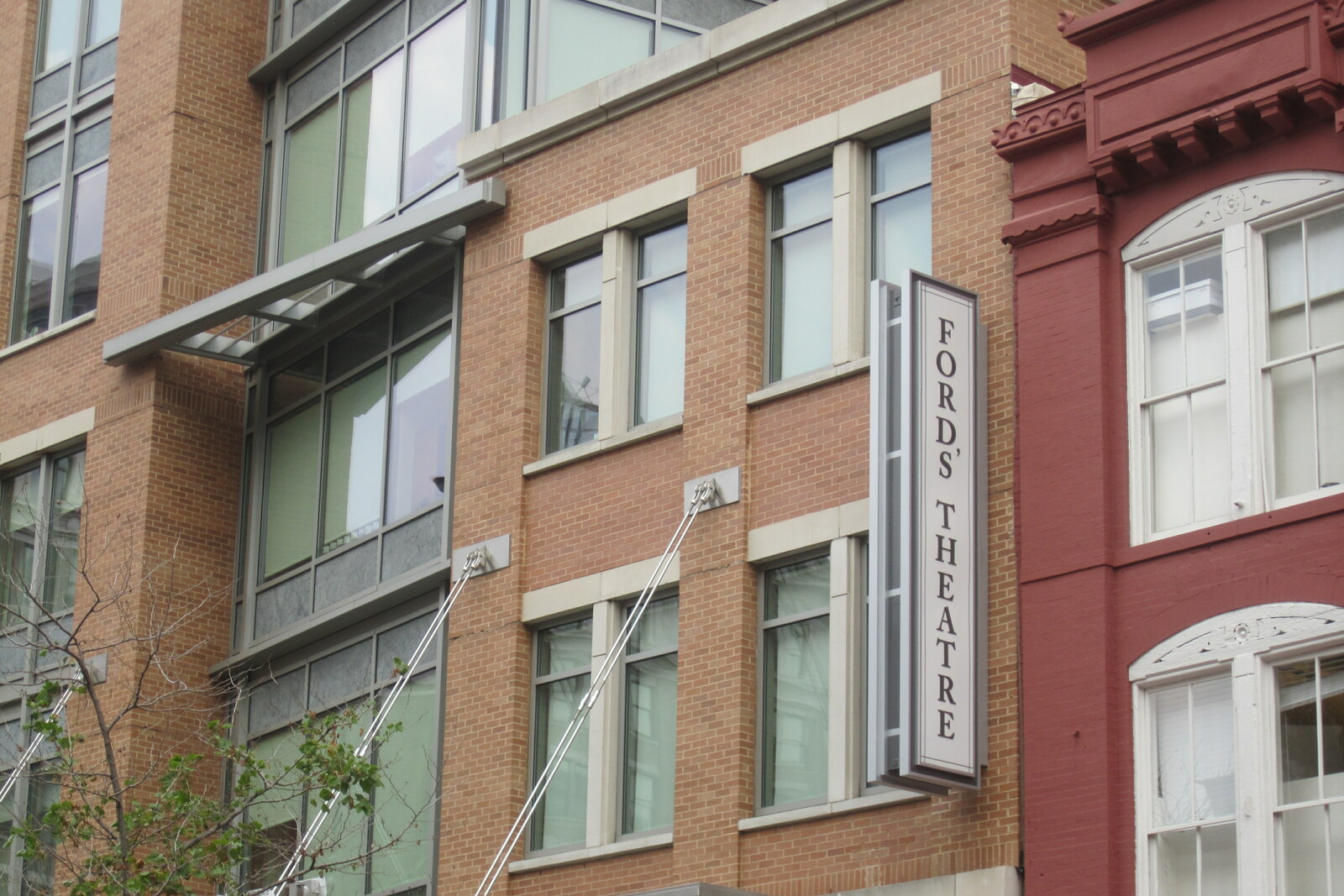
Look around first
What to notice
- The theater facade
- The President's Box
- The original door of the box
- The wooden bar
The story of the place
The theater's name preserves that of John T. Ford, a Baltimore impresario who made money from productions in several cities. At the start of the American Civil War, he leased a vacant Baptist church on Tenth Street and converted it into an auditorium. After a fire, Ford built the present building and opened it in eighteen sixty-three as the new Ford's Theatre.
One of the actors who performed here was John Wilkes Booth. He came from a well-known theatrical family, became a celebrity himself, and made his living by touring. When Booth was in Washington, letters for him were left at Ford's Theatre: traveling actors often had no permanent address in the city. Booth was friends with the owner, knew the service passageways, and could move through the building without raising questions.
By the spring of eighteen sixty-five, Booth had already spent several months preparing to kidnap President Abraham Lincoln. He supported the Confederacy and slavery, and hoped to exchange the captive president for soldiers of the South. On April ninth, General Robert E. Lee's army surrendered. Two days later, Lincoln publicly allowed for the possibility of granting voting rights to some Black men. Booth heard that speech and decided to move from kidnapping to murder.
On the morning of April fourteenth, he came here to collect his mail and learned that Lincoln would be watching the comedy Our American Cousin that evening. This information was available to Booth precisely because the theater was his workplace. The appearance of a famous actor in the corridor did not look like an intrusion.
Lincoln arrived with his wife and two guests and took the flag-decorated President's Box above the stage. At about a quarter past ten, during the final act, Booth blocked the outer door of the corridor leading to the box with a wooden bar. The audience laughed at a comic line. Booth entered the box and shot the president in the back of the head with a small single-shot pistol.
Major Henry Rathbone, Lincoln's guest and an army officer, tried to seize the murderer. Booth deeply cut Rathbone's arm with a dagger, climbed over the railing of the box, and jumped onto the stage. Rathbone survived. Booth ran backstage, went out through the rear door, mounted the horse he had left in the alley, and left Washington.
Military surgeon Charles Leale was watching the performance from the audience. Reaching the box, he understood that the wound was fatal, but decided to move Lincoln to the nearest bed. Taking him over the uneven streets to the White House was dangerous. The president was carried out of the theater and taken to Petersen House across the street. There he died on the morning of April fifteenth, without ever regaining consciousness.
Booth's escape lasted twelve days. Soldiers surrounded him in a barn in Virginia. He refused to surrender, was wounded by a gunshot, and soon died. Ford, meanwhile, tried to regain his source of income. He sold more than two hundred tickets for the first performance after the assassination, scheduled for July tenth. But residents threatened to burn down the building, and Edwin Stanton, head of the War Department at the time, sent soldiers and ordered them to turn spectators away at the entrance.
The government leased the theater, then bought it, and that same autumn destroyed the auditorium, the stage, and the President's Box, creating three floors of government offices inside. Of the theater in which Lincoln sat, the facade, parts of the outer walls, and some structures beneath the roof have survived.
The interior was reconstructed from old photographs, and performances began here again in nineteen sixty-eight. No one occupies the President's Box during performances. Its furnishings are a reconstruction; the original box disappeared during the remodeling. The museum collection retains its original door and the wooden bar Booth used to lock the corridor behind him.
Useful on site
As of 30.06.2026, all visitors must have a ticket; reservations are strongly recommended. The theater is temporarily closed until 31.07.2026 9:00, and the museum until 15.08.2026 9:00 for safety work; the lobby, Petersen House, and the education center remain open during available time slots.
Checked: June 30, 2026. Check the official source before visiting.The theater, museum, and house across the street may have different visiting procedures, so check indoor access separately. Without stepping into the roadway, compare the two buildings and the distance between them.