 Guide On Map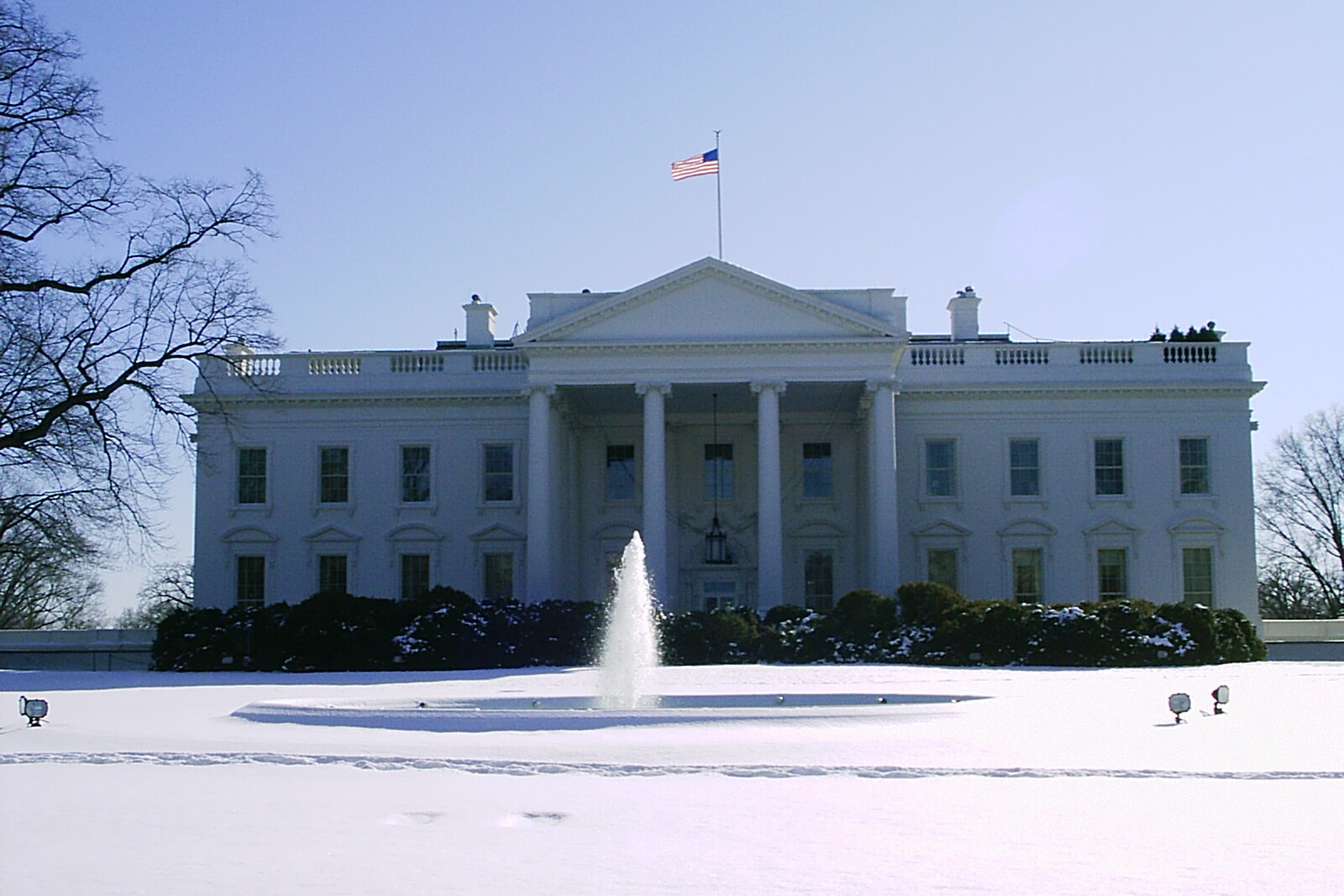
Look around first
What to notice
- Northern portico
- Columns of the ceremonial entrance
- Central section of the northern wall
The story of the place
Behind the columns is the northern ceremonial entrance to the residence and working home of the president of the United States. Today, it is used primarily to receive state guests. In August eighteen fourteen, the portico did not yet exist, and the building was more often called the President's House. The walls were already white: the porous sandstone had been coated with lime as early as seventeen ninety-eight to protect it from damp and frost.
On August twenty-fourth, the president's wife, Dolley Madison, ordered a dinner to be served at three o'clock. Her husband, President James Madison, had gone to Bladensburg to find out whether the British troops advancing on the capital could be stopped. Dolley planned to receive ministers and military officers here, wait for her husband, and, if necessary, arrange for the family to leave. The house simultaneously served as a residence, a place for official receptions, and the center of the president's work—so even on the day of the invasion, a dinner was being prepared in the kitchen.
After the defeat at Bladensburg, a messenger brought an order to leave immediately. Dolley delayed for the sake of documents, silver, and a large portrait of the first president, George Washington, painted by Gilbert Stuart. The painting was fixed high on the wall, and Dolley ordered that it be saved at any cost.
A legend later arose that she herself cut the canvas from the frame and carried it out of the house. One witness, Paul Jennings, called that version false. He was fifteen that day; the Madisons owned him, and he served the president as a valet and worked in the dining room. According to his recollections, Dolley gave the order, while the president's steward Jean-Pierre Sioussat and the gardener Thomas McGraw took down the portrait and sent it away by wagon. Other accounts add Jennings himself and two residents of New York to those involved, so it is no longer possible to determine exactly how the work was divided among them all. What is certain is that Dolley insisted on saving the painting, while servants and helpers took it down and carried it away.
British soldiers entered the empty house, ate the prepared dinner, piled up the furniture, and set it on fire. The roof and interiors burned; the weakened exterior walls survived. James Madison returned to the capital as the president under whom the enemy had occupied Washington. Across the country, people demanded his resignation, and in Congress there were proposals to move the capital to another city. Madison pressed for the government buildings to be restored here. After an inspection, masons found part of the walls suitable, and in February eighteen fifteen, Congress appropriated money to restore the President's House and other buildings “in their present locations.”
The architect James Hoban restored the house to its former design. The Madisons never returned here; the first resident after the fire was the next president, James Monroe. The Washington portrait was returned in eighteen seventeen, and it now hangs in the East Room. The central section of the northern wall behind the columns remains from the burned building. Hoban added the portico itself only in eighteen twenty-nine to eighteen thirty, so that those arriving in carriages could enter under cover.
Useful on site
The exterior is usually accessible from public sidewalks, but the perimeter can be closed without warning. Interior tours are free, by advance request only through a member of Congress or an embassy.
Checked: June 30, 2026. Check the official source before visiting.View it from the publicly accessible area and follow the security officers' instructions: the position of the barriers matters more than the point chosen in advance. You do not need to go inside for this episode.