 Guide On Map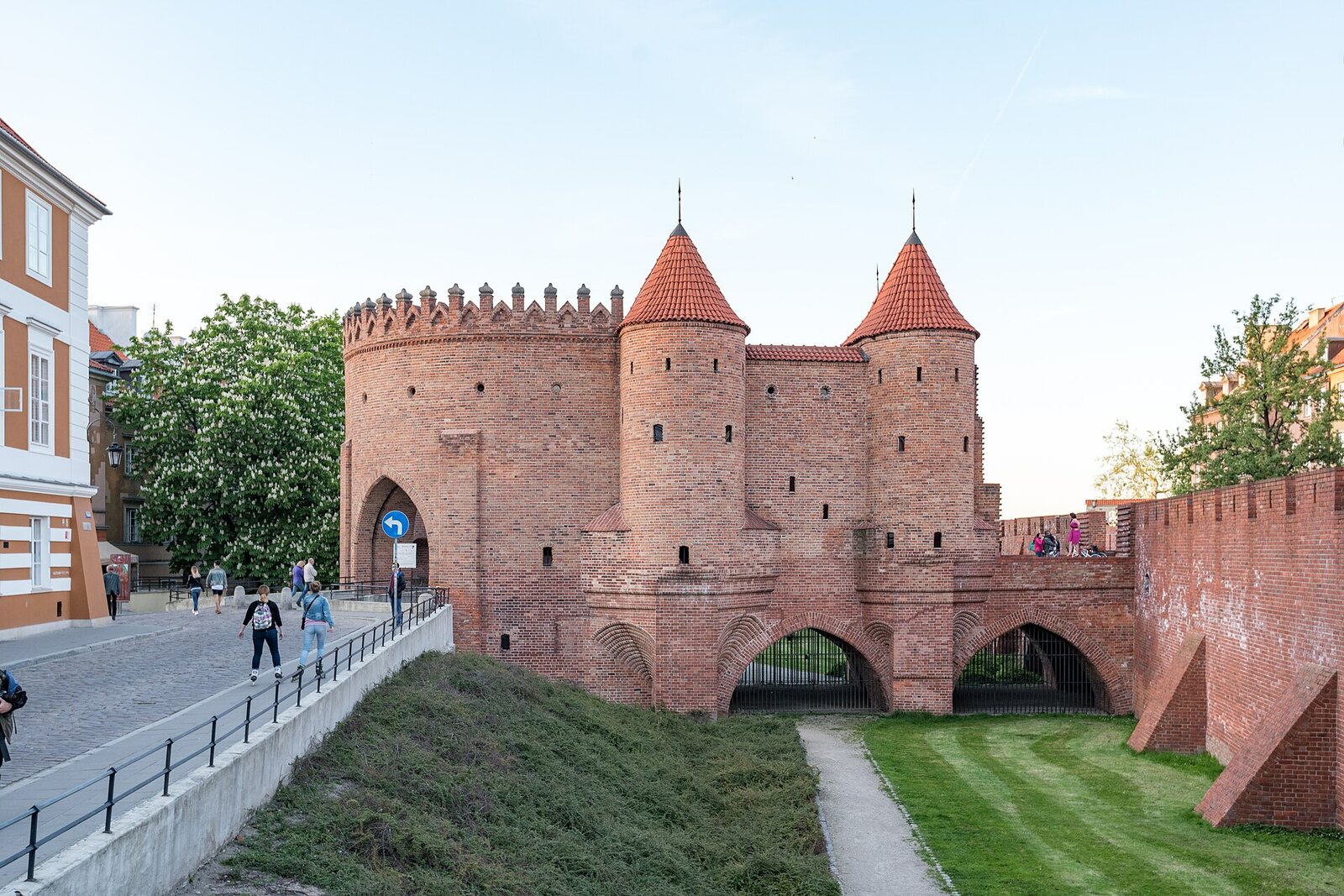
Look around first
What to notice
- Memorial plaque inside the Warsaw Barbican
- Dark line of mortar in the brickwork
- Brick passage of the Warsaw Barbican
The story of the place
On the inner wall of the Warsaw Barbican, a plaque is mounted in memory of the “heroic deeds of the Polish soldier and people” in the liberation of Warsaw from the Swedes. Here, the word “people” refers to quite specific individuals: peasants, poor townspeople, and camp servants. Camp servants were attendants assigned to military units. They looked after the horses, transported property, set up camp, and served noblemen. In the summer of sixteen fifty-six, they were issued pikes and scythes and sent to take this gate.
The Warsaw Barbican protected the northern entrance to Old Warsaw. In the sixteenth century, the city council ordered a brick fortification built in front of the New Town Gate: the road from the New Town passed through a narrow corridor over a moat, while defenders could fire on attackers from the front and the side. The gate was locked at night. Beyond it began the territory of the city, where its laws applied and where people were permitted to trade and live.
In September sixteen fifty-five, during the war known in Poland as the Swedish Deluge, the king and the highest-ranking officials left Warsaw. The remaining city council surrendered the city to the Swedish army without a fight. A few months later, the Polish king Jan Kazimierz returned to retake the capital. The Swedish garrison was commanded by Field Marshal Arvid Wittenberg. He held the walls and sought permission for his soldiers to leave the city with their weapons and property.
Jan Kazimierz wanted to preserve the elite regular infantry, so during the June assaults, volunteers—the very peasants, poor townspeople, and servants—were sent forward. They were supported by artillery, but at the New Town Gate the defenders fired from behind the moat and walls. During the night leading into June thirtieth, the attack was repelled. The losses were not counted precisely; it is known that the camp servants had to be taken back to camp almost by force.
On the morning of July first, negotiations again reached a deadlock. Wittenberg was given half an hour to answer. When no answer came, two cannon shots served as the signal for the attack. The volunteers rushed toward the New Town Gate, reached the breaches, and engaged the Swedish infantry there. Regular regiments entered after them. Some of the defenders laid down their weapons, and Wittenberg agreed to capitulate.
But taking the gate and receiving the spoils turned out to be different things. The volunteers had lost comrades and believed rumors about treasures the Swedes had gathered in the city. When Jan Kazimierz ordered the fighting to stop, they refused to disperse. One Polish commander was thrown from his horse, and another had his horse killed beneath him. The king had to receive their representatives and promise forty thousand zlotys in exchange for ending the assault. Then the regular infantry occupied the New Town Gate and, until the following noon, did not let the recent victors into the city.
The gate they fought for no longer exists. After the fortifications lost their military significance, they were dismantled or incorporated into residential buildings. From nineteen fifty-two to nineteen fifty-four, conservationists built the present Warsaw Barbican from surviving remains and old images. The surviving brickwork was separated from the new work by a dark line of mortar. Inside the reconstructed passage, they left the plaque to the soldiers and the people—the people who once broke through this gate and then had to be stopped at that same gate.
Useful on site
Open urban space; choose a viewing spot that does not obstruct pedestrian traffic.
Checked: date not specified. Check the official source before visiting.The Warsaw Barbican is easy to take in from outside; for the story, choose a spot by the wall where you will not narrow the passage. Walk carefully on wet cobblestones.