 Guide On Map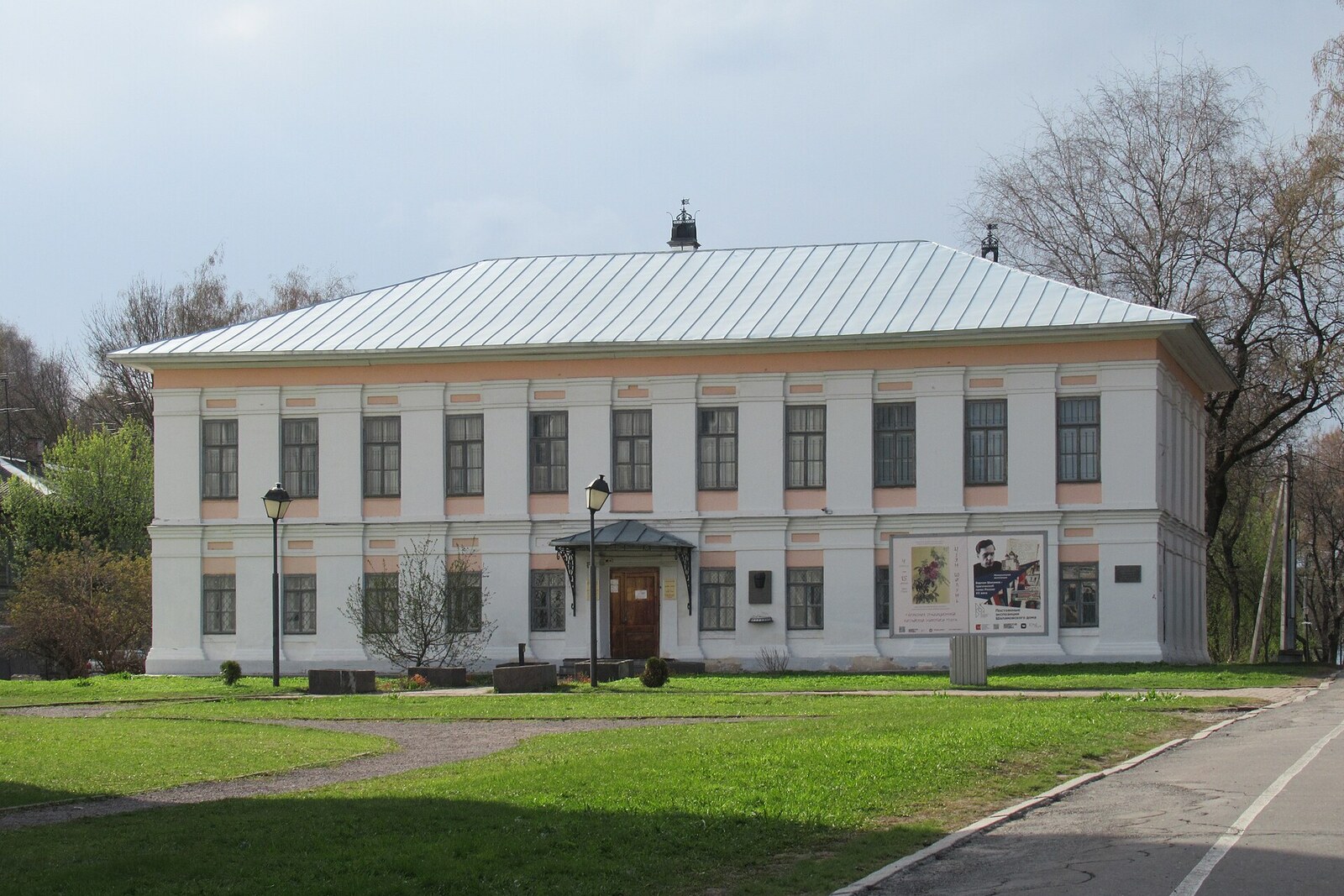
Look around first
What to notice
- Stone facade
- Memorial exhibition rooms
- Documents
- Photographs
The story of the place
Behind the stone facade, part of the former staff apartment at Sophia Cathedral has survived. Such apartments were intended for cathedral staff; one family lived here on the ground floor in three rooms. Now three adjoining rooms are given over to the memorial exhibition, while the rest of the house is occupied by the art gallery. In place of the household belongings that have barely survived, documents, photographs, and books have been assembled here.
In the autumn of nineteen twenty-four, the Shalamov family prepared seventeen-year-old Varlam for Moscow. His coat was remade from his uncle's, and two shirts were sewn from scratch. So that the young man would have money to get by at first, his parents sold two hunting rifles. They could give him almost nothing else.
This stone house was built for the staff of Sophia Cathedral. Varlam's father, Tikhon Shalamov, was a cathedral priest and was given a staff apartment here: three rooms on the ground floor. In one of them, on June eighteenth, nineteen oh seven, the future writer Varlam Shalamov was born.
After the revolution, the family lost its former payments. Varlam's mother, Nadezhda Shalamova, a trained teacher, baked pies, and her son sold them at the market. City officials began moving unrelated people into the apartment. The largest room, the family sitting room, was occupied by various tenants; one of them became the city prosecutor. Tikhon, Nadezhda, and Varlam squeezed into the two remaining rooms.
By then, Varlam's father had gone blind. Varlam guided him to lectures and religious debates, but on the main question they disagreed. Tikhon wanted to set his son on the familiar path and place him in a theological seminary. Varlam sought a secular higher education.
Father and son went to the head of provincial education to ask for a university referral. They did not receive one: at that time, the son of a cathedral priest was barred from attending university. According to Shalamov's recollection, the official refused him precisely because he had strong abilities.
Tikhon again proposed a seminary. Varlam refused. His parents agreed to let him go to Moscow, sold the rifles, and placed their son in his aunt's care. At first, he earned a living as a tanner at a leather factory, and two years later he did eventually enroll at Moscow University.
After his departure, Tikhon and Nadezhda finally left the staff apartment. They moved first into a basement room of Resurrection Cathedral, then into a wooden house on Blagoveshchenskaya Street. The last house has not survived. Varlam Shalamov spent almost all the rest of his life away from Vologda; later, he wrote prose that brought his surname back to the facade of his childhood home.
Today, the entire building is called Shalamov House, although the memorial exhibition occupies three adjoining rooms of the former family apartment. The art gallery uses the remaining rooms. Almost none of the Shalamovs' original belongings survive: the rooms mainly hold documents, photographs, and books.
Useful on site
Wednesday, Thursday, and Sunday 10:00–18:00, ticket office until 17:30; Friday and Saturday 11:00–19:00, ticket office until 18:30; Monday and Tuesday—closed.
Checked: June 24, 2026. Check the official source before visiting.Admission to the exhibition is arranged separately and depends on museum access. If the house is closed, stop by the plaque: the exterior address matters to the story no less than the restored rooms.