 Guide On Map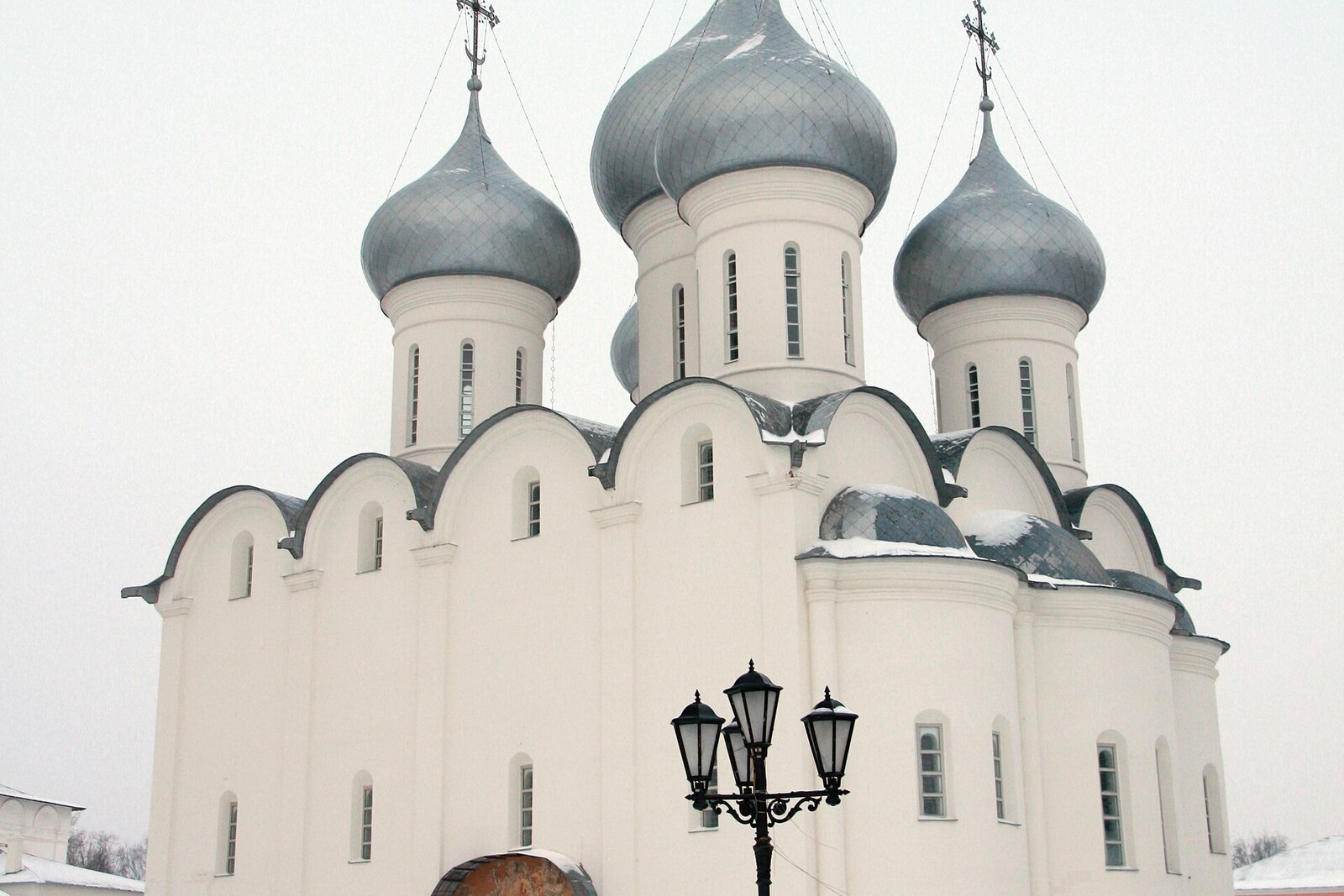
Look around first
What to notice
- Stone walls
- Vaults
- Domes
The story of the place
Two and a half months after Vologda was devastated, Archbishop Silvestr ordered two men to visit four surviving monasteries and return “without lingering anywhere for even an hour.” He needed to reopen the diocese’s main church—Sophia Cathedral.
On September twenty-second, sixteen twelve, during the Time of Troubles, a raiding detachment of Polish, Lithuanian, Cossack, and Russian fighters burst into the poorly guarded city. Church property was taken from the cathedral, and fire destroyed the wooden roof and the tops of the domes. Forty-nine priests and deacons died in the city. Without them, without books and vestments, the cathedral remained a stone shell, with no one and nothing with which to hold services.
Silvestr himself was taken prisoner. For four nights, he was kept under guard, taken out for execution several times, and brought back again. The archbishop wrote that he was released barely alive. He governed the churches of Vologda and sought to ensure that, after the devastation, the diocese once again had a cathedral for shared worship.
On December eleventh, Silvestr sent the cathedral priest Zhdan and serviceman Stefan Ragozin to the monasteries that had not been devastated. The list shows exactly what brought the church back to life: an altar Gospel, twelve books containing services for each month, seven sets of priests’ vestments, five deacons’ sticharions, and two censers. All of this was ordered brought to Vologda without delay—for consecrating the altar and resuming services.
Money for repairs was collected from parishes across the diocese. A year later, in December sixteen thirteen, Silvestr consecrated the main altar again. The man who had been taken out for execution after the fire had to complete the cathedral’s return to worship himself. The roof and domes were repaired for several more years.
The stone walls and vaults of the sixteenth century survived; the burned wooden upper part did not, and the present domes appeared after later alterations. In Silvestr’s order, the church is already called the Cathedral of Sophia, the Divine Wisdom. Here Sophia means Divine Wisdom, not a holy woman. This dedication remains in the cathedral’s present name.
Useful on site
The exterior can be viewed from public spaces; the interior is closed together with the ensemble until 16 April 2029.
Checked: June 24, 2026. Check the official source before visiting.The building’s main scale is easy to grasp from outside. Check separately whether it is possible to enter and see the frescoes; the restrictions help preserve their fragile paint layer.