 Guide On Map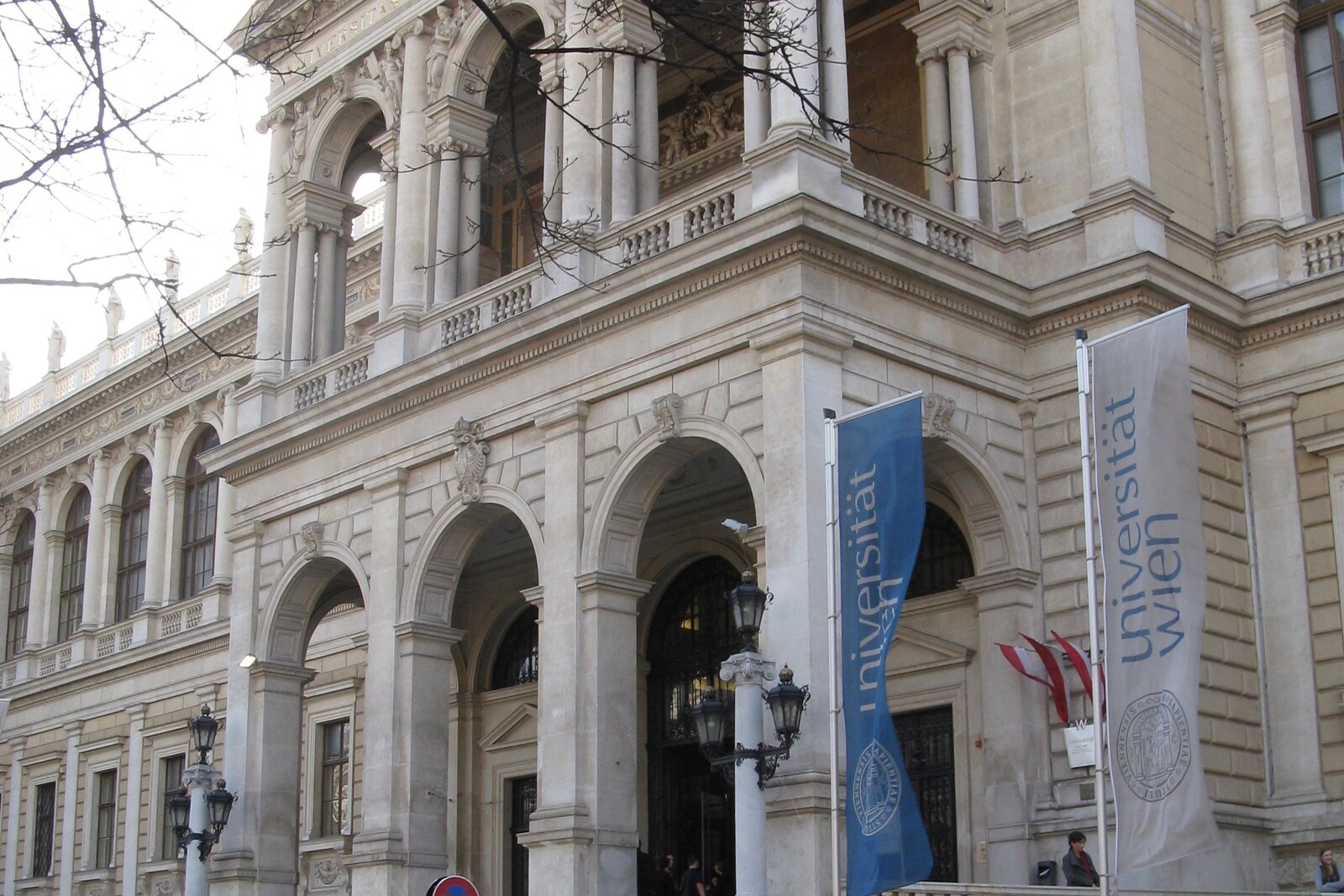
Look around first
What to notice
- Arcaded courtyard
- Philosophers' Staircase
- Ceremonial halls
The story of the place
The Main Building of the University of Vienna brought teachers and students back under one roof after thirty-six years of wandering. During the revolution of eighteen forty-eight, the university lost its former home, and its chairs scattered to different addresses. The building on Ringstrasse opened in eighteen eighty-four. Heinrich von Ferstel arranged ceremonial halls, a library, lecture halls, and departmental rooms around the arcaded courtyard. Lectures are still given there today, research is carried out, and the university is administered.
On the morning of June twenty-second, nineteen thirty-six, Professor Moritz Schlick crossed this courtyard and began climbing the Philosophers' Staircase to a lecture. At the university, he held the chair of philosophy of nature and sought to have philosophical arguments tested through logic and scientific experience. The Vienna Circle formed around him—a group of philosophers, mathematicians, and natural scientists that influenced the development of the philosophy of science in the twentieth century.
Hans Nelböck, Schlick's former doctoral student, was waiting for him on the staircase. Five years earlier, Schlick had accepted his dissertation on the role of logic in empiricism and positivism. Now Nelböck was convinced that his former supervisor was obstructing his professional career. He also saw Schlick as a rival over a woman with whom he had studied, and blamed the professor's philosophy for depriving him of his moral foundation.
These were Nelböck's own explanations; researchers do not reduce the motive for the murder to a single cause. Before the attack, he had already threatened Schlick with death twice. The professor went to the police, Nelböck was sent for psychiatric evaluation, but both times he was released as not dangerous. On the Philosophers' Staircase, he shot Schlick four times. The professor died on the spot, on his way to the lecture hall.
Nelböck did not try to flee and confessed. The court found him sane and sentenced him to ten years in prison. He expressed no remorse and portrayed himself at the trial as a victim of his teacher. After Austria's annexation by Nazi Germany, the killer was released on parole: of the ten years imposed, he spent two in prison.
Schlick was the principal organizer of the Vienna Circle. After his death, the group broke up, and most of its members continued their work abroad. The Philosophers' Staircase survives inside the building. It still leads to university lecture halls—along the same route the professor took to deliver his final lecture.
Useful on site
Check the university website for current access to the building and tours
Checked: date not specified. Check the official source before visiting.Begin with an exterior look. Enter the courtyard and rooms only when public access is open; memorial objects inside may be inaccessible.