 Guide On Map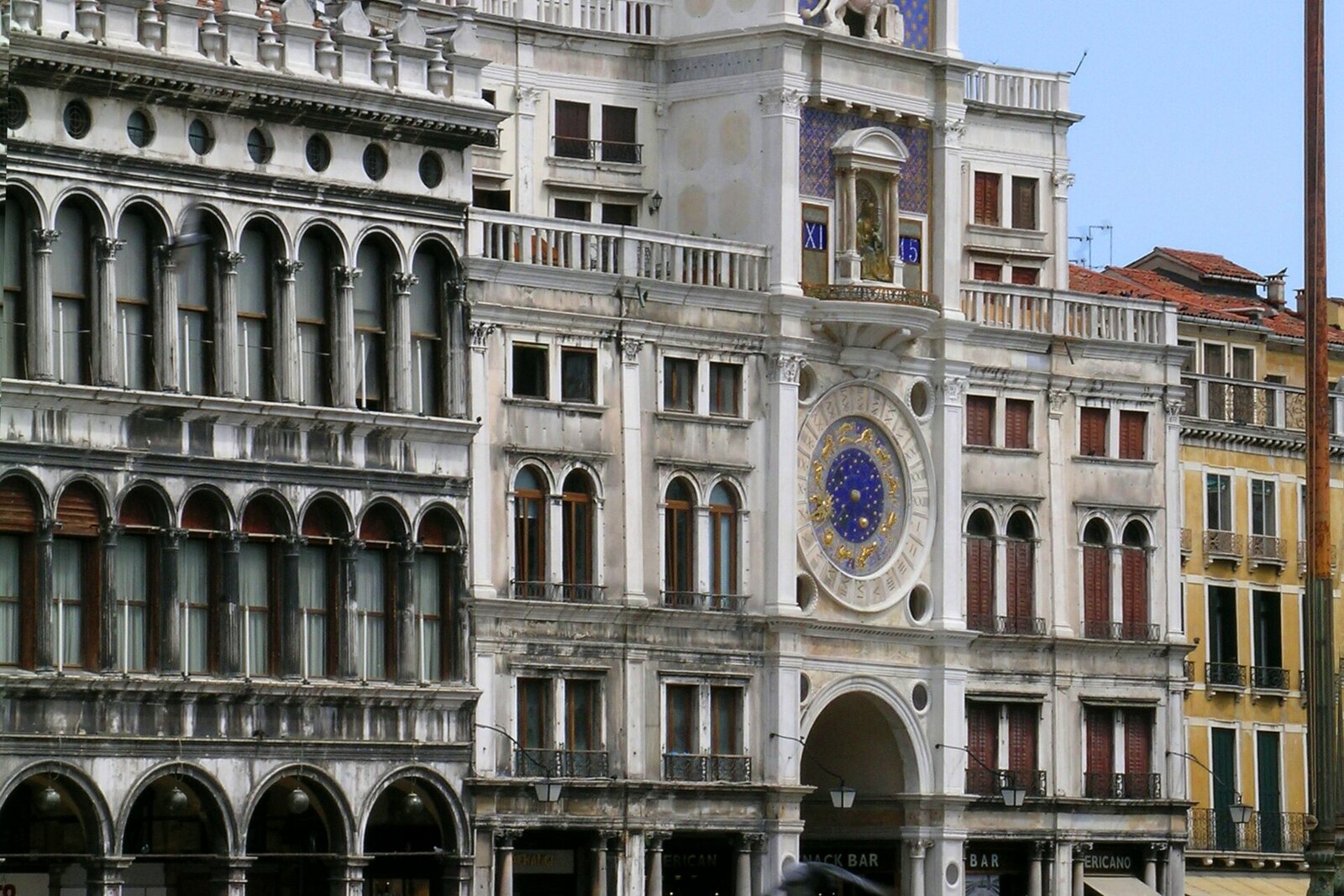
Look around first
What to notice
- Arch of St Mark's Clocktower
- Narrow shopping streets
- Signs above shops
- Calle del Calice street sign
The story of the place
From Piazza San Marco to Rialto stretches a narrow shopping corridor where signs still crowd above the doors. It once connected wholesale deals at Rialto with officials and well-to-do customers near San Marco. Here, imported fabrics, clothing, ribbons, gloves, and small goods became purchases for the home. House numbers did not exist, so people looked for the right shop by the goblet, moon, or ship above its entrance.
These narrow streets between San Marco and Rialto are called the Mercerie. In the mid-sixteenth century, thirteen-year-old Bartolomeo Bontempelli dal Calice arrived in Venice from a mountain valley near Brescia. He had a small sum of money with him, but in the city he had neither a family with a famous name nor a business of his own. He would have to make his living through trade.
A few years later, Bontempelli found himself here in the Mercerie, in a shop with the sign of the Goblet. The Mercerie are a chain of narrow streets between San Marco and Rialto. The name comes from the Venetian word “marzeri,” used for merchants selling fabrics, clothing, ribbons, gloves, and a host of imported small goods. Wholesalers made their deals at Rialto, officials and wealthy customers were at San Marco, and the marzeri occupied the road between them. They turned goods from a ship's hold or a workshop into purchases that could be carried home.
There were no house numbers then. A customer looked for a goblet, a moon, a ship, or another image above the door. The sign gradually attached itself to the merchant as well: Bartolomeo became known as Bontempelli dal Calice—Bontempelli “of the Goblet.”
By fifteen sixty-two, he was already a co-owner of this shop. Bontempelli then joined the business with Joachim Rubbi and Salvatore Rubbi, the sons of the former partner, who needed to preserve the family's share. In fifteen seventy-eight, the partners invested twenty-four thousand ducats in the enterprise, half from each side. The scale of the risk becomes clear by comparison: the capital of two-thirds of Venetian marzeri did not even reach five hundred ducats.
The contract prohibited them from withdrawing profits for eight years. The money had to remain in circulation: it was used again to buy fabrics, extend goods on credit, and pay for the next consignments. The families strengthened the alliance through marriage: Bartolomeo's brother married the Rubbi sister. Yet by fifteen eighty-seven, the Goblet shop had passed entirely to Bontempelli, while the Rubbi retained only a share of its income.
Bartolomeo was already trading in more than brocade alone. He invested in cinnabar and mercury, leased a mine, lent money to noble families, and held tens of thousands of ducats in government securities. In fifteen seventy-nine, the senators granted the newcomer full Venetian citizenship. This did not make him a patrician, but the shopkeeper received the recognition for which he had begun at someone else's counter.
In fifteen eighty-six, Bontempelli bought a place for the family tomb beside the high altar of the neighboring Church of San Salvador. A painting was also placed there, showing him and his brother Grazioso Bontempelli kneeling beneath a scene of the Lamentation of Christ. While still alive, the merchant commissioned his own presence beside the altar.
Bontempelli's shop is gone. From a side passage of the Mercerie still branch Calle del Calice, Sotoportego del Calice, and Corte del Calice—the street, covered passage, and courtyard of the Goblet. The sign above the counter outlived both its owner and his goods.
Useful on site
Open urban space; choose a viewing spot that does not obstruct pedestrian flow.
Checked: June 27, 2026. Check the official source before visiting.The passages are narrow and constantly busy. Do not stand in shop doorways or directly beneath the arch; for a pause, choose a small widening in the street.