 Guide On Map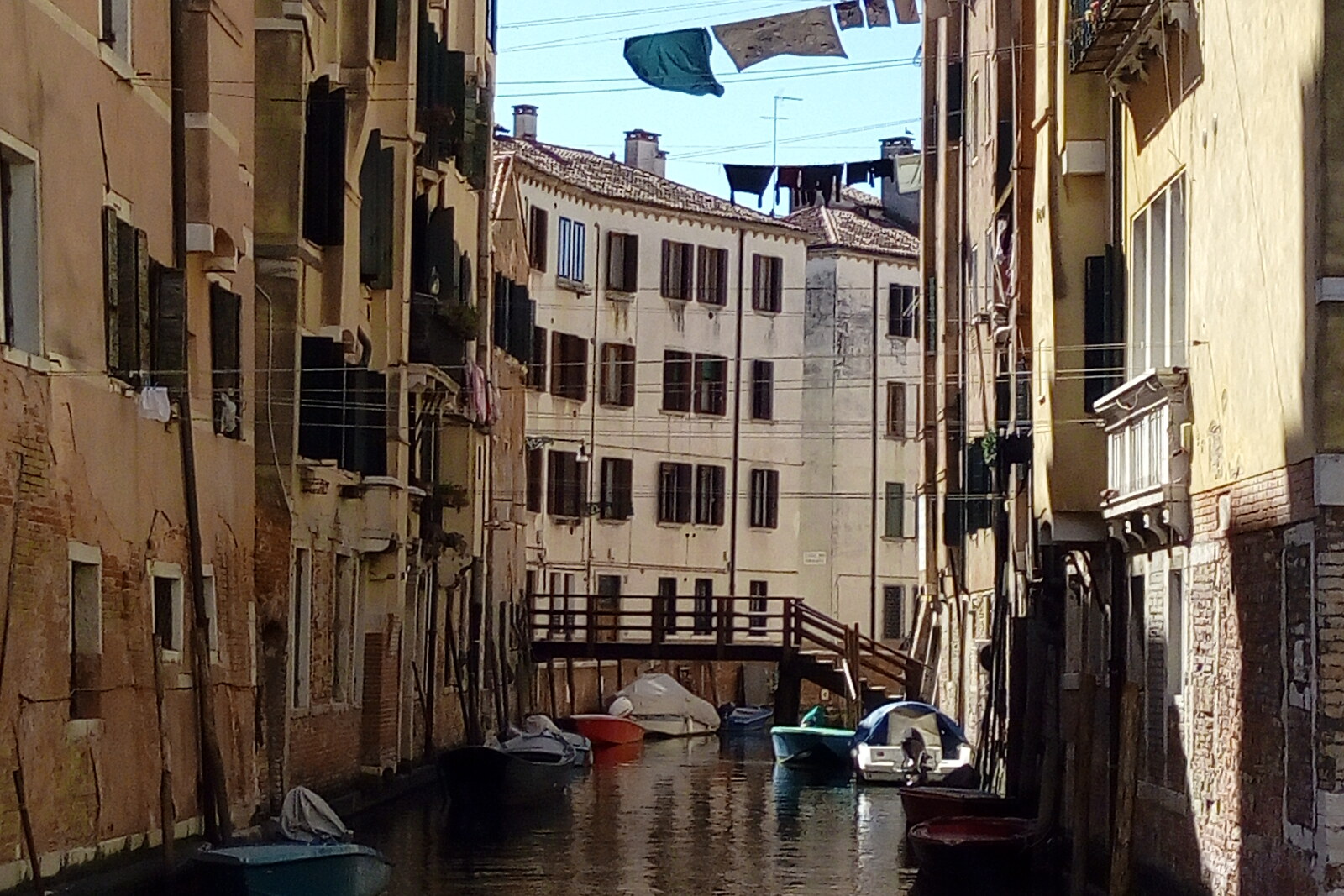
Look around first
What to notice
- Waterfront along the canal
- Calle degli Ormesini
- Ponte degli Ormesini
- Residential buildings on the site of the workshops
The story of the place
Fondamenta degli Ormesini is lined with residential buildings and tables from local establishments, while the waterfront preserves the name of vanished workshops. “Ormesini” is neither a surname nor the name of a people. In Venice, this was the name for lightweight silk fabrics, named after Hormuz, the Persian port through which they reached the Mediterranean.
People fleeing the Italian city of Lucca began weaving them here. In thirteen fourteen, the Ghibelline exiles of Lucca, supporters of the emperor seeking to return to their native city, brought a Pisan army there. The victors looted Lucca for three days. Their Guelph opponents fled; among them were dyers, weavers, and silk merchants. Everything they relied on for a living could only partly be carried to another city: tools, yes; workshops and stock, no. What mattered most was knowledge of techniques that Lucca tried to keep to itself.
The Venetian Senate saw in the refugees an opportunity to establish its own production of costly silk. It offered them loans, but required repayment in Luccan fabrics and tools. In thirteen twenty-one, the Senate granted trading privileges to sixty families. By agreeing, the artisans risked their lives: the laws of Lucca’s silk guild ordered the execution of citizens who practiced this craft outside Lucca—men were to be strangled, women burned.
Some of the settlers made their home in Cannaregio, near the Church of Santa Maria dei Servi. The district was nicknamed Piccola Lucca—Little Lucca. Here the newcomers set up looms and began producing, among other things, ormesini. The fabric with a Persian name was now made in Venice, and Venetian merchants sent it even to eastern markets.
The refugees also managed to rebuild their community. In thirteen fifty-nine, they founded the confraternity of the Holy Face—in honor of the crucifix venerated in Lucca; later, the Council of Ten officially recognized the confraternity, and their own chapel appeared by the Servi church.
There are no silk looms left on the waterfront. The workshops have left behind an exact record in the cityscape: Fondamenta degli Ormesini, Calle degli Ormesini, and Ponte degli Ormesini bear the name of the fabric that the Luccan exiles agreed to produce here on Venice’s terms.
Useful on site
Open waterfront; usually accessible around the clock.
Checked: June 28, 2026. Check the official source before visiting.This is an active residential and restaurant waterfront. Keep the passage between the facades, visitors, and water clear.