 Guide On Map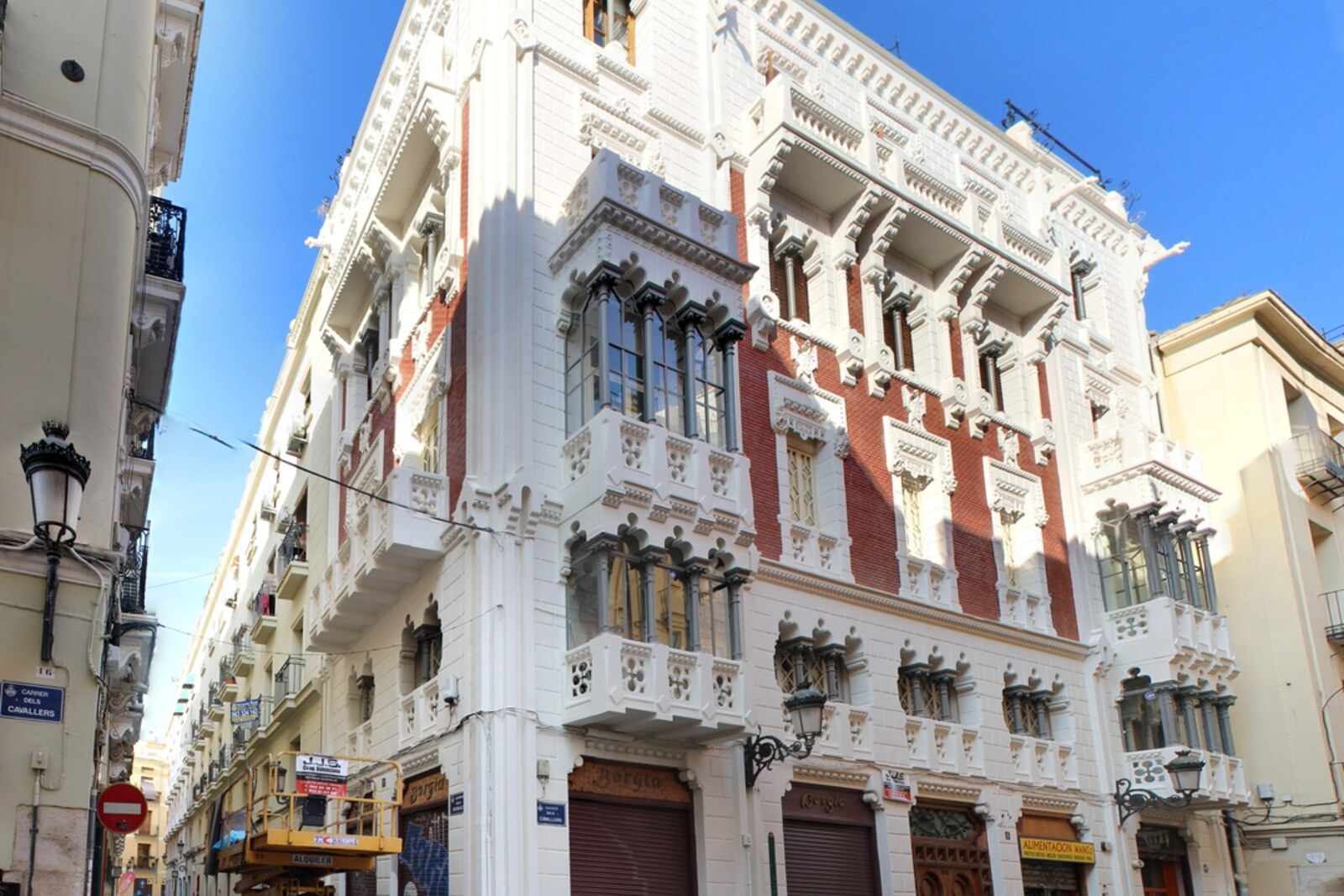
Look around first
What to notice
- Palace facades
- Facade of the Palau de la Generalitat Valenciana
- The street’s perspective toward the cathedral quarter
- Carrer dels Cavallers street sign
The story of the place
The name Cavallers means knights and nobles: in the sixteenth century, noble families chose this slightly elevated stretch for their homes. The palace facades and the facade of the Palau de la Generalitat Valenciana keep the street within the orbit of old power, while its proximity to the cathedral and the city council made it a convenient ceremonial route for high-ranking guests. When the Turia flooded the lowlands by the market and the artisan quarters, this route remained above the water and linked Plaça del Tossal with the cathedral quarter.
On May twenty-first, fifteen twenty, a ceremonial procession stopped at Plaça del Tossal. Diego Hurtado de Mendoza, the viceroy of Valencia appointed by the king, was riding to the cathedral to take office. He was supposed to be led along Carrer dels Cavallers. Guillem Sorolla, a wool weaver and leader of the city’s artisans, made the procession turn in another direction.
A year earlier, during an epidemic, many officials and nobles had left Valencia. The craft guilds, which had been allowed to arm themselves against pirate attacks, joined together as Germania, an armed brotherhood. Its Council of Thirteen, with one representative from each of the largest guilds, demanded that artisans be admitted to city offices. Sorolla made his living as a weaver and secured the king’s initial recognition of this council. He now risked losing both his place in the city government and his freedom: Mendoza had received a secret commission to persuade the Thirteen to resign and to revoke the concessions made to the Council.
The street along which the viceroy intended to ride to the cathedral already showed whose side he was on. Cavallers means knights and nobles. In the sixteenth century, noble families concentrated their homes here and gave the street its name. They chose this slightly elevated stretch because, when the Turia flooded, water more often covered the lowlands around the market and the artisan quarters. From here, the cathedral, the city council, and the Palau de la Generalitat Valenciana were close by. Viceroys and other high-ranking guests were usually led along the decorated Carrer dels Cavallers.
Sorolla changed the ceremony. The people of Germania did not allow Mendoza to proceed straight ahead and led him through Carrer de la Bosseria and Market Square, where artisans lived and worked. Residents had been prepared for the reception in advance. The viceroy had to see the armed guilds before he reached the cathedral. Refusing to let him pass along the street of nobles was a warning: the Council of Thirteen did not intend to disappear by order.
Mendoza responded by refusing to recognize both the Council and the city officials chosen with its participation. He threatened the artisans with punishment. Clashes began; Sorolla’s men seized the viceroy’s residence, and Mendoza fled Valencia with his family. He then joined his detachments to the troops of the leading nobles and returned. By the end of fifteen twenty-one, the city had capitulated. Sorolla was captured, executed, and quartered, and his head was displayed at the corner of the former Casa de la Ciudad.
From Plaça del Tossal, Carrer dels Cavallers still leads to the cathedral quarter. Its palaces of the families from which the name came, and the facade of the Palau de la Generalitat Valenciana, have survived. The very link between the gates, the street of nobles, and the cathedral remains the same—it was along this route that the viceroy was not allowed to proceed that day.
Useful on site
Most details are clearly visible from the street, but inner courtyards and museum spaces may have separate access. Treat residential and service entrances as private space.