 Guide On Map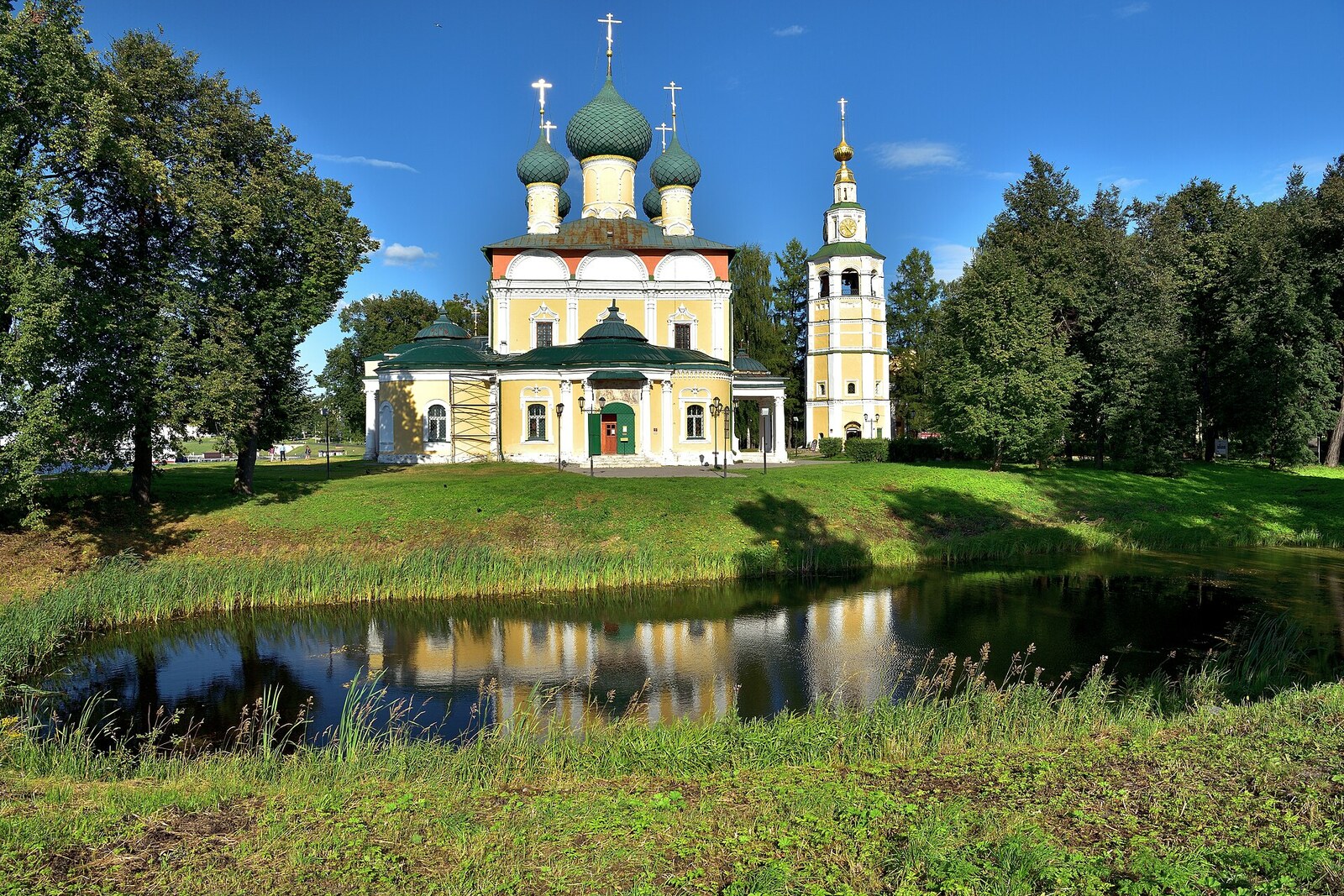
Look around first
What to notice
- Cathedral walls
- Bell tower
- Transfiguration painting on the north wall
- Vaults
The story of the place
In sixteen eleven, another Transfiguration Cathedral stood on this site—a stone church from the time of Prince Andrei Bolshoy. The Time of Troubles was underway: after the royal dynasty came to an end, different claimants sought the throne, and armed detachments each supported their own. When the people of Uglich were ordered to swear allegiance to Sigismund the Third, King of the Polish-Lithuanian Commonwealth, the townspeople refused.
After the breakthrough into the Kremlin, the defenders had two large stone buildings left: the princely chambers and the cathedral. Some residents took shelter in the chambers; others locked themselves inside here. They counted on the thick walls and door bolts holding out longer than the wooden fortifications. The soldiers who burst in broke down the doors, killed the people inside, and set the church ablaze from within. For the people of Uglich, the cathedral fulfilled the last of the urban functions then possible: it became a fortress when there was no fortress left.
After the enemy left, the remaining residents restored it before any of the other ravaged churches. It was the city’s main church, where the cathedral clergy and priests from several parishes served, so leaving it scorched would have meant leaving Uglich without a shared place of worship. The walls were painted anew, the icons were returned, and services resumed. Yet the fire had left cracks in the masonry. By the end of the seventeenth century, the vaults rested on support that was far too unreliable, and the townspeople began requesting permission to dismantle the building.
They received permission in seventeen hundred. The old cathedral was demolished, and the present, more spacious one was built in its place; it was consecrated in seventeen six. Thus, the church’s present appearance resulted from two decisions by the people of Uglich: first, they returned the fire-scorched building to service; then they recognized that it was dangerous to keep trying to save it.
The dedication was retained during the rebuilding. “Spas” here means Jesus Christ, and the Transfiguration is the Gospel event in which Christ appeared to three disciples in divine light. In the early nineteenth century, the painter Timofey Medvedev placed this scene at the center of the painting on the north wall, repeating Raphael’s composition. Today this is Uglich’s main active cathedral, and its name is explained by this very painting.
Nothing remains above ground of the church in which the townspeople died. In its place stand walls built after the people of Uglich obtained permission to dismantle the fire-damaged masonry.
Useful on site
An active church; access for viewing depends on services and the church schedule.
Checked: June 24, 2026. Check the official source before visiting.This is an active church. Do not view the interior during services, speak quietly, and follow local photography rules.