 Guide On Map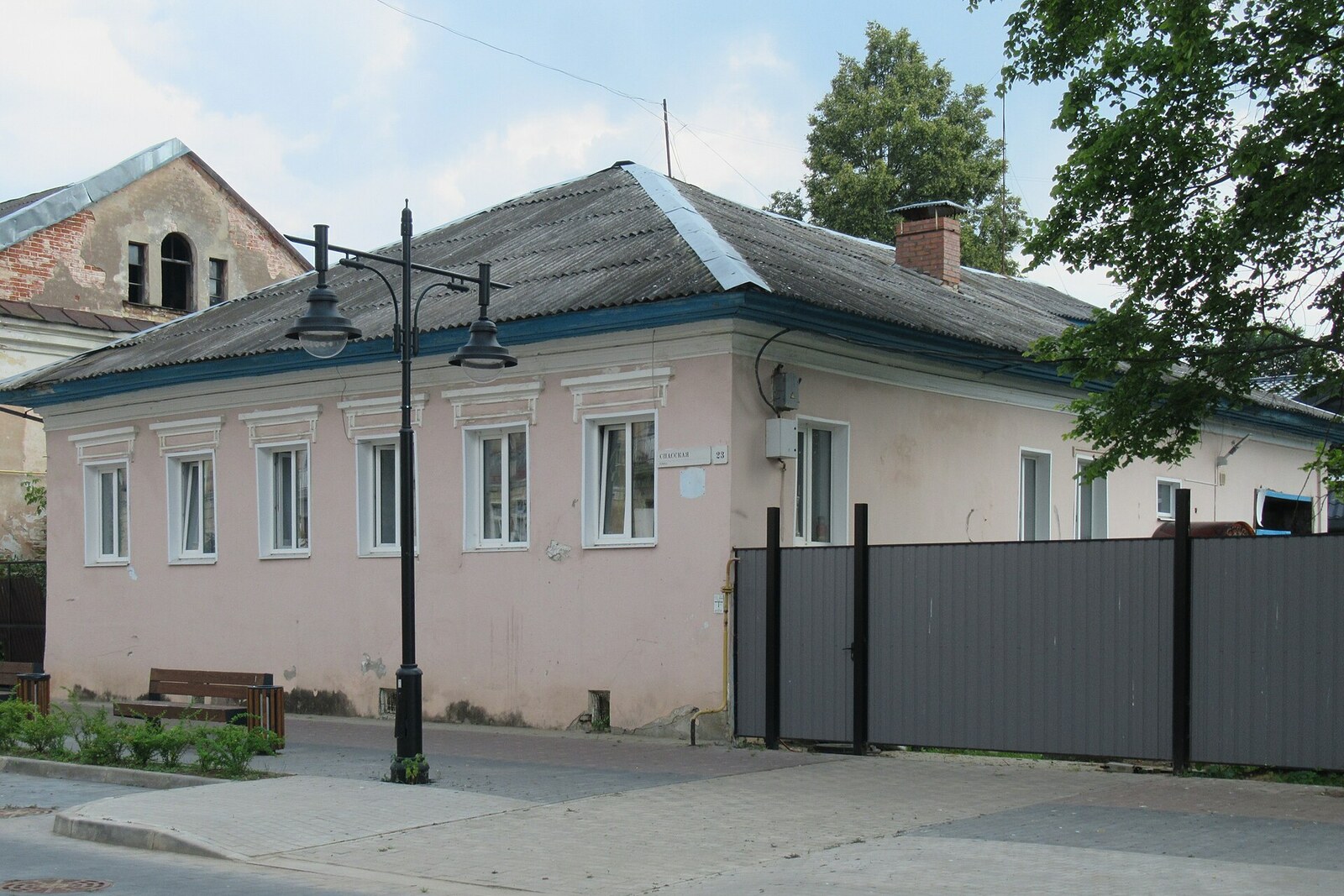
Look around first
What to notice
- The straight line of Spasskaya Street
- The intersection with Lenin Street
- The church by the Volga at the end of the street
The story of the place
At the end of the eighteenth century, merchant courtyards of the Bychkovs stood roughly at the present-day intersection of Spasskaya Street and Lenin Street, then called Moscow Street. Even the owners' grandfather was listed as a pauper. The tallow-and-candle trade lifted the family out of poverty: the Bychkovs turned animal fat into candles, sold them by the town square, opened shops, and gradually acquired land in the most profitable part of Uglich.
By the seventeen nineties, the plots belonged to the brothers Alexander, Andrei, and Dmitry Bychkov. They lived from candle sales and kept their production at their courtyards. In September of seventeen ninety-three, a fire began on Dmitry's property. It swept through the market square and neighboring streets; of Dmitry's own courtyard, only a stone house remained, which he usually rented out as a drinking establishment.
The fire victims also had to deal with a new town plan. In seventeen eighty-four, Empress Catherine the Second approved a general plan for Uglich: the former winding lanes were to be replaced with straight streets and geometric blocks. When surveyors laid the drawing out on the ground, a substantial part of Alexander Bychkov's plot was taken for the new Spasskaya Street.
The brothers decided to build a two-story stone house with shops on the remaining land. Alexander bought the materials, laid the foundation, and raised the first floor. Andrei and Dmitry did not contribute their share of the expenses. The hired workers sat idle, the stored materials deteriorated, and Alexander asked to be allowed to finish the house alone, paying his brothers the value of their plots.
After disputes, the Bychkovs nevertheless built up the corner with two stone buildings. The ground floors were given to traders, and covered galleries on columns were built along the facades. Other shops, taverns, hotels, and inns later appeared along the same line. Thus, candle merchants who had lost part of their ancestral courtyard helped turn the street driven through it into Uglich's business center.
The Bychkovs' buildings burned down in April of nineteen twenty-one and were not rebuilt. The shops and covered sidewalks vanished from the intersection, but the straight line for which Alexander's land had been cut off remained.
The surveyors extended this line to the church by the Volga, now known as the Church of the Nativity of John the Forerunner on the Volga. In the eighteenth century, its main altar was dedicated to the Image of the Savior Not Made by Hands, while the northern side chapel was called that of John the Forerunner. The new street took the name Spasskaya from the main altar.
Useful on site
A city street with no visiting hours; buildings are viewed from the outside.
Checked: June 24, 2026. Check the official source before visiting.Most of the story can be read from the street. Look at the houses without entering courtyards or disturbing residents.