 Guide On Map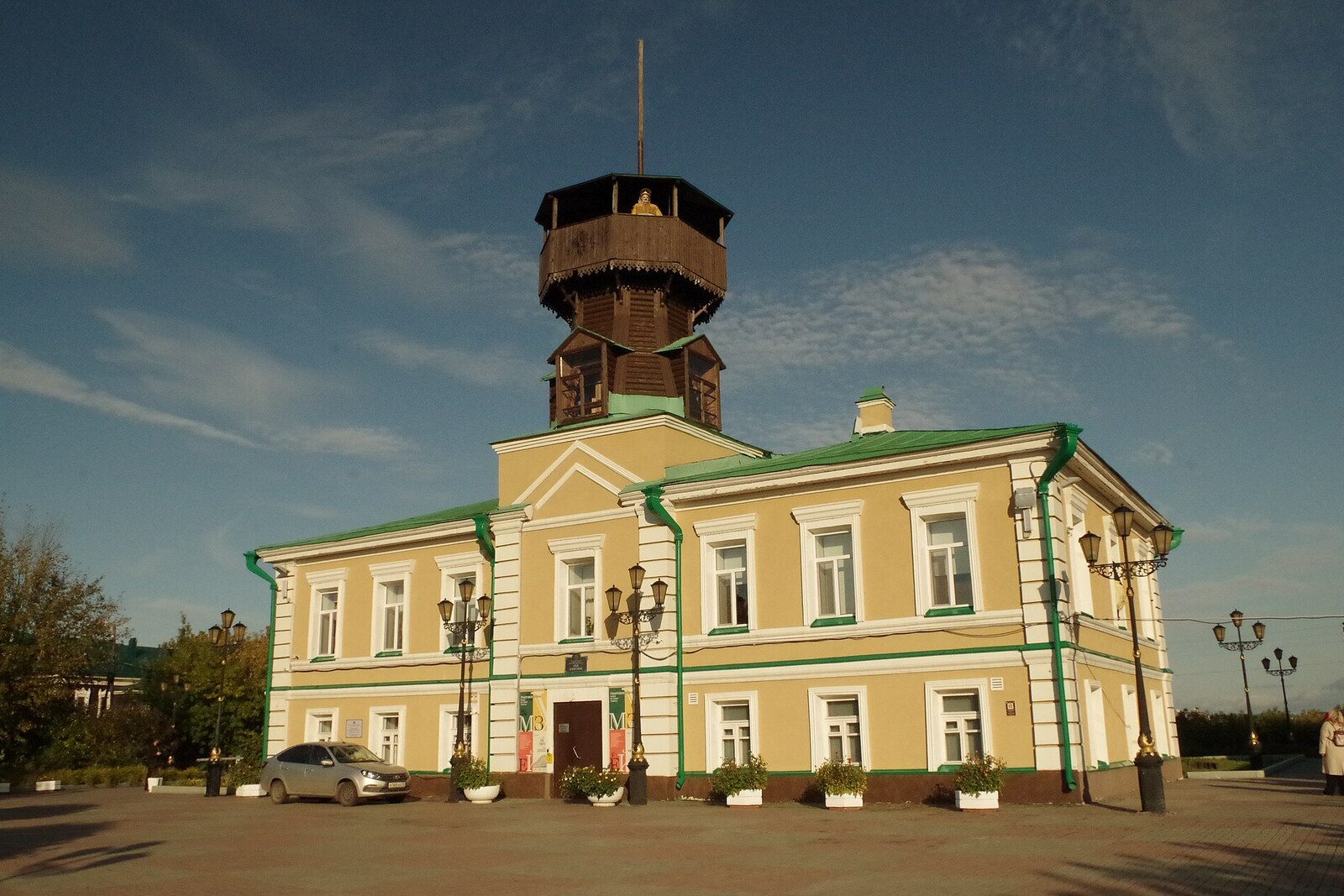
Look around first
What to notice
- Spasskaya Tower
- Palisade
- Stone marking the founding of Tomsk
- Fire tower with a firefighter figure
The story of the place
Behind the museum building rise a palisade and a wooden tower: they mark the old defensive promontory, although no authentic seventeenth-century structures remain above ground. The residential settlement spread out below, and the height made it possible to see the wooden quarters and the distant approaches to the city. Archaeologists found traces here of a wall, buildings, a forge, and the voevoda’s compound. Later, a fire lookout was installed above the roof of the stone administration building, from where signals were sent to different districts of Tomsk based on smoke.
A stone at the edge of the southern promontory states that Tomsk was founded here in sixteen oh four. The exact location of the first fortress remains a matter of debate among historians. This promontory is, however, reliably associated with Tomsk’s second fortress, built in sixteen forty-eight. The wooden Spasskaya Tower beside the museum reproduces that fortress.
By the middle of the seventeenth century, the earlier fortifications had rotted and fallen apart. Osip Shcherbatov, appointed by the tsar as head of Tomsk and its district, received orders to build a new kremlin. Earlier voevodas had avoided this construction: municipal work was considered an obligation of the residents, and refusal to do the “sovereign’s work” threatened punishment and exile. The people of Tomsk would have had to abandon their fields, vegetable plots, and crafts while continuing to pay taxes.
Shcherbatov proposed a different arrangement. Instead of working in person, the townspeople were to collect money, while a hired crew would hew the walls. Townspeople and peasants were subjected to a levy. From the service people—the Cossacks and streltsy who guarded Tomsk and lived on state grain and monetary pay—the voevoda withheld wages for an entire year.
Shcherbatov hired the foot Cossack Pyotr Terentyev to supervise the carpenters. Documents called him a town-builder, a master responsible for constructing the fortress. The crew began hewing the walls on this promontory, while residents sent complaints: they suspected that the voevoda had appropriated part of the money collected.
Shcherbatov’s assistant, the second voevoda Ilya Bunakov, led the dissatisfied service people. He dismissed the carpenters, forbade further payments, and ordered the unfinished fortifications dismantled. Terentyev was declared a traitor, arrested, and tortured. He barely survived the beatings and was unable to work for several months; without their leader, the other carpenters did not dare continue the construction.
In the spring of sixteen forty-eight, Shcherbatov’s opponents removed him from office and locked him in his own compound. The city chancellery was moved from the hill to a private Cossack house in the residential settlement below. From there, the rebels governed Tomsk and sent petitions to Moscow listing the exactions and abuses.
Construction was halted and restarted several times. Yet by September, the carpenters had hewn and roofed the walls, installed gates, and cut loopholes. An investigation later confirmed that Shcherbatov had unlawfully received eighty-eight rubles and sixty-five kopecks. His career nevertheless continued: the former voevoda of Tomsk received the high court rank of okolnichy. Bunakov was flogged with a knout in the square and stripped of his property; other participants were beaten and exiled from the city.
The original walls eventually rotted and disappeared. The present-day Spasskaya Tower and palisade were erected in two thousand four. Archaeologists found on the promontory the remains of a wooden defensive wall, buildings, a forge, and the voevoda’s compound, but no seventeenth-century structures remain above ground.
The height proved useful to the townspeople once again. In eighteen fifty-nine, the architect Vikenty Fadeev built the stone Voskresenskaya Police Administration here, now the museum building. A year later, a wooden fire tower appeared above its roof. From it, almost all of wooden Tomsk could be seen.
The fire lookout kept constant watch over the city. On noticing smoke, he rang a bell and then raised signal markers on a mast: their combination indicated the required district to the fire brigades. Flags or balls were used by day, lanterns at night. The tower was placed on the southern promontory specifically for this view.
The old fire tower was later dismantled and restored when the museum was created. The firefighter figure at the top, Afanasy, appeared in two thousand six. According to a city legend, a fire lookout with that name was the first to notice a fire in Zaistochye and saved the district from burning out. This biography is not documented: today’s Afanasy is a museum mannequin placed at the restored lookout post.
Useful on site
Daily 10:00–19:00; ticket office until 18:30. The main exhibition and viewing platform are paid separately or included in a full ticket.
Checked: June 24, 2026. Check the official source before visiting.Do not mistake the towers for XVII-century structures; the museum interior and access to open platforms depend on the building’s operating hours.