 Guide On Map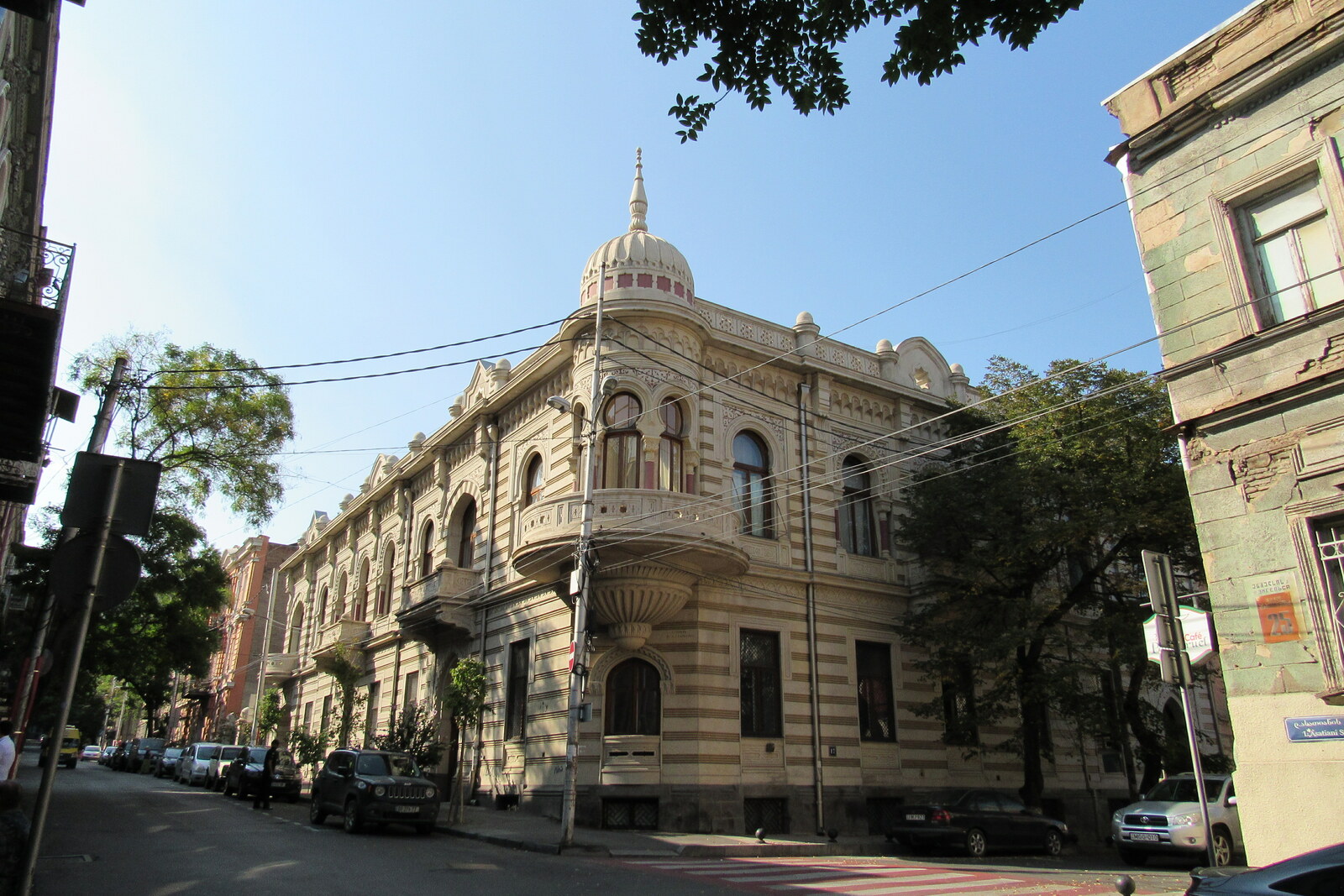
Look around first
What to notice
- Moorish arches
- Molded ornaments
- Colorful paintings
- Marble staircase
The story of the place
At the corner of Machabeli Street and Lado Asatiani Street stands a house with two addresses and two painted grand entrance halls. It received its surname from the man who commissioned it: the merchant Kalantarov, who made his fortune in Baku oil. In nineteen oh eight, the architect Ghazaros Sargsyan built this mansion for him, with Moorish arches, molded ornaments, and colorful paintings.
An urban legend explains the reason for such a commission. Kalantarov was seeking the hand of an opera singer whose name the storytellers did not preserve. She agreed to marry him if the groom built a house capable of rivaling the Tiflis Opera House. Kalantarov staked his own capital on her promise: he paid for the design and construction without yet knowing whether the singer would keep her word.
Sargsyan did not copy the auditorium. He brought into the residence the same Eastern language that had been used to decorate the theater: horseshoe arches, patterned ceilings, a marble staircase, and lace-like stucco. According to the legend, after the mansion was completed, the singer fulfilled the condition and married Kalantarov. The couple had six children. The family story adds that a cypress tree was planted in the courtyard in honor of each child.
The house itself, the architect's name, the year of construction, and the owner's surname are firmly confirmed. The condition of marriage, the wedding, and the family trees remain legend. Even the owner's given name is reported differently by sources: Mikhail, Mkrtich, or only an initial. The building's fate, however, is known more precisely. After the establishment of Soviet rule, the Kalantarovs left the country, and their mansion was converted into a communal apartment house.
It remains residential today. Apartments lie behind the theatrical arches, and the two grand entrance halls serve residents rather than the public. The city's name for the house preserves the surname of the man who paid for it; even legend did not retain the name of the woman for whom, perhaps, it all began.
Useful on site
An urban route point; access to private entrance halls, museums, and courtyards varies, so check the rules on site and do not enter residential spaces without an invitation.
Checked: date not specified. Check the official source before visiting.This is a residential building, and legends do not give anyone the right to enter. If the grand entrance hall is inaccessible, compare the building's exterior sides and do not try to enter the courtyard behind residents.