 Guide On Map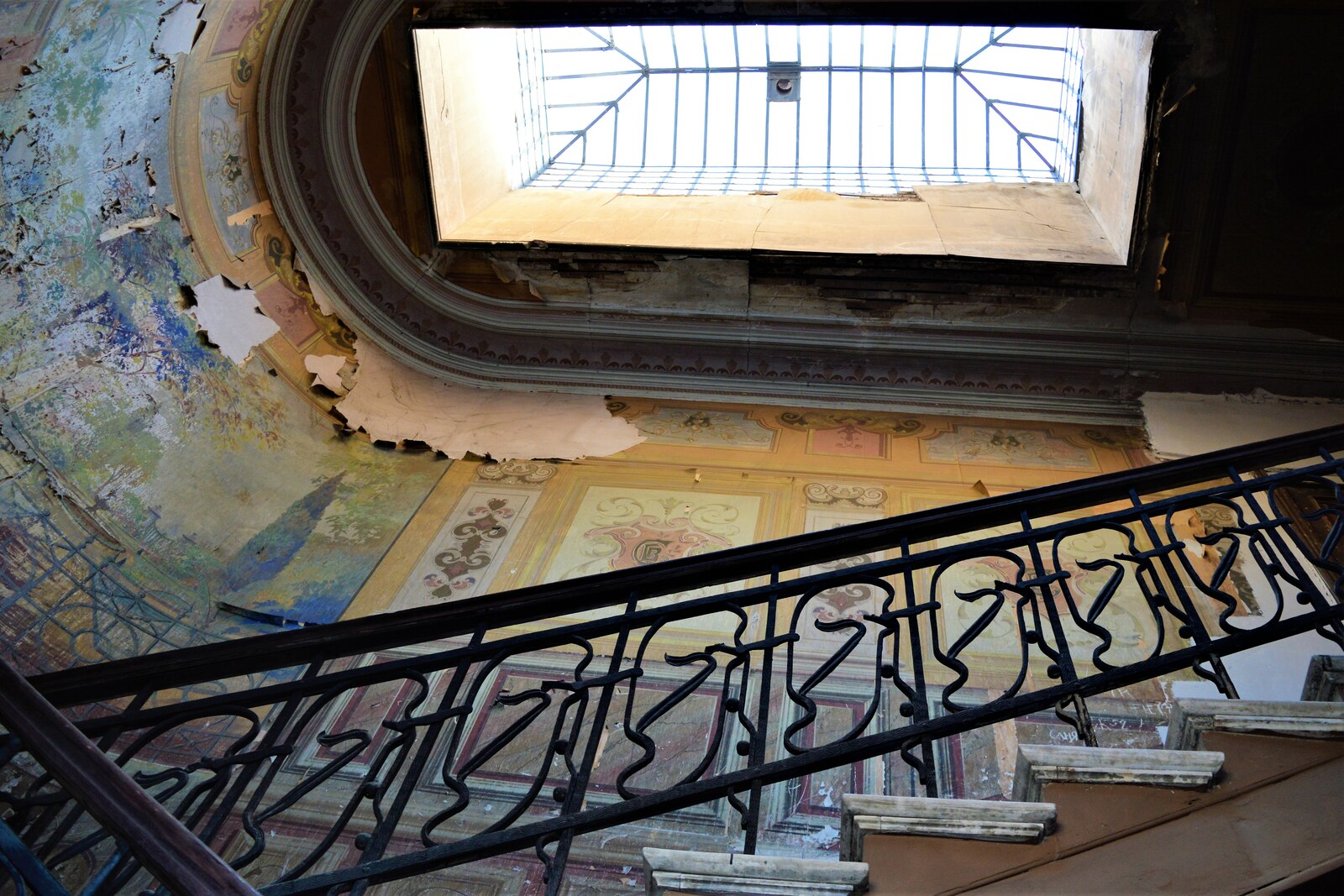
Look around first
What to notice
- The mosaic inscription “Seylanov Brothers”
- Monograms
- Oil paintings
- Old doors
The story of the place
The house was formed from several earlier buildings, remodeled into one large residence. On the staircase, intertwined initials and tall figures of the continents are still visible; residents once covered the darkened paintings with varnish, hoping to preserve them, but the colors disappeared beneath it. The door leaves carried away from the entrance hall in the nineties were returned, and later restorers removed this dense layer from the paintings. Different families still live inside, so the trace of the former owners remains not in a museum, but in the house’s shared entrance.
At the threshold, set into the mosaic floor, is the inscription: “Seylanov Brothers,” with the year nineteen eleven beside it. This is the owners’ signature, not a later name for a landmark.
Behind it were six brothers: Tigran, Artashes, Yeghishe, Vagharshak, Amazasp, and Artyom Seylanov. Natives of the Armenian city of Gyumri, they moved to Tbilisi and joined the First Merchants’ Guild—the highest category of merchants, permitted to make major deals and trade abroad. The brothers made their living from tobacco production. Their factory produced Voskhod, Zephyr, Mars, and Ararat cigarettes; both the family fortune and its place among Tbilisi’s leading industrialists depended on sales.
The Seylanovs acquired several apartment buildings in the city, but rented out the apartments there. They chose this address for themselves and their families. They commissioned the architect Ghazaros Sargsyan to remodel the buildings already standing here, and by nineteen eleven the large shared house was ready.
Visitors were greeted by the Seylanov name underfoot. Above it, their monograms and coat of arms appeared again, while the entrance hall walls were occupied by nearly life-size oil paintings: Asia, Africa, America, Europe, and Russia. The entrance hall then served as the owners’ calling card, so the brothers displayed both the family name and the scale of their enterprise here. The paintings are commonly linked to the geography of their trade, although no document describing the painting program they commissioned has survived. Their authorship has not been definitively established either: the paintings are attributed to the artist Beno Telingater, but during restoration specialists found the signature of another master on them.
After the Soviet regime was established, officials nationalized the house and divided the large family rooms into communal apartments. The manufacturers disappeared from here, but their surname was not chipped out of the mosaic. Later, residents covered the darkened paintings with varnish, hoping to preserve them; the varnish merely hid the colors beneath a dense layer. In the nineties, the old doors were carried away from the entrance hall, but they were found and returned. In nineteen eighteen and nineteen nineteen, restorers cleaned the paintings.
Different families live here again today. The shared house of the six brothers is no more, but their name still lies at the entrance—where the Seylanovs ordered it placed before anyone moved in.
Useful on site
A city route point; access to private entrance halls, museums, and courtyards varies, so check the rules on site and do not enter residential spaces without an invitation.
Checked: date not specified. Check the official source before visiting.This is a residential building. View the entrance hall only when access is unobstructed and appropriate; do not go beyond a closed door or disturb residents.