 Guide On Map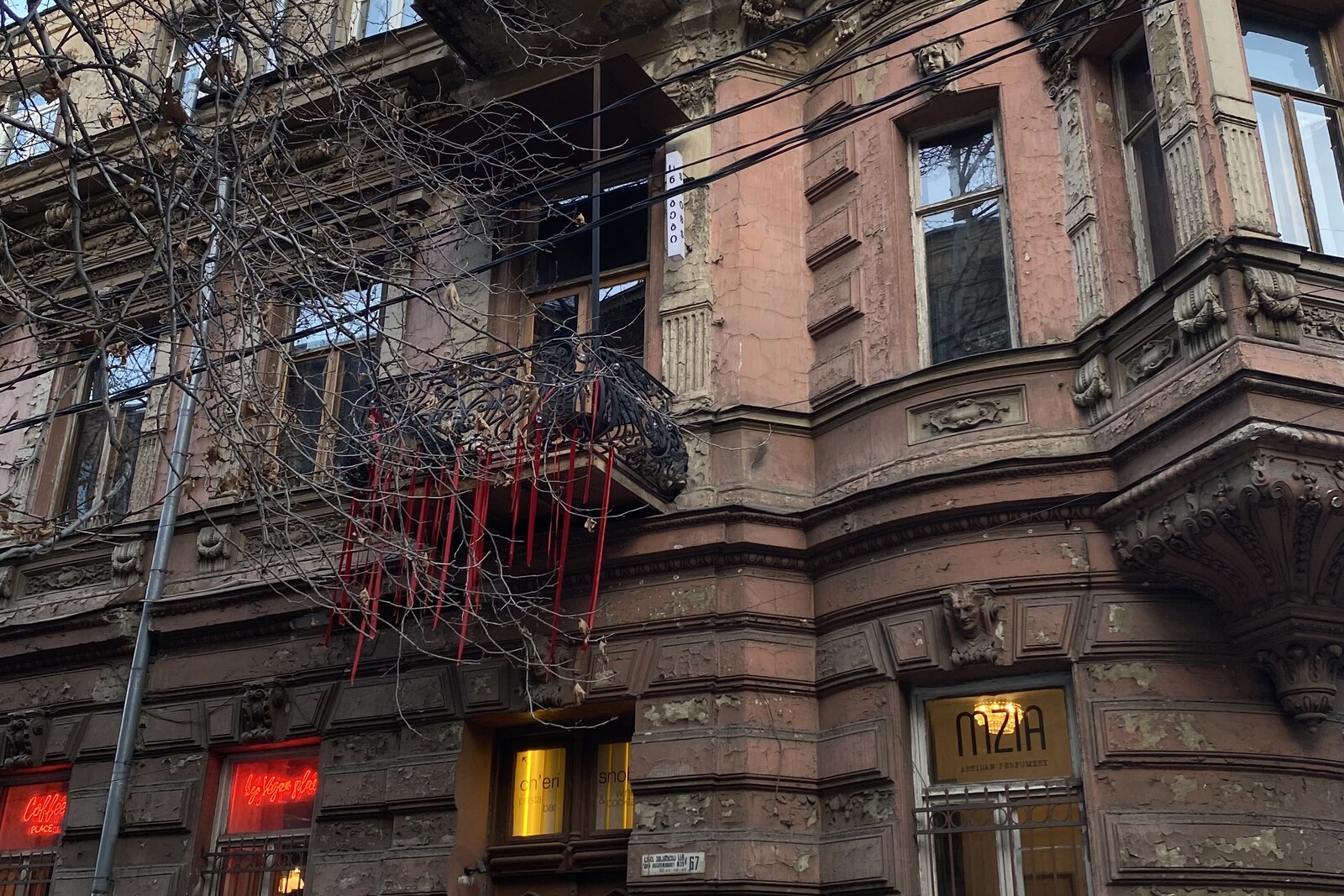
Look around first
What to notice
- Evelina Ter-Akopova's surname in the floor
- Andreoletti's brass signature
- Marble steps
- The added third floor
The story of the place
In the marble vestibule, Evelina Ter-Akopova's surname is set out in black letters. It is the name of the client: a woman oil industrialist who, after her husband's death, built this house to live in herself and rent out some of its premises.
Evelina is often mentioned only as the wife of the major merchant Gerasim Ter-Akopov. The newspaper Caspian makes it possible to distinguish their roles more precisely. In eighteen ninety, it listed the oil companies of the Absheron Peninsula: Gerasim's enterprise was engaged in extraction, while Evelina's firm drilled wells and extracted oil. She also owned sawmills on Madatov Island in the middle of the Kura River. She lived on the income from her own business and appeared in documents under her own name.
By eighteen ninety-six, Evelina had been widowed and invested her capital in this corner house. It was arranged as an income-producing property, with apartments and premises rented out for a fee. Three separate entrances divided the owner's section from the rental sections. Evelina settled on the second floor, behind the most richly decorated main entrance, while the other two sections brought her income.
The marble steps and floor were made by Angelo Andreoletti's workshop. The master left a brass signature in the vestibule, and the client left her surname in black marble. Thus, the house brought together the names of the person who paid for the work and the person who carried it out.
Later, Soviet institutions nationalized the building and resettled new families in it. In nineteen thirty-two, a third floor was added above the two original floors. According to residents' recollections, Evelina herself was not evicted: she remained in her apartment until a very old age. It is now a multi-apartment residential building, but in the main entrance there still lies a stone inscription about the woman who made money from oil and timber, rented out apartments here, and set her own name into the floor of her part of the house.
Useful on site
A city route stop; access to private entrance halls, museums, and courtyards changes, so check the rules on site and do not enter residential spaces without an invitation.
Checked: date not specified. Check the official source before visiting.Start with the facade, the memorial plaque, and the mask opposite. View the interior decoration only without intruding on the house's private life.