 Guide On Map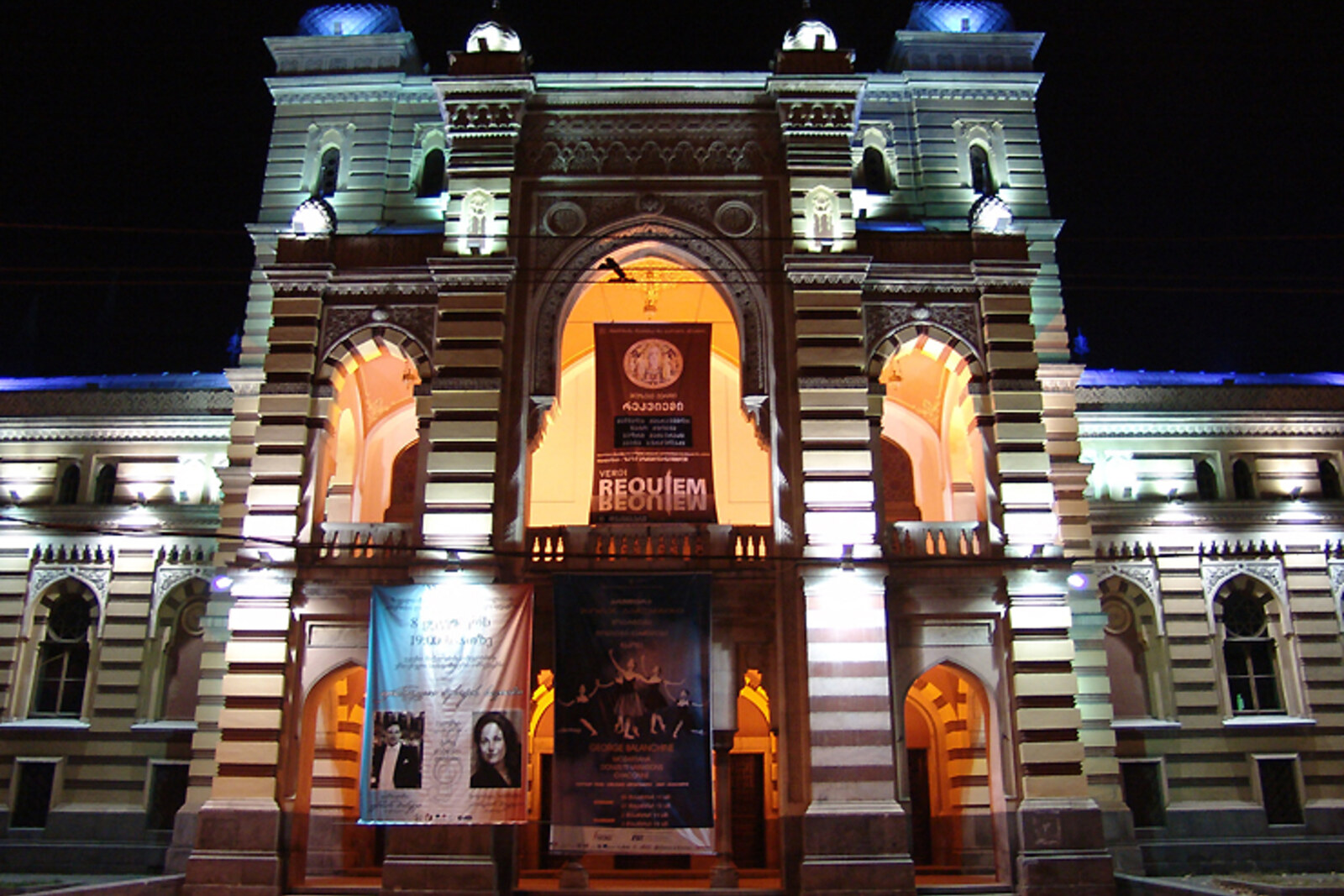
Look around first
What to notice
- Arched windows
- Main entrance
- Garden by the theatre
- Grave of Zakaria Paliashvili
The story of the place
Arched windows and the ceremonial entrance face the garden by Tbilisi's main opera stage. The building in its present form opened in eighteen ninety-six, when the city was officially called Tiflis and was part of the Russian Empire. Russian, Italian, French, and German operas were performed here, and now Georgia's state opera and ballet companies work here.
On February twenty-first, nineteen nineteen, Zakaria Paliashvili took the conductor's podium on this stage. Before him lay the score of Abesalom and Eteri, which he had been writing for almost nine years. The premiere lasted about six hours. After the performance, the composer was crowned with wreaths.
When the present building opened in eighteen ninety-six, Tiflis—as Tbilisi was then officially called—was part of the Russian Empire. Seasons at the main opera theatre usually began with Glinka's A Life for the Tsar; Italian, French, German, and Russian operas were performed here. Paliashvili had already conducted Carmen and Tosca on this stage and was involved with a society that staged European operas in Georgian translation. To move from translation to its own repertoire, a large original score in Georgian was needed.
Paliashvili's everyday work remained teaching, directing a music school, and conducting. At the same time, he recorded folk songs throughout Georgia. He had no money for a phonograph; the device was acquired with the help of the Society for the Spreading of Literacy among Georgians. The composer combined the collected intonations and techniques of Georgian polyphony with the form of a four-act European opera. The libretto was based on the old legend Eteriani, about Prince Abesalom and Eteri, whose love Murman destroys.
Work stopped after the death of the composer's only son, Irakli. The boy sat beside his father as he composed the opera and, according to family recollections, sometimes made remarks about the music. According to legend, in despair Paliashvili wanted to tear up the manuscript, but his friend, the historian Ivane Javakhishvili, snatched the sheets of music from his hands. The exact scene is preserved in oral tradition, but the dedication on the score is beyond dispute: the composer completed the opera in memory of his son.
In nineteen nineteen, musicians staged three Georgian operas here at once, which is why this season is considered the birth of Georgian national opera theatre. Abesalom and Eteri received a particularly warm welcome: over the next four years, the troupe performed it one hundred times. Paliashvili continued working in Tbilisi, directed the conservatory, and wrote two more operas for this same stage.
After the composer's death in nineteen thirty-three, he was buried in the garden near the theatre. Four years later, the institution was named after him. Today, Georgia's state opera and ballet companies work here, and by tradition the seasons open with Abesalom and Eteri. The name on the facade, the grave in the garden, and the title in the season's first program belong to the same story.
Useful on site
the facade is accessible from the street; entry inside depends on the current program and a ticket
Checked: June 29, 2026. Check the official source before visiting.The architectural design is easy to make out from outside. A performance or a look inside requires separate planning.