 Guide On Map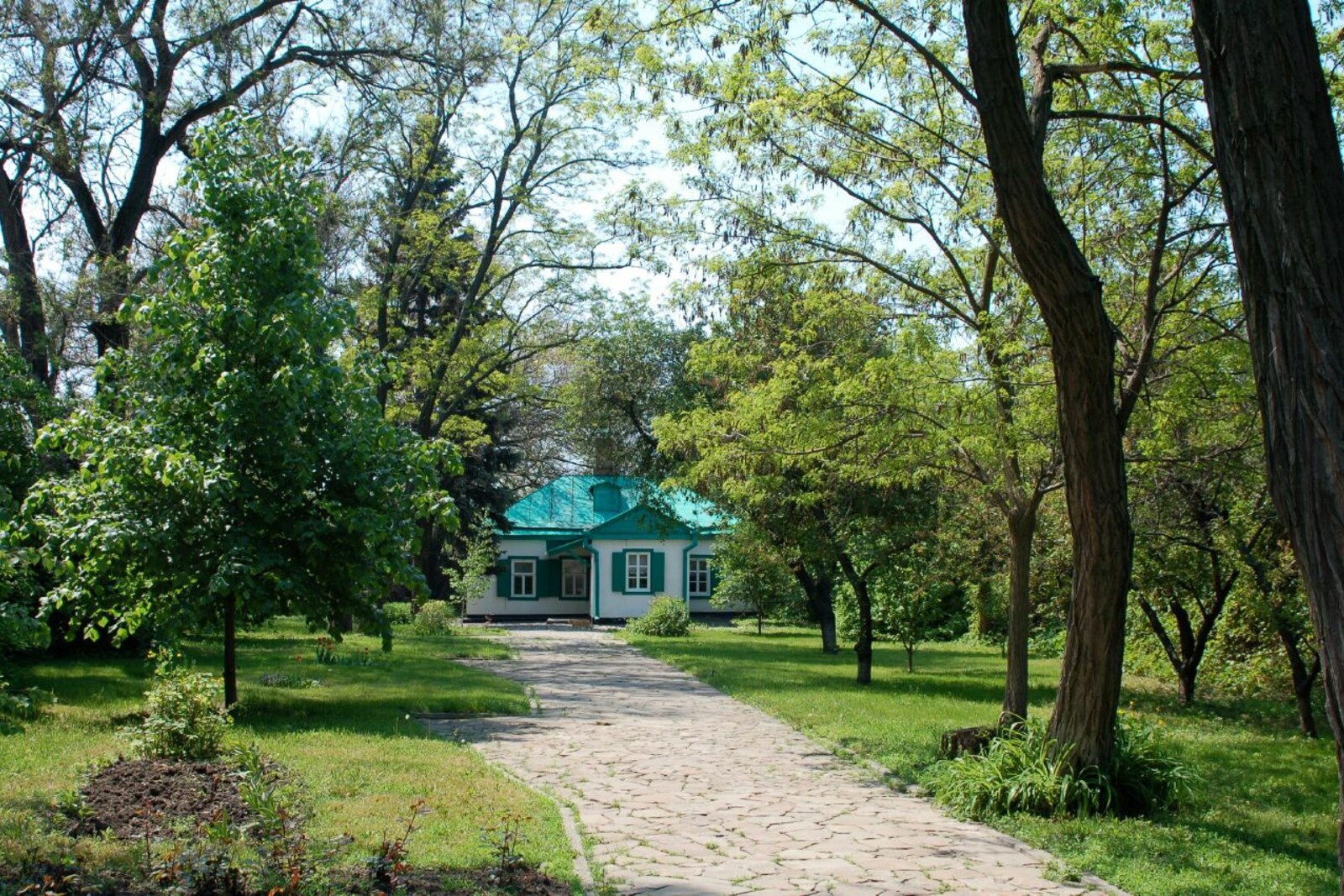
Look around first
What to notice
- Whitewashed earthen annex
- Stove
- Family photographs
- Three living rooms
The story of the place
In nineteen thirty-one, Alexander Morrison, the editor of a local newspaper and an admirer of Anton Chekhov, first entered this annex. A museum already existed here, but it was kept going by just a few caretakers and looked neglected: trampled floorboards, photographs beneath dusty cracked glass, and a stove stuffed with crumpled paper.
Morrison pulled out one sheet, smoothed it flat, and saw Anton Chekhov's autograph. The caretaker explained that no firewood was provided: unless the stove was heated, damp would ruin everything, so papers went into it. No one counted how many handwritten sheets had already been burned. Many years later, Morrison's daughter, who had been a child at the time, recorded this scene; the exact conversation is known from her recollections, not from a museum record.
To understand why Chekhov's papers ended up in such a place, we need to return to the purpose of the annex itself. In the autumn of eighteen fifty-nine, Pavel Yegorovich Chekhov, a novice Taganrog merchant, rented cheap lodgings from the trader Gnutov beside his grocery shop. His pregnant wife, Yevgenia Yakovlevna, and their two young sons moved in with him. On January twenty-ninth, eighteen sixty, their third son, Anton, was born here—the future physician, writer, and playwright.
The family occupied three rooms and a kitchen, with a total area of about thirty-five square meters. As early as March of the following year, the Chekhov family moved away. Anton Chekhov wrote no stories here and did not spend his childhood here: this house gave him his birth and the first fourteen months of his life. The annex's small size gave the museum its everyday, and then official, name: “Chekhov's Birthplace.”
Morrison made his living as an editor and worked to save the museum after his newspaper job, without a separate position or salary. The sheets found in the stove prompted him to sort through what had survived, search for photographs and for people who remembered the Chekhov family. He brought here a former gymnasium classmate of the writer, who helped reconstruct the arrangement of objects and look for items from the old furnishings. In nineteen thirty-three, the museum received memorial status and reopened as a reconstructed family home.
The present-day rooms have not remained untouched since the time of the Chekhov family. Their furnishings were assembled from recollections, family documents, and the few authentic objects among items from that era. The whitewashed earthen annex itself has survived; how many Chekhov sheets burned before Morrison looked into the paper-stuffed stove remains unknown.
Useful on site
Tue–Sun 10:00–18:00, ticket office until 17:00; closed Mon. Until 31.08.2026, on Thursdays 10:00–19:00, ticket office until 18:00. 01.07.2026 is a cleaning day.
Checked: June 24, 2026. Check the official source before visiting.The size of the house is clear even from outside, but indoors it is especially noticeable how little personal space was left for a large family.