 Guide On Map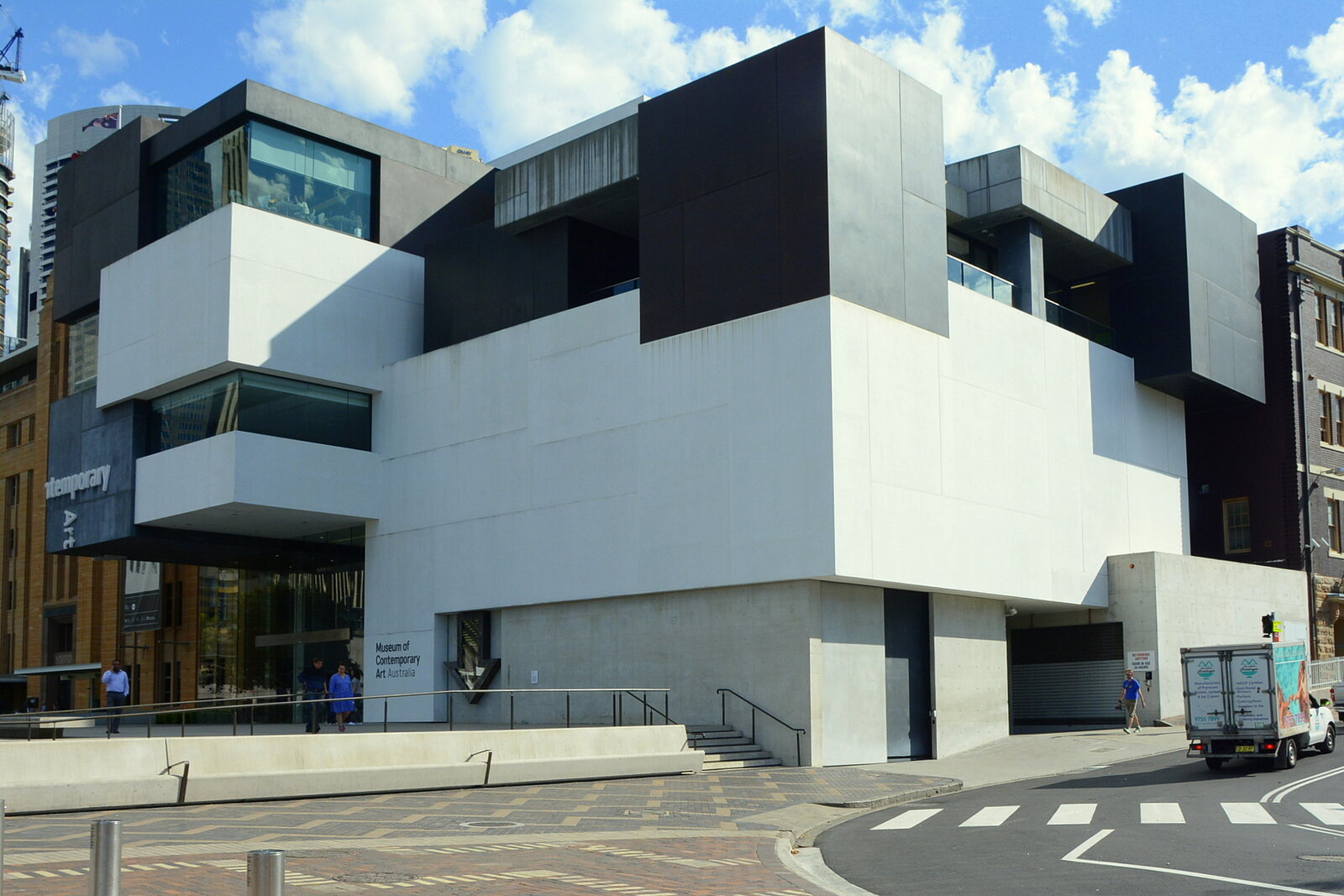
Look around first
What to notice
- Stone ship's wheel, propeller, and anchor
- The museum's old building
- The lawn by the water
The story of the place
Commissariat Stores stood on the site of the Museum of Contemporary Art Australia until nineteen thirty-nine. The commissariat was the service that stored and issued government supplies. Convicts, soldiers, and institutions of the young colony received food and equipment from here. Two stone buildings were constructed right by the water in the early nineteenth century. They served for about one hundred thirty years and, by the end of that time, were considered Sydney's oldest surviving public buildings.
In nineteen thirty-seven, Sir John Butters, chairman of the committee redeveloping Circular Quay, was preparing the site for a railway station, elevated tracks, and a new office for the Maritime Services Board. The board's old premises had to disappear because of the railway, and Butters decided to put the new ones where the stores stood. The committee acknowledged their historical value but considered them an obstacle to the chosen layout. The tenants were given three months to move out.
James Houison, honorary secretary of the Royal Australian Historical Society, tried to show that the railway line did not affect the stores. They were to be demolished to create an open area around the port office. Houison demanded that another site be found for it.
Sid Long joined him—an artist who made his living through painting and etching. He was making an etching of a view of these stores from the cove and, while working, discovered Cadmans Cottage, almost unnoticed behind a wall. Long warned that Butters's plan would destroy both the stores and the cottage. Only the cottage could be saved.
In the summer of nineteen thirty-nine, the stores began to be dismantled. The Historical Society secured the preservation of the foundation stone, but the buildings themselves disappeared. A quick replacement did not materialize: the site stood empty for about twelve years. The Maritime Services Board occupied its new office only in nineteen fifty-two.
Annie Forsyth Wyatt, an advocate for nature and old buildings, watched the demolition. The loss of the stores at the western edge of the quay became one of the proofs for her that one-off newspaper campaigns could not stop bulldozers in time. In nineteen forty-four, Wyatt proposed creating a permanent society that would compile lists of valuable places in advance and campaign in their defense. In the spring of the following year, she and twenty-eight other members founded the National Trust of Australia (NSW).
The museum's old building now stands above the remains of the stores. It was built for the service that managed the state's wharves and shipping, which is why stone depictions of a ship's wheel, a propeller, and an anchor remain high on its facade. Beneath the building and the neighboring lawn, archaeologists found the foundations of the demolished buildings and slabs of the former waterfront.
The paintings came to the port office thanks to another person. Sydney doctor John Power inherited a fortune, left medicine, and became an artist in Europe. Sales of his own works did not support him, and Power could afford to paint without regard for buyers. He left Australia when young and never returned, yet he bequeathed about two million pounds to the University of Sydney: the money was to introduce Australians to the newest foreign art.
After the death of his wife Edith, the will came into effect. The university began buying works that other Australian collections passed over at the time. The collection waited for permanent premises until the Maritime Services Board left its office at Circular Quay. The state government transferred the building to the future museum, and galleries of contemporary art opened here in nineteen ninety-one. The ship's wheel, propeller, and anchor remained above the windows, while the Commissariat Stores remained only beneath the museum floor and the grass by the water.
Useful on site
The public edge of the wharves is accessible as an outdoor passage; museum hours vary, and the current The Rocks district page states that it is closed on Tuesdays and open on other days from ten to seventeen hundred; ferries and passages depend on warnings.
Checked: date not specified. Check the official source before visiting.Do not linger in the passenger passageways by the wharves. Viewing the exhibitions is a separate visit; the route works without entering the museum.