 Guide On Map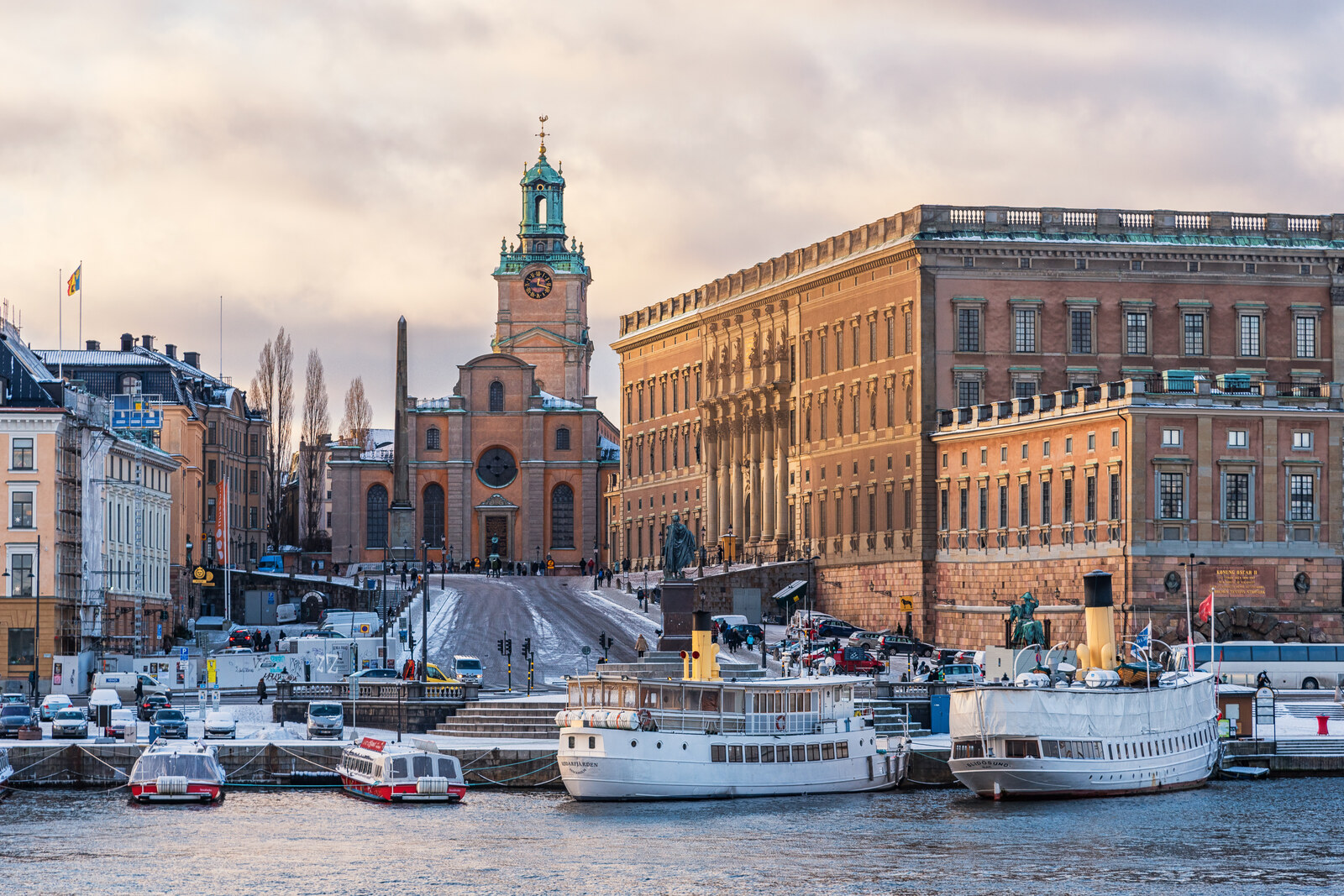
Look around first
What to notice
- Bronze figure of the king
- Ship’s rudder
- Olive branch
- Granite obelisk
The story of the place
At the upper edge of the slope by the palace stands a granite obelisk. It was erected in memory of the city burgesses whose units remained to guard the capital when the army went on campaign. At that time, burgesses were merchants and guild masters with full rights as townspeople; the garrison was maintained with their money. The old stone later cracked, and in twenty twenty the obelisk was assembled from new blocks, with the original inscription retained.
Slottsbacken means “Castle Slope.” This short street descends from the southern façade of the Royal Palace to Skeppsbron. By the water stands a bronze Gustav III. The king is depicted at the moment when, after the war with Russia, he lands right here and begins the climb to the palace.
He started the war in seventeen eighty-eight, hoping to regain support within the country. The opposite happened: the first setbacks strengthened the resistance of officers and the nobility. In July of seventeen ninety, Gustav personally led the Swedish fleet in the Battle of Svensksund and won a victory after which Russia agreed to negotiations. The peace treaty did not move the border, but Russia renounced its previous claims to interfere in Sweden’s system of government. The king could return as a victor and restorer of peace.
Stockholm greeted him more coolly than he expected. The city burgesses—merchants and guild masters with full rights as townspeople—agreed to erect a triumphal arch at the northern city gate only after pressure from the governor. These people paid city taxes, maintained the garrison, and performed guard duty; while the army was at war, their military units guarded the capital. They had reason to see the end of the war as a relief, but the king needed a celebration.
In official correspondence, the request to erect a monument came from the burgesses. Gustav determined which monument they were supposed to wish for: a statue of himself by Johan Tobias Sergel, the court sculptor, to be paid for by the townspeople. Sergel gave the king a naval uniform, a ship’s rudder as a support, and an olive branch in his outstretched hand. The result was a landing forever frozen in place—at the very spot where the landing took place.
Gustav did not see the statue. Two years later, he was mortally wounded at a masquerade ball, and disputes over a site for the monument delayed the work for years more. The bronze king was unveiled only in eighteen oh eight. The inscription on the pedestal calls him a lawgiver, victor, and restorer of peace, and names the Stockholm burgesses as the donors.
Higher up the slope stands a return gift. After peace was concluded, Gustav ordered an obelisk erected in gratitude to those same burgesses for their guard duty during the war. It was his son, Gustav IV Adolf, who completed it in eighteen hundred. The old granite blocks later cracked; in twenty twenty, they were replaced with newly cut ones, while preserving the inscription.
By the quay, an inscription thanks the king on behalf of the burgesses. By the palace, another inscription thanks the burgesses on behalf of the kings. Between them rises Slottsbacken—the road by which Gustav III returned from the war to his palace.
Useful on site
The street space is open at all times; passage may change temporarily because of ceremonies, official events, and work at the palace complex.
Checked: June 17, 2026. Check the official source before visiting.The stop can be experienced entirely from outside. On the slope, stand clear of traffic and view the ensemble from several levels.