 Guide On Map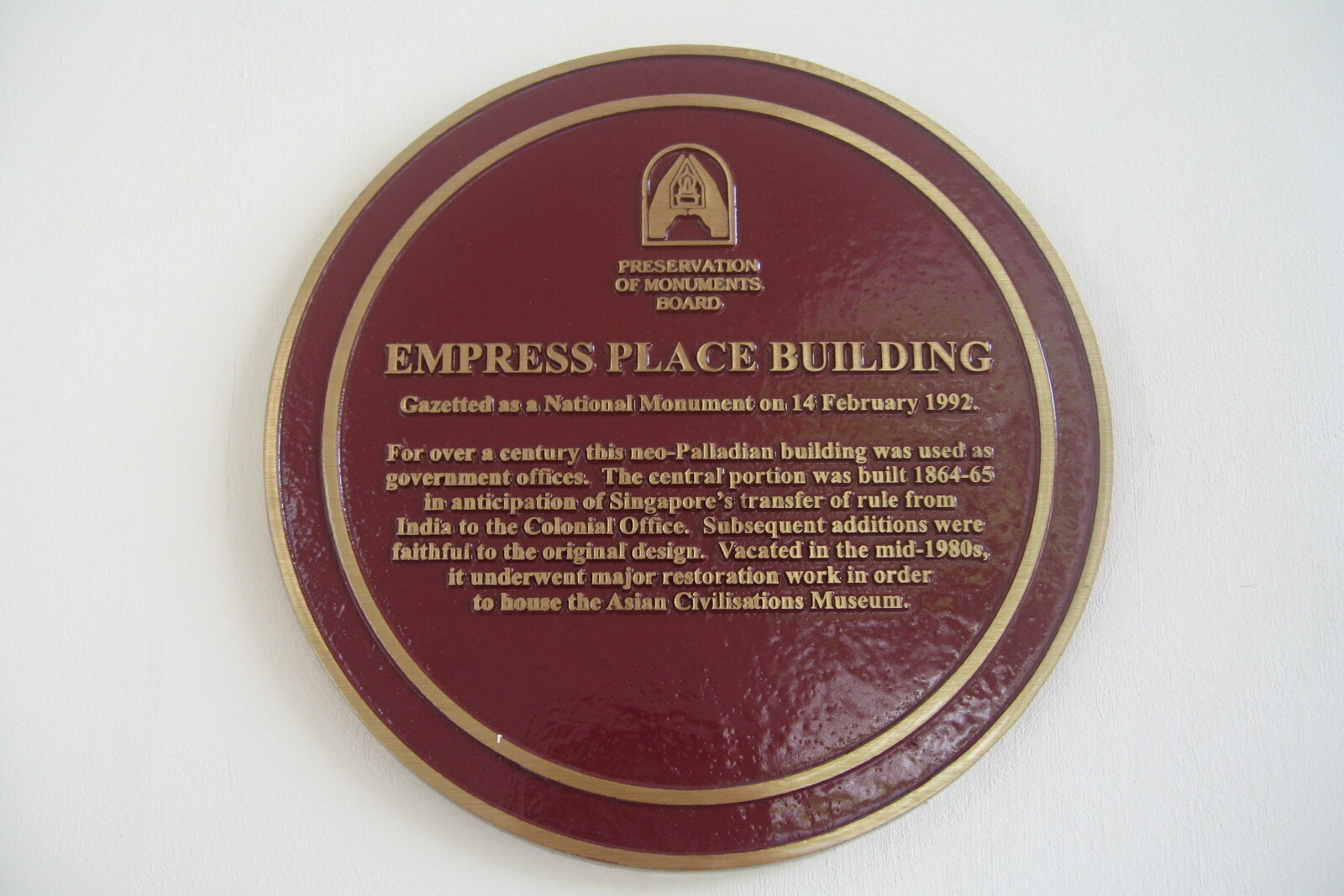
Look around first
What to notice
- The light-colored museum building
- The arcades of the former Empress Place Building
- The open square by the river
The story of the place
A large tree once stood between the river and the light-colored building of the Asian Civilisations Museum. In the mid-nineteen fifties, employees from the neighboring offices gathered beneath it at lunchtime. David Saul Marshall chose this crowd for his first rallies—a prominent criminal lawyer, leader of the Labour Front party, and supporter of Singapore gaining self-government soon.
Behind the tree stood the Government Offices—what the present museum building was called after it opened in eighteen sixty-seven. It housed the colony’s secretariat, treasury, land and medical departments, public works department, attorney general’s chambers, and police headquarters. The Empress name appeared later. In nineteen oh seven, members of the municipal council named the square in memory of the late Queen Victoria, who also bore the title Empress of India. The square’s name then passed to the building as well.
Marshall chose the tree precisely because of its proximity to these offices. He borrowed a small van with a loudspeaker from a friend, arrived for the lunch break, and spoke to the clerks coming out of the Government Offices. They served in the colonial administration, and Marshall explained why the British governor should not govern the island without full oversight from elected representatives.
In the nineteen fifty-five elections, the Labour Front won more seats than any other party. Marshall became Singapore’s first Chief Minister—the head of the local cabinet under the British governor. His powers remained limited: British officials retained finance, foreign affairs, defense, and internal security, while the governor could block a law that had been passed. At first, there was not even a separate office for the new Chief Minister. Marshall threatened to set up a desk and chair beneath that very tree. After that, he was hurriedly assigned a cramped room under the stairs in the neighboring building of the Legislative Assembly of Singapore.
He continued to return to the square. On March twenty-first, nineteen fifty-six, Marshall gave a speech here demanding “Malay merdeka”—freedom and self-government. Before leaving for negotiations in London, he personally nailed a sign reading “Singapore wants merdeka” to the tree. Marshall sought an arrangement under which the elected cabinet would be responsible for the island’s affairs, and he had tied the outcome of the negotiations to his position in advance.
The British side agreed to transfer many powers to the local government but insisted on retaining the deciding vote in the council responsible for internal security. Marshall refused to accept this condition. The negotiations ended without an agreement, and on June seventh, nineteen fifty-six, after fourteen months at the head of the cabinet, he resigned.
His successor, Lim Yew Hock, continued the negotiations. Subsequent delegations agreed on a new constitution, and in nineteen fifty-nine Singapore gained internal self-government. For those elections, residents came to the Empress Place Building to register. After the proclamation of the independent republic, the citizenship, birth and death registers and the immigration department were also housed here.
The “old apple tree” beneath which Marshall spoke was most likely not an apple tree. A newspaper reporter invented the nickname; Marshall himself called the tree a tembusu, but its species could not be identified from the surviving photographs. The tree disappeared in the nineteen eighties. At the same time, the last government services moved out of the building. In nineteen eighty-nine, the Empress Place Museum opened here, and since two thousand three, art from China, Southeast Asia, South Asia, and West Asia has been exhibited in the former government offices. What remains of Marshall’s rally site is the open space by the river before the same arcades of the Empress Place Building; the tree itself is no longer here.
Useful on site
The museum is open daily 10:00—19:00, on Fridays 10:00—21:00; entry to the galleries ends 30 minutes before closing. The stop itself is intended for viewing the exterior and the waterfront.
Checked: July 1, 2026. Check the official source before visiting.Outside, focus on the contrast between the heavy administrative architecture and the river before it. A ship’s cargo is in the museum exhibition; viewing it will require a separate visit.