 Guide On Map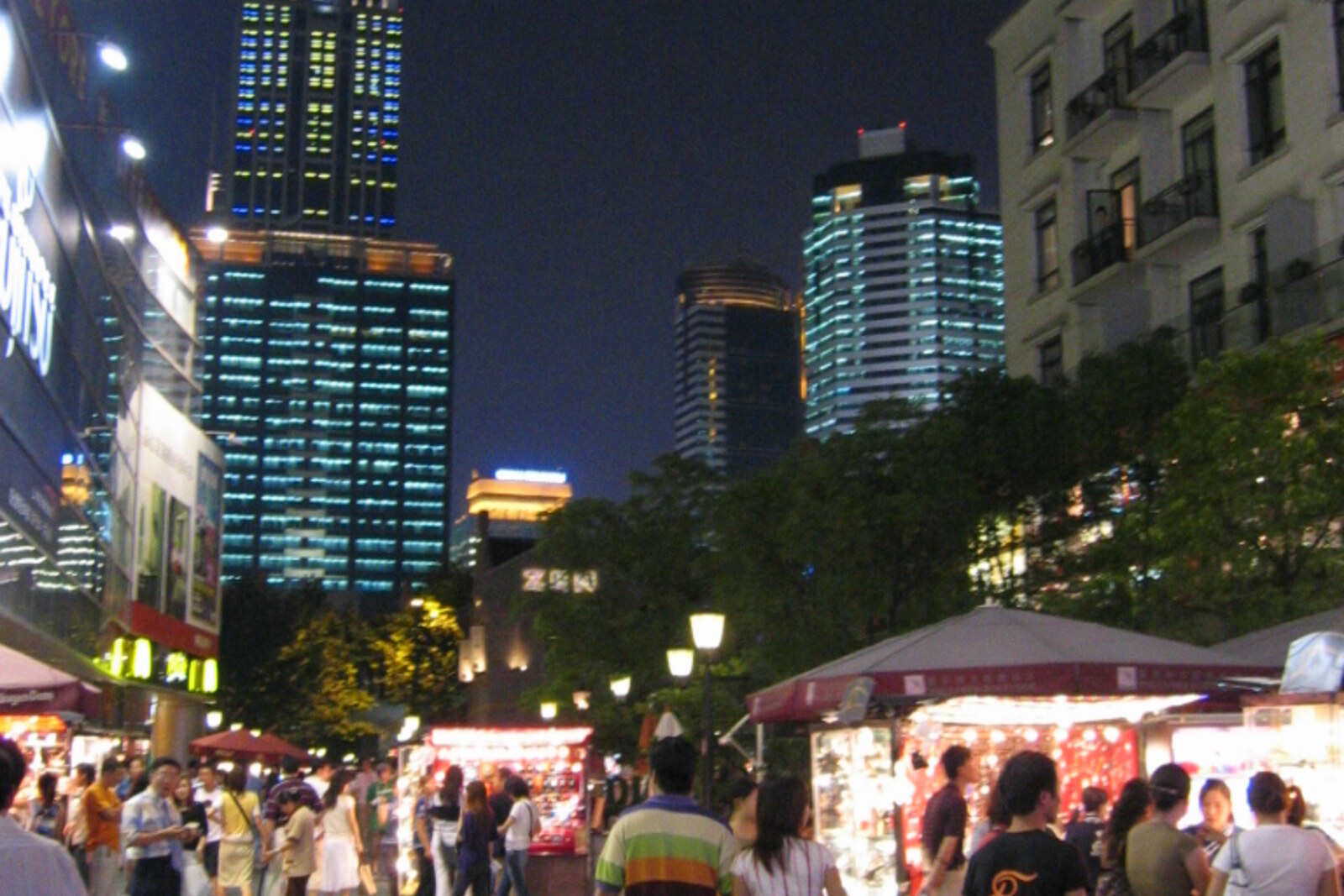
Look around first
What to notice
- Stone gate frames
- Heavy doors
- Narrow lanes
- Rows of two-story brick houses
The story of the place
Among the restaurants and shops of Xintiandi stands a row of two-story brick houses with heavy doors set in stone frames. The word “shikumen” comes from these frames. Behind the gates was a small courtyard, then a shared room and residential floors. Builders compressed the Chinese courtyard house to the width of a European townhouse and set such houses in continuous rows along narrow lanes.
In the summer of nineteen twenty-one, houses number one hundred six and one hundred eight on Wangzhi Road—now seventy-six and seventy-eight on Xinye Road—were occupied by the Li brothers. The elder, Li Shucheng, was a general and former minister of war in the Beijing government. The younger, Li Hanjun, translated Marx’s works, organized the Shanghai communist study group, and pressed to unite the scattered groups into a nationwide party. A passage was made between the brothers’ two halves. A large dining table stood in the elder brother’s house, while Li Hanjun’s study was upstairs in the neighboring house.
On July twenty-third, thirteen delegates from Shanghai, Beijing, Wuhan, Changsha, Jinan, Guangzhou, and the Chinese group in Japan gathered around that table. Two representatives of the Communist International were also present. The meeting was held in secret: the French police watched political organizations and could arrest the host along with the guests.
Li Hanjun provided the house, prepared draft documents, and translated the foreigners’ speeches, yet the dispute at his own table went against him. He believed that Chinese socialists should first spread knowledge, create organizations, and use legal politics where possible. The majority chose a centralized revolutionary party. The host’s proposals were rejected, and he was not elected to its governing body.
On the evening of July thirtieth, the sixth session began. A stranger in a gray long gown looked into the room, surveyed those gathered, and said he was looking for the chairman of a neighboring public organization. He then left quickly. Historians have not established with complete certainty who sent him there: later accounts name a police detective, while archival documents allow that the police found out about the meeting while checking the neighboring address.
Maring, the representative of the Communist International with experience in underground work, ordered everyone to leave immediately. Li Hanjun, who would have to answer for what was happening in his own living room, and the delegate Chen Gongbo remained in the house. Within a few minutes, French police officers and Chinese detectives arrived. They searched the rooms and asked why people had gathered there and why the shelves held so much socialist literature.
Li Hanjun answered in French. He presented the meeting as a conference of editors of a book series, the foreigners as professors, and the books as working materials. The police found no documents sufficient for an arrest. They left, but it was no longer possible to continue the congress at that address.
Wang Huiwu, the wife of the delegate Li Da and the meeting’s organizer, proposed moving the final session to her hometown of Jiaxing. There, the participants hired an excursion boat on Nanhu Lake, adopted a program and a resolution, and elected a central bureau. Thus the meeting that had begun at the Li brothers’ dining table ended with the creation of the Communist Party of China. Li Hanjun himself soon withdrew from the party organization. In December nineteen twenty-seven, the military arrested him in Wuhan on charges of leading communists and shot him.
When the search for the site of the First Congress began in nineteen fifty, former Wangzhi Road was already called Xinye Road, and a noodle shop operated behind the stone gates of house number seventy-six. Researchers interviewed former residents and participants in the meeting, established the old numbering, and reconstructed the rooms. That is why the setting of the hall inside is a museum reconstruction; the two connected shikumen themselves stand at the address from which the delegates managed to leave before the search.
The name Xintiandi, “new world,” appeared for the commercial complex on the site of the former Taipingqiao residential district. In the late nineteen nineties, the developer Vincent Lo and the architect Ben Wood converted neighboring shikumen into restaurants, shops, and galleries; many interior spaces were dismantled or completely rebuilt. The protected house of the First Congress limited the height of construction beside it, so the low rows and the lines of the lanes were preserved around it. Now people enter restaurants through neighboring stone gates, and the memorial museum through the gates of house number seventy-six.
Useful on site
The Xintiandi street quarter is open around the clock. Memorial of the First Congress of the Communist Party of China: Tue–Sun 09:00–17:00, entry until 16:30, closed Mon except public holidays. Do not use the status of the old shikumen house-museum without a new check.
Checked: June 28, 2026. Check the official source before visiting.The commercial quarter and the memorial site operate by different rules; check access to the museum section separately, and allow for a dense flow of people in the passageways.