 Guide On Map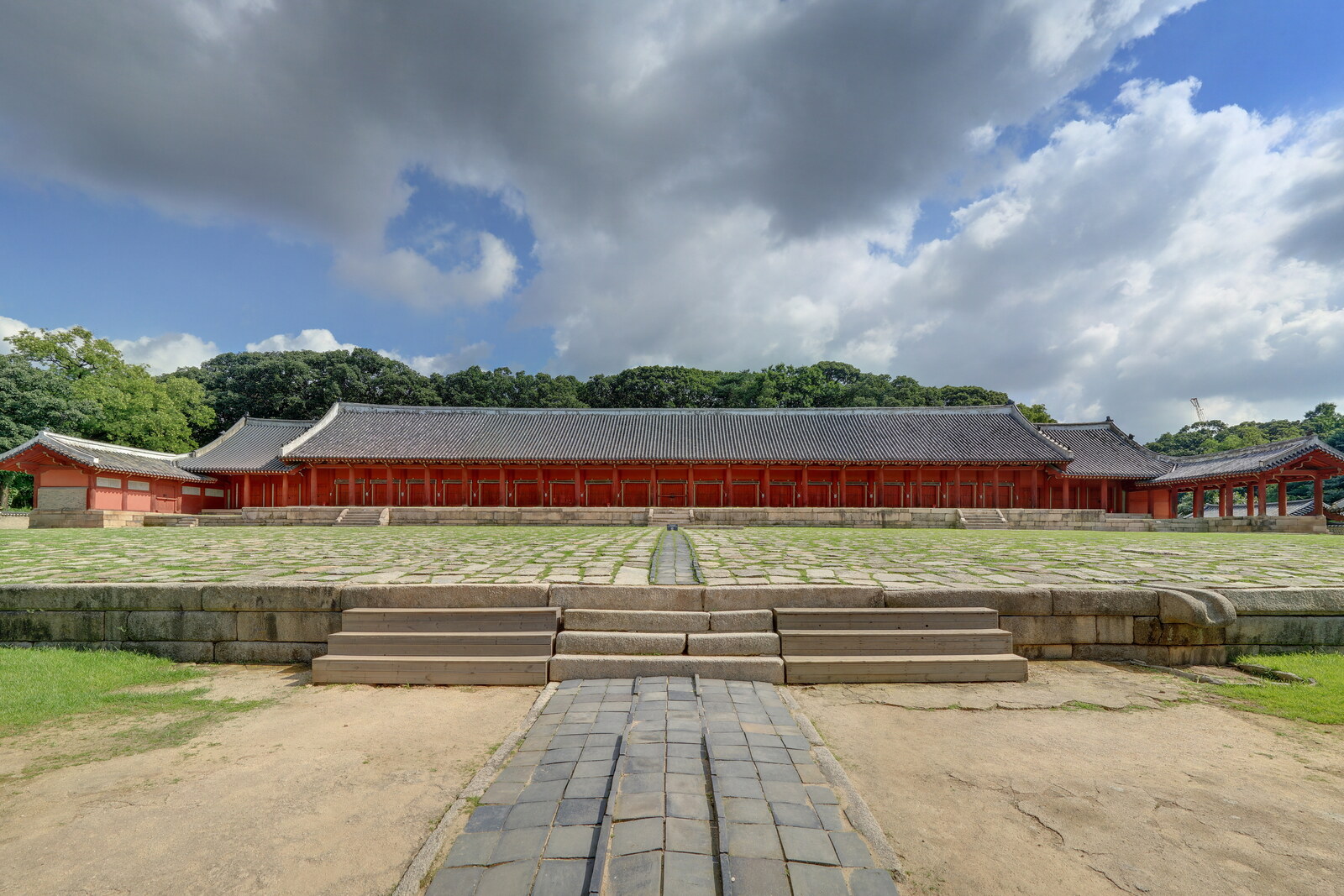
Look around first
What to notice
- The long facade of Jeongjeon Hall
- The row of chamber doors
- The first door from the western end
- The stone ritual courtyard
The story of the place
Behind the long facade and row of identical doors stretch the nineteen chambers of Jongmyo Shrine's main ancestral hall. They hold the wooden tablets of kings and queens: the tombs themselves lay outside the city, while the tablet was considered the presence of the deceased during the rite. In the stone courtyard before the hall, on the days of the great ceremony, offerings are arranged, libations are made, ritual music is played, and dances are performed.
The first chamber from the western end of Jeongjeon Hall holds the tablets of Taejo, the founder of Joseon, and his wives. Queen Sindeok's tablet was brought here two hundred seventy-three years after her death.
The nineteen chambers of Jeongjeon Hall contain the wooden memorial tablets of kings and queens. Their bodies were buried in tombs outside the city, while the tablet was considered the place where the spirit resided during the rite. Offerings were set before it, libations were made, and the dead person's merits were named. To receive a place in the main hall meant remaining forever a recognized part of the ruling family.
Sindeok was Taejo's second wife and received the title of queen when Joseon was founded. She sought to have the throne pass to her younger son, Yi Bang-seok. Taejo named the boy heir, although he had adult sons by his first wife. One of them, Yi Bang-won, had taken part in creating the new dynasty and expected the throne to go to the elder branch of the family. Bang-seok's appointment left his merits without their chief reward.
Sindeok died in thirteen ninety-six. Two years later, Yi Bang-won attacked the palace with armed men and killed Bang-seok together with his brother. First another elder son of Taejo became king, then Yi Bang-won took the throne as Taejong. Sindeok's tomb was moved beyond the city walls, and the rites due to a queen were canceled. When Taejo died, her tablet was not placed beside his in Jeongjeon Hall. Her sons had died, and she herself vanished from the official genealogy at the altar.
In sixteen sixty-nine, the scholar-official Song Si-yeol and his supporters demanded that this exclusion be corrected. They presented documents drawn up under Taejo himself: Sindeok had been the crowned wife of the founder, and the decision of a later king could not undo a rite that had already been performed. King Hyeonjong supported them. The court reaffirmed Sindeok's posthumous title, made a tablet and a jade book, then carried them in procession to Jongmyo Shrine. The tablet was placed in the first chamber together with Taejo's tablet.
During the annual great rite, offerings are once again arranged before the chambers, three libations are made, and ritual music and dances are performed. In the first, leftmost chamber, Taejo and Sindeok receive the offerings. Behind the next door is the tablet of Taejong—Yi Bang-won, who killed her sons and once deprived her of a place in this hall.
Useful on site
Jongmyo Shrine is closed on Tuesdays. Free viewing is usually available on Saturdays, Sundays, holidays, and the last Wednesday of the month; on Mondays, Wednesdays, Thursdays, and Fridays, entry is by fixed guided tour, and regular self-guided entry is unavailable.
Checked: June 27, 2026. Check the official source before visiting.Do not step on the marked ritual path, and observe local restrictions: the emptiness of the courtyard is part of the monument.