 Guide On Map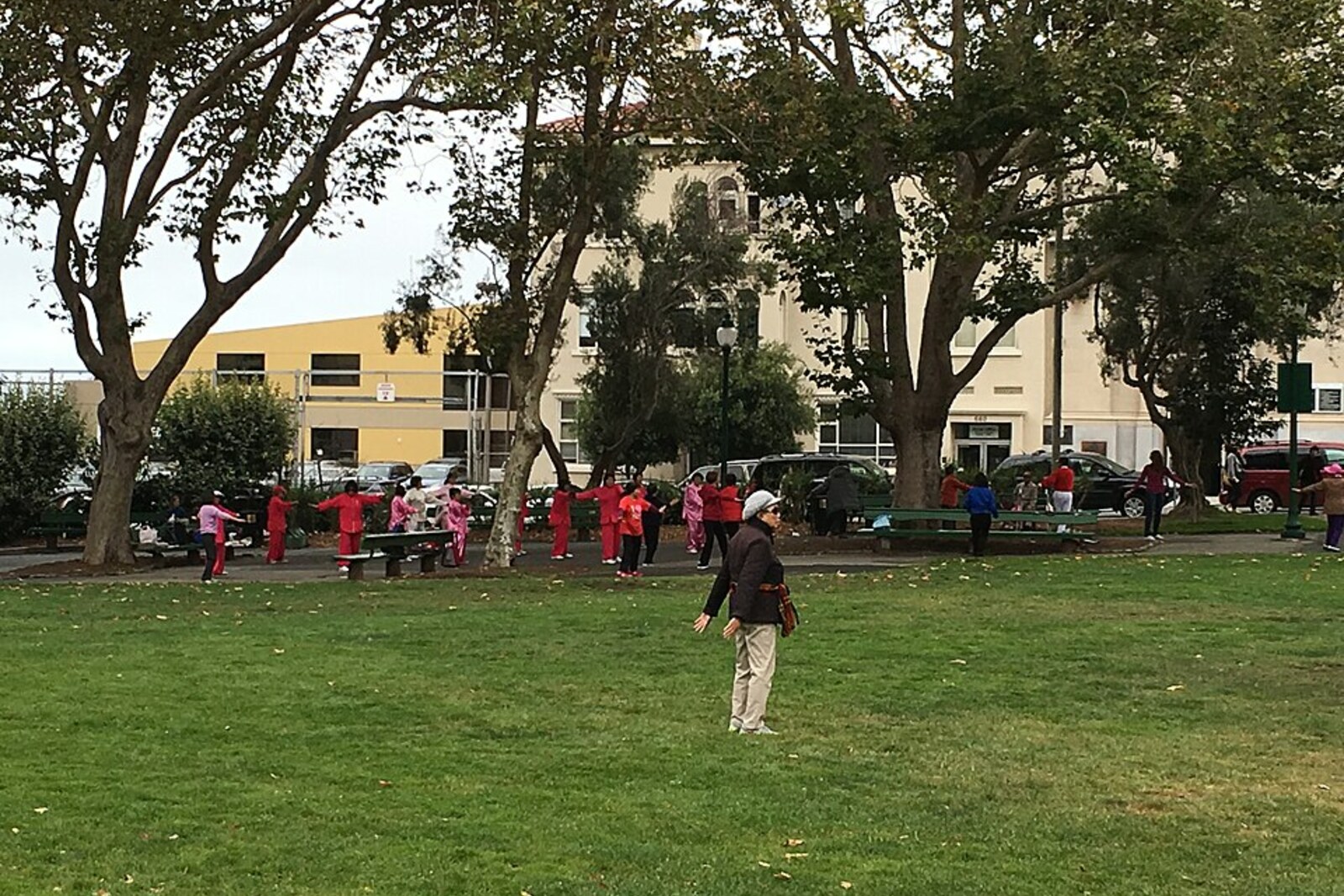
Look around first
What to notice
- Central lawn
- Benjamin Franklin monument
- Paths along the edges of the square
The story of the place
When the streets of growing San Francisco were laid out, a public plot was set aside here, one of the city's first three squares. In the middle of the twentieth century, ten local associations commissioned a new layout: the diagonal paths disappeared, walkways moved to the edges, and a broad lawn remained in the middle. People cross North Beach and sit on benches along the outer paths, while the open middle remains for games and neighborhood celebrations.
Benjamin Franklin stands at the center of the lawn, though the square is not named after him. There is no monument to George Washington here. The name appeared in the patriotic years before the American Civil War: the city honored the commander in chief of the American army in the American Revolutionary War and the first president of the United States.
This plot was kept public as early as eighteen forty-seven, when surveyors were laying out the streets of rapidly growing San Francisco. Washington Square became one of the city's first three squares. Later, paths crossed it diagonally, forming an X: North Beach residents took shortcuts here between streets.
In the fifties, ten local organizations commissioned a new plan. Landscape architects removed the diagonal walkways, moved the paths to the edges, and cleared a broad central lawn. This created the layout used today: people sit on benches at the edges and cross through the block, while the middle remains for relaxation, games, and neighborhood celebrations.
A few years later, all this nearly ended up on a concrete roof. In nineteen sixty-six, supporters of automobile construction proposed digging a garage for five hundred thirty-five cars beneath the square. Above it, there would have had to be entrances, ventilation shafts, and a thin layer of soil in which large trees could not grow.
The city council approved the project by a small margin. The person who could stop the construction was Mayor John Shelley—a professional politician who needed the support of influential garage backers for his next campaign. He vetoed it. Shelley explained that the estimates promised losses for all thirty-five years while the city would be paying off the bonds. The decision helped save the park, but cost the mayor political support; he did not run for another term. Another attempt to build a garage was rejected two years later.
Garages did appear beneath Union Square and Portsmouth Square, San Francisco's two other early squares. Beneath Washington Square's central lawn, there is still earth rather than a concrete roof.
Useful on site
The narration is intended for viewing the square and the church facade from outside. Choose a spot away from the paths, and do not count on access inside the church.